Parviz M. Pour - Böcker
Visar alla böcker från författaren Parviz M. Pour. Handla med fri frakt och snabb leverans.
4 produkter
4 produkter
666 kr
Skickas inom 10-15 vardagar
The increased incidence of pancreatic cancer in the Western world and its grave prognosis has resulted in an urgency for research in this area. Until now the available data on toxicology of the pancreas has been few and fragmentary, scattered throughout the literature. A benchmark volume, Toxicology of the Pancreas pulls together information in this neglected area of toxicological research and highlights fundamental research performed in the last ten years.Leaders in the field discuss important structures, the detoxification and toxification process at the cellular and sub-cellular level, the distribution of phase 1 and phase 2 drug-metabolizing enzymes and their role in pancreatic disease, and the role of diet and toxicants on pancreatic disease. The book also covers the role of altered genes in the integrity of the pancreas and explores comparative toxicology in humans and in the lab species used in testing.Illustrated with histological, electron microscopical, and immunohistochemical formats, this book provides a comprehensive and novel presentation of biological and toxicological data. It stands alone as a reliable resource of information easily accessible to professionals in different disciplines.
1 813 kr
Skickas inom 10-15 vardagar
The increased incidence of pancreatic cancer in the Western world and its grave prognosis has resulted in an urgency for research in this area. Until now the available data on toxicology of the pancreas has been few and fragmentary, scattered throughout the literature. A benchmark volume, Toxicology of the Pancreas pulls together information in this neglected area of toxicological research and highlights fundamental research performed in the last ten years.Leaders in the field discuss important structures, the detoxification and toxification process at the cellular and sub-cellular level, the distribution of phase 1 and phase 2 drug-metabolizing enzymes and their role in pancreatic disease, and the role of diet and toxicants on pancreatic disease. The book also covers the role of altered genes in the integrity of the pancreas and explores comparative toxicology in humans and in the lab species used in testing.Illustrated with histological, electron microscopical, and immunohistochemical formats, this book provides a comprehensive and novel presentation of biological and toxicological data. It stands alone as a reliable resource of information easily accessible to professionals in different disciplines.
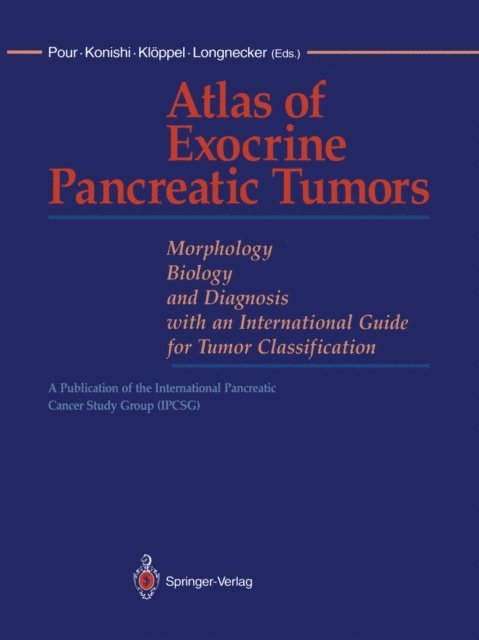
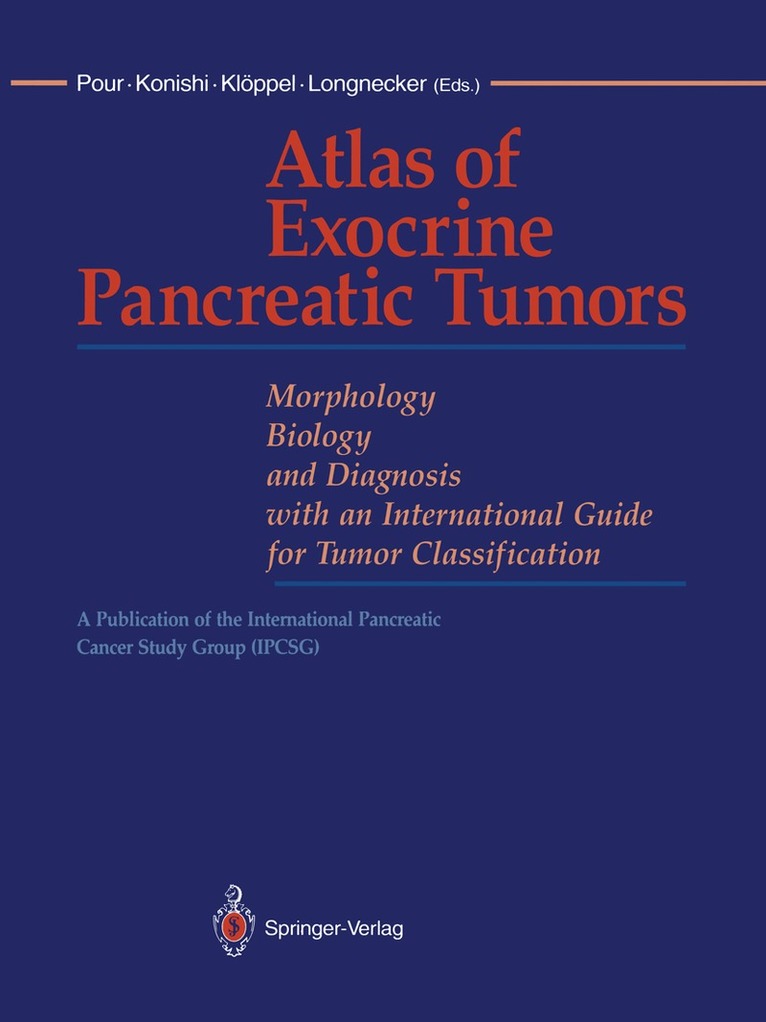
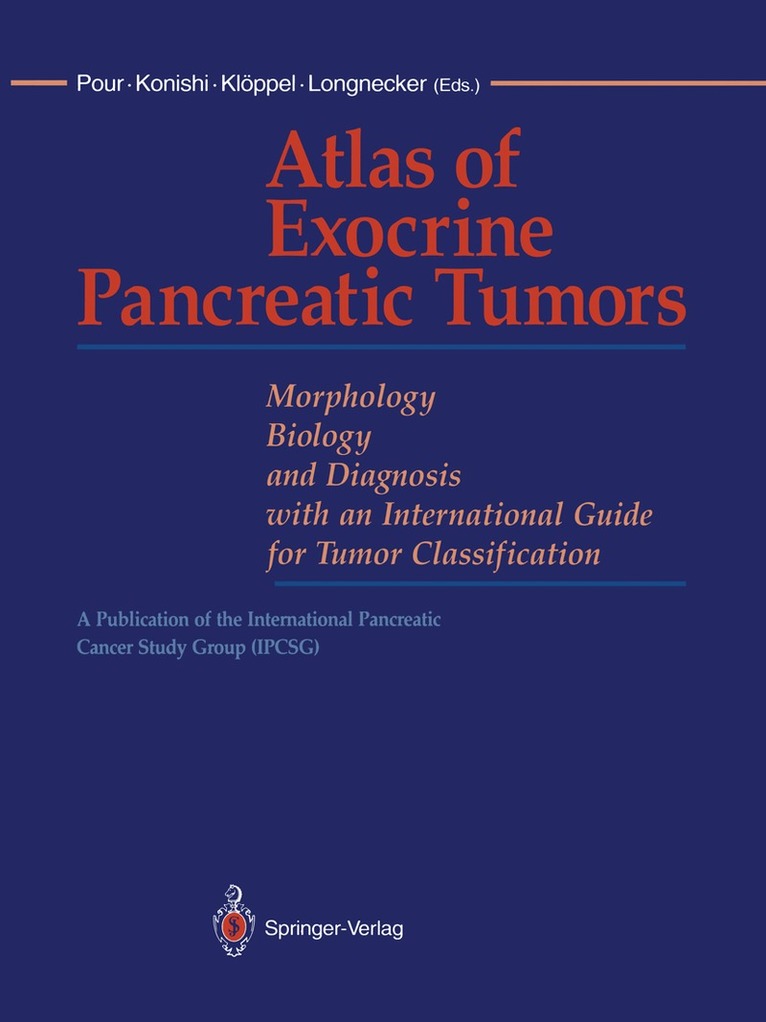
Atlas of Exocrine Pancreatic Tumors
Morphology, Biology, and Diagnosis with an International Guide for Tumor Classification
Häftad, Engelska, 2012
554 kr
Skickas inom 10-15 vardagar
The classification of tumors is important for understanding tumor histogenesis, for predicting prognosis, for differential diagnosis, and for recommending appropriate therapy. Since 1836, when pancreatic cancer was first described, progress has been made in pancreatic cancer morphology, and a number of classifications have been proposed. All of these classifications are mainly based on morphological characteristics. Some are too detailed to be of practical use while others are more pragmatic. Some of the inherent problems in the previous classifications included difficulties in obtaining an adequate number of pan creatic tumors for examination and insufficient clinical data and follow-up. With the increasing incidence of pancreatic cancer in many parts of the world during the past six decades, and with the availability of more tumors to patho logists, advances have been made in pancreatic tumor studies. Classifications by Cubilla and Fitzgerald and by Kloppel, which are generally similar, mostly considered prominent morphological features and their histogenesis. These pathology-oriented classifications, although complete, were not practical from the standpoint of clinicians concerned with the prognosis of individual tumors.
Atlas of Exocrine Pancreatic Tumors
Morphology, Biology, and Diagnosis with an International Guide for Tumor Classification
Inbunden, Engelska, 1994
554 kr
Skickas inom 10-15 vardagar
The classification of tumors is important for understanding tumor histogenesis, for predicting prognosis, for differential diagnosis, and for recommending appropriate therapy. Since 1836, when pancreatic cancer was first described, progress has been made in pancreatic cancer morphology, and a number of classifications have been proposed. All of these classifications are mainly based on morphological characteristics. Some are too detailed to be of practical use while others are more pragmatic. Some of the inherent problems in the previous classifications included difficulties in obtaining an adequate number of pan creatic tumors for examination and insufficient clinical data and follow-up. With the increasing incidence of pancreatic cancer in many parts of the world during the past six decades, and with the availability of more tumors to patho logists, advances have been made in pancreatic tumor studies. Classifications by Cubilla and Fitzgerald and by Kloppel, which are generally similar, mostly considered prominent morphological features and their histogenesis. These pathology-oriented classifications, although complete, were not practical from the standpoint of clinicians concerned with the prognosis of individual tumors.