Pascal van Eck – författare
Visar alla böcker från författaren Pascal van Eck. Handla med fri frakt och snabb leverans.
7 produkter
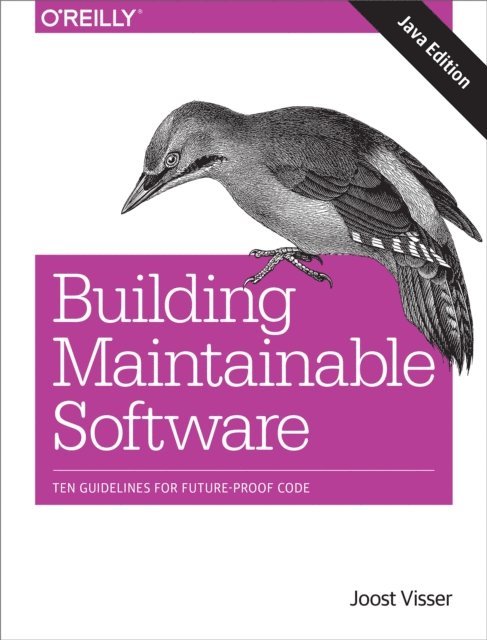
Building Maintainable Software, Java Edition
Ten Guidelines for Future-Proof Code
Av Gijs Wijnholds, Pascal van Eck m. fl.
E-bok, 2016
239 kr
Lägg i varukorg
Have you ever felt frustrated working with someone else’s code? Difficult-to-maintain source code is a big problem in software development today, leading to costly delays and defects. Be part of the solution. With this practical book, you’ll learn 10 easy-to-follow guidelines for delivering Java …
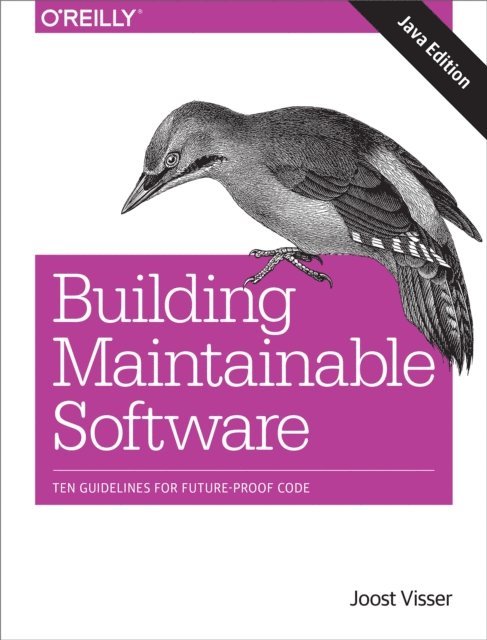
Building Maintainable Software, Java Edition
Ten Guidelines for Future-Proof Code
Av Gijs Wijnholds, Pascal van Eck m. fl.
E-bok, 2016
237 kr
Lägg i varukorg
Have you ever felt frustrated working with someone else’s code? Difficult-to-maintain source code is a big problem in software development today, leading to costly delays and defects. Be part of the solution. With this practical book, you’ll learn 10 easy-to-follow guidelines for delivering Java …
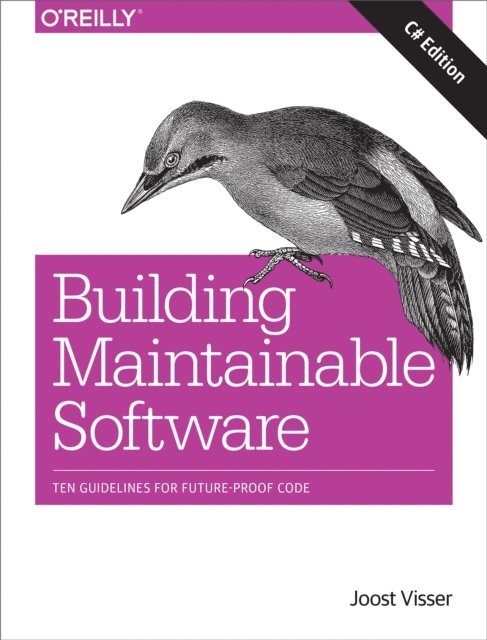
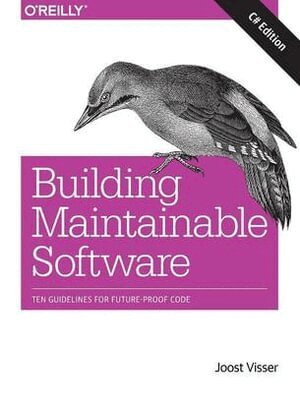
Building Maintainable Software, C# Edition
Ten Guidelines for Future-Proof Code
Av Rob van der Leek, Pascal van Eck m. fl.
E-bok, 2016
239 kr
Lägg i varukorg
Have you ever felt frustrated working with someone else’s code? Difficult-to-maintain source code is a big problem in software development today, leading to costly delays and defects. Be part of the solution. With this practical book, you’ll learn 10 easy-to-follow guidelines for delivering C# …
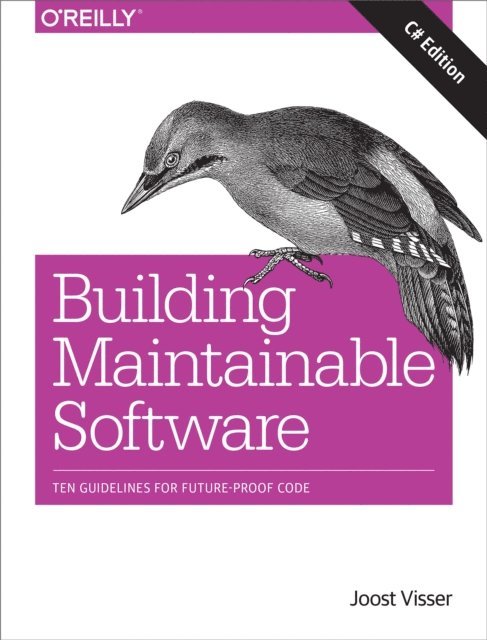
Building Maintainable Software, C# Edition
Ten Guidelines for Future-Proof Code
Av Rob van der Leek, Pascal van Eck m. fl.
E-bok, 2016
239 kr
Lägg i varukorg
Have you ever felt frustrated working with someone else’s code? Difficult-to-maintain source code is a big problem in software development today, leading to costly delays and defects. Be part of the solution. With this practical book, you’ll learn 10 easy-to-follow guidelines for delivering C# …
Building Maintainable Software, C# Edition
Av Joost Visser, Sylvan Rigal m. fl.
Häftad, 2016
200 kr
Lägg i varukorg
Have you ever felt frustrated working with someone else's code? Difficult-to-maintain source code is a big problem in software development today, leading to costly delays and defects. Be part of the solution. With this practical book, you'll learn 10 easy-to-follow guidelines for delivering C# …
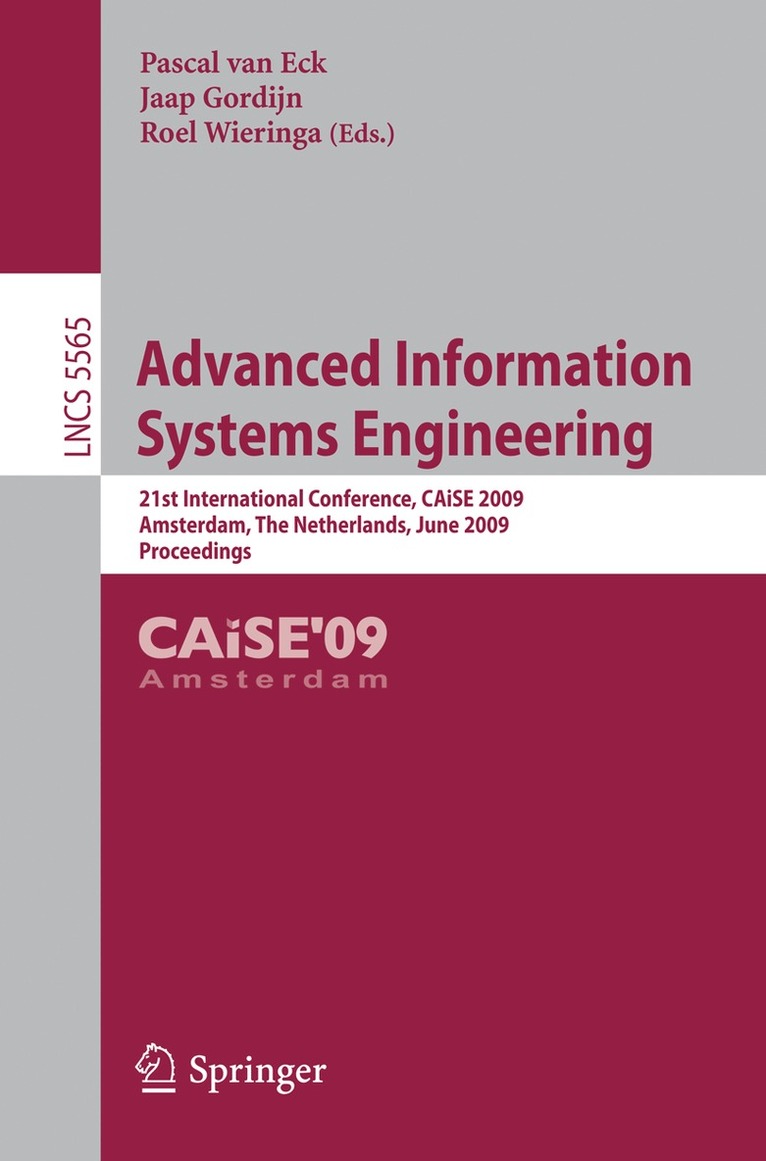
Advanced Information Systems Engineering
21st International Conference, CAiSE 2009, Amsterdam, The Netherlands, June 8-12, 2009, Proceedings
Av Pascal van Eck, Jaap Gordijn m. fl.
Häftad, 2009
567 kr
Lägg i varukorg
This book constitutes the refereed proceedings of the 21st International Conference on Advanced Information Systems Engineering, CAiSE 2009, held in Amsterdam, The Netherlands, on June 8-12, 2009. The 36 papers presented in this book together with 6 keynote papers were carefully reviewed and …
Advanced Information Systems Engineering
21st International Conference, CAiSE 2009, Amsterdam, The Netherlands, June 8-12, 2009, Proceedings
Av Roel J. Wieringa, Jaap Gordijn m. fl.
E-bok, 2009
739 kr
Lägg i varukorg
This book constitutes the refereed proceedings of the 21st International Conference on Advanced Information Systems Engineering, CAiSE 2009, held in Amsterdam, The Netherlands, on June 8-12, 2009. The 36 papers presented in this book together with 6 keynote papers were carefully reviewed and …