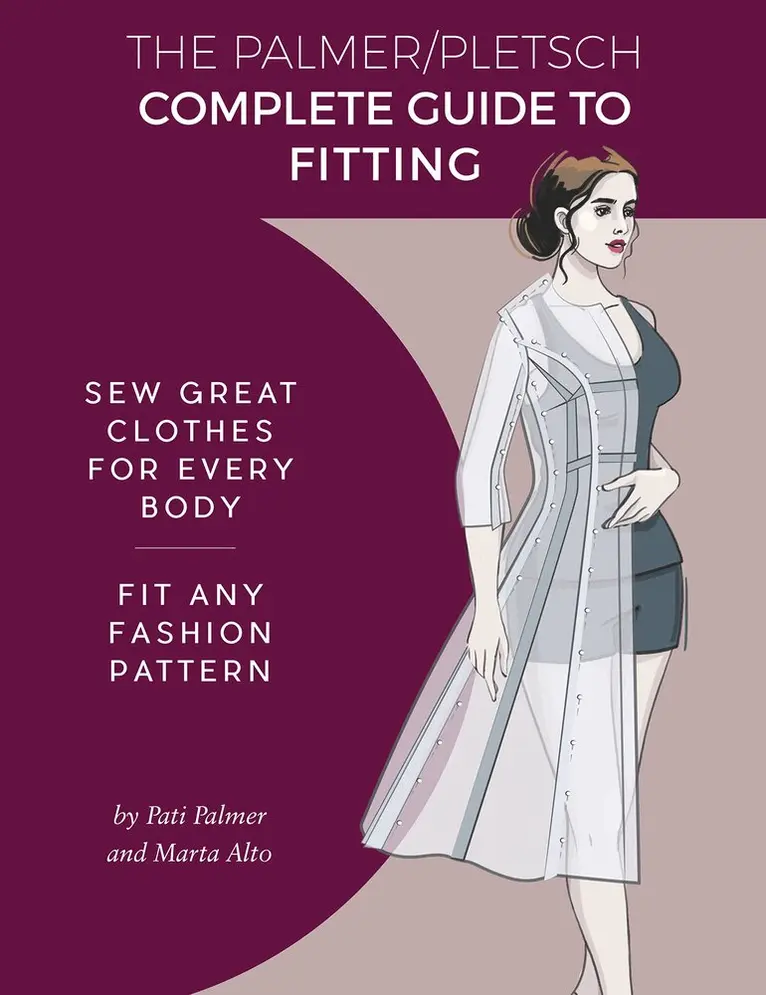
From tissue-fitting pioneers Pati Palmer and Marta Alto comes a new book whose title says it all: The Palmer/Pletsch Complete Guide to Fitting: Sew Great Clothes for Every Body! Fit Any Fashion Pattern. It’s been 20 years since their last book about fitting and altering sewing patterns, Fit for Real People. For Palmer and Alto, that means 20 more years of hands-on learning and experience from fitting more “real people” of all shapes and sizes from around the globe. Having long ago dispensed with tedious measuring or making a muslin to check the fit of a sewing pattern, the authors have mastered the process of tissue-fitting. This means simply “trying on” the pattern’s tissue pieces to check systematically for where to alter the pattern for a custom fit. The pattern pieces themselves become the “muslin.” “Systematically” means following the tissue-fitting sequence they’ve developed and refined. It’s a no-guess order of fitting that ensures success. The book reinforces this sequence since the alteration chapters themselves are ordered in the same sequence. Readers are instructed to start with length and width, move on to the back, check the neck and shoulders, all before even considering how the pattern fits in the bust. As they work through the pattern, sewers will alter the tissue and try on again until the tissue fits well. The book then instructs how to pin-fit the fabric for a final tweaking before sewing. The book explains all facets of pattern fitting and alteration to give readers the background and guidance they need to achieve a custom fit on any pattern from any company. Instructions include: • Take just one measurement to determine the right pattern size to buy. Find out what to do if you are between sizes or a different size top and bottom. • Make a “body map” with a close-fitting dress pattern to see how you differ from the “standard” on which sewing patterns are based. • Learn from “real people” examples of a variety of bodies and their individual alterations. • Use the book’s new “wrinkle dictionary” to identify a needed pattern alteration. “Wrinkles point to the problem,” say the authors, and now you can look up the page reference for a solution. • See how age can affect body shape, from preteen to octogenarian. • Take note of the latest sewing techniques for garment details that affect fit, such as darts, zippers and sleeves, for enhancing the look of a well-fitted garment. • Learn basic skills for designing or redesigning for myriad variations using the same pattern. Throughout the book, step-by step instructions are accompanied by full-color photography and a new style of technical art that is extremely clear. Short captions explain each illustration. As a bonus, the authors detail the evolution of ready-to-wear and pattern sizing over the past century, along with their own history in pioneering the art and practice of tissue-fitting.
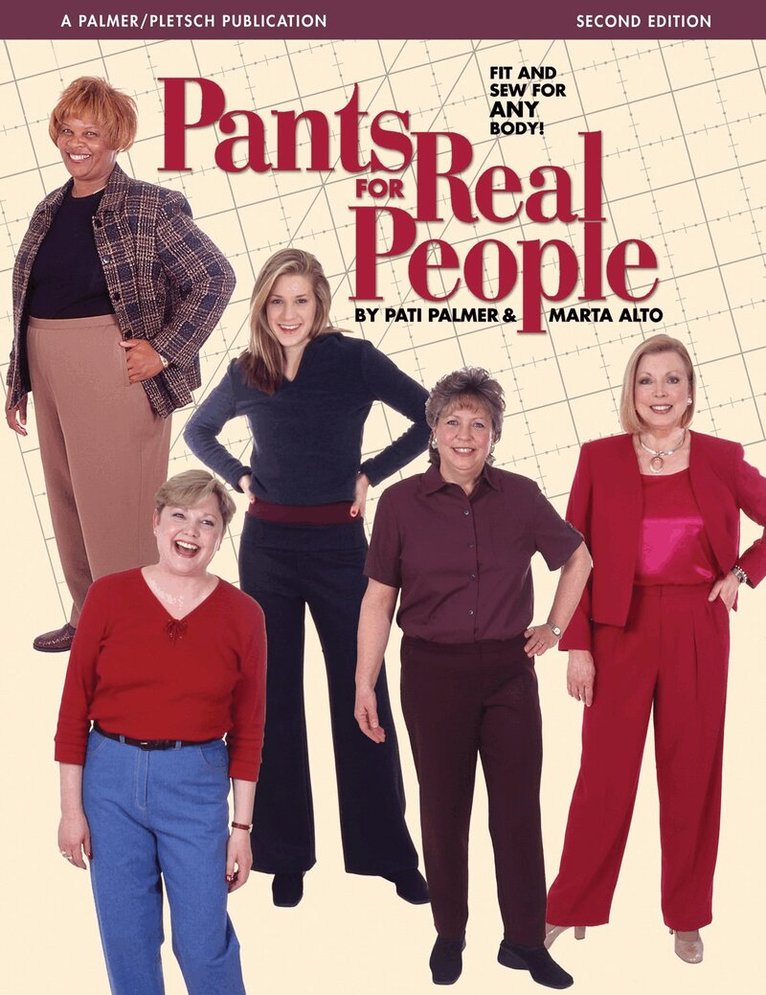
This pattern book features step-by-step instructions on fitting and sewing pants for women of all body types using the twin techniques of tissue fitting and fabric fitting. Important sewing choices are highlighted, including choosing fabrics, selecting appropriate alteration tools, and finding styles that are most flattering. The fit-as-you-sew process of making pants is illustrated with progressive photographs and step-by-step illustrations. A variety of styles are covered, including nonroll, expandable, and contour waistbands; side seam and patched pockets; and easy hems and cuffs. This updated second edition features refinements to the fitting and sewing information and has added instructions on the fitting and sewing of jeans and no-side-seam pants.
Fit and Sew Custom Jeans is unique in that it addresses both the order of construction and fit simultaneously. Other books gloss over the fitting, having you guess your adjustments in the flat pattern stage. By the time you try on the jeans, it may be too late to fix areas with poor fit. If you could, you'd need to rip a lot of topstitching, a real chore. Helen uses a combination of tissue-fitting and fabric fitting. This means not using a typical ready-to-wear sewing order. See the chart on what size to choose based on the type of fabric you have. Fill out the Jeans Profile so you consider how fitted you want the jeans for how they will be worn. Prepare the tissue for trying on to determine rise, width, length, and crotch shape. Learn how to gauge how much smaller the pattern can be in width based on a stretch of the denim. There are many ways to do a fly front, but which is best for incorporating fit? This is why the author tested many different techniques using her order to see which worked best. She sewed a total of 31 pair of jeans for herself and others so make sure she was truly giving the best solutions for fit.