Patrice C. McMahon – författare
2 246 kr
Skickas inom 10-15 vardagar
496 kr
Skickas inom 5-8 vardagar
581 kr
Skickas inom 10-15 vardagar
2 176 kr
Skickas inom 10-15 vardagar
633 kr
Läs direkt efter köp
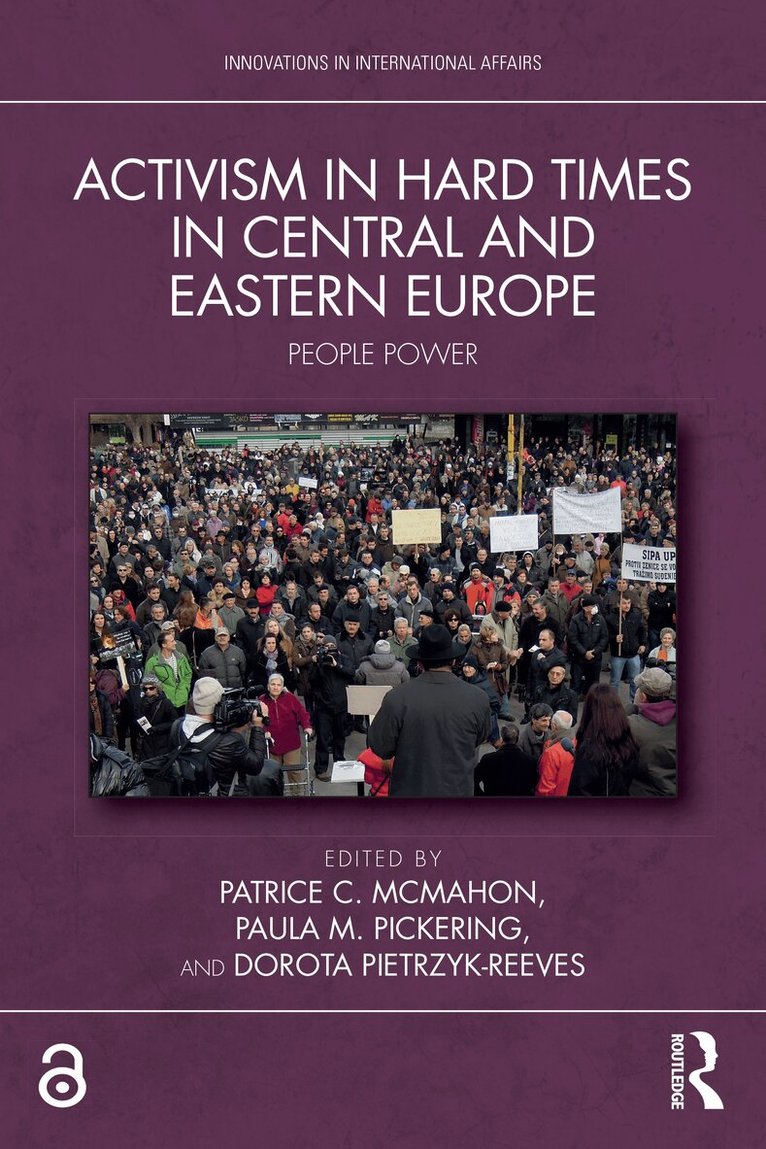
Activism in Hard Times in Central and Eastern Europe elevates the voices of civic activists from Central and Eastern Europe (CEE) and analyzes a wealth of information to generate new insights into how activism in the region manages to be vibrant, diverse, and consequential.
Because of these countries’ unique historical trajectory, CEE activists have, in important ways, leap-frogged their counterparts in the West. Giving special attention to activists in Bosnia and Herzegovina (BiH), Hungary, Poland, Russia, and Ukraine, the book focuses on responses to the recent “hard times” – the shrinking of public space for civil society, democratic backsliding, polarization, and Russia’s war in Ukraine. The contributors contend that CEE activists provide important lessons for others confronting similar challenges around the world.
The book is well-suited for a variety of undergraduate and graduate courses, such as comparative politics, human rights, global governance, social movements, Central and East European politics, and contemporary world politics. This timely and readable book, co-created by academics and activists and written in a conversational tone, will also be of interest to the interested public and practitioners. The book encourages readers to think differently about the role of civil society and activism, as well as about how new tools and polarizing dynamics affect activism in this region.
Chapters 2, 3, 6 and 8 of this book are freely available as downloadable Open Access PDFs at http://www.taylorfrancis.com under a Creative Commons Attribution-Non Commercial-No Derivatives (CC-BY-NC-ND) 4.0 license.
633 kr
Läs direkt efter köp
Activism in Hard Times in Central and Eastern Europe elevates the voices of civic activists from Central and Eastern Europe (CEE) and analyzes a wealth of information to generate new insights into how activism in the region manages to be vibrant, diverse, and consequential.
Because of these countries’ unique historical trajectory, CEE activists have, in important ways, leap-frogged their counterparts in the West. Giving special attention to activists in Bosnia and Herzegovina (BiH), Hungary, Poland, Russia, and Ukraine, the book focuses on responses to the recent “hard times” – the shrinking of public space for civil society, democratic backsliding, polarization, and Russia’s war in Ukraine. The contributors contend that CEE activists provide important lessons for others confronting similar challenges around the world.
The book is well-suited for a variety of undergraduate and graduate courses, such as comparative politics, human rights, global governance, social movements, Central and East European politics, and contemporary world politics. This timely and readable book, co-created by academics and activists and written in a conversational tone, will also be of interest to the interested public and practitioners. The book encourages readers to think differently about the role of civil society and activism, as well as about how new tools and polarizing dynamics affect activism in this region.
Chapters 2, 3, 6 and 8 of this book are freely available as downloadable Open Access PDFs at http://www.taylorfrancis.com under a Creative Commons Attribution-Non Commercial-No Derivatives (CC-BY-NC-ND) 4.0 license.
753 kr
Läs direkt efter köp
The aim of this book is to analyse why and how states respond to human security, both at home and abroad.
Although states still define security as "the defense of territory" from military attack, increasingly security pertains to the protection of human beings from violence. This violence can emerge from rebels, drug traffickers, terrorism, and even environmental and demographic changes. While previous literature in this field has provided rich empirical detail about human security crises, it is generally quiet about how states respond to these crises.
State Responses to Human Security fills this lacuna by bringing in concepts from international security studies and focusing on states’ perceptions of power and the changing nature of human security. Instead of debating whether or not human security exists, the authors in this volume agree that human security has been redefined to include policies associated with violence toward individuals and groups, and draw on recent events in the Middle East, China and Mexico to understand how and when human security issues prompt state responses and affect international relations. The case studies analysed in this book suggest that states respond to human security threats differently, but in both the domestic context and abroad, power and perceptions matter greatly in shaping states’ reactions to human security concerns.
This book will be of much interest to students of human security, foreign policy, international relations and security studies in general.
746 kr
Läs direkt efter köp
The aim of this book is to analyse why and how states respond to human security, both at home and abroad.
Although states still define security as "the defense of territory" from military attack, increasingly security pertains to the protection of human beings from violence. This violence can emerge from rebels, drug traffickers, terrorism, and even environmental and demographic changes. While previous literature in this field has provided rich empirical detail about human security crises, it is generally quiet about how states respond to these crises.
State Responses to Human Security fills this lacuna by bringing in concepts from international security studies and focusing on states’ perceptions of power and the changing nature of human security. Instead of debating whether or not human security exists, the authors in this volume agree that human security has been redefined to include policies associated with violence toward individuals and groups, and draw on recent events in the Middle East, China and Mexico to understand how and when human security issues prompt state responses and affect international relations. The case studies analysed in this book suggest that states respond to human security threats differently, but in both the domestic context and abroad, power and perceptions matter greatly in shaping states’ reactions to human security concerns.
This book will be of much interest to students of human security, foreign policy, international relations and security studies in general.
2 176 kr
Skickas inom 10-15 vardagar
651 kr
Skickas inom 10-15 vardagar
746 kr
Läs direkt efter köp
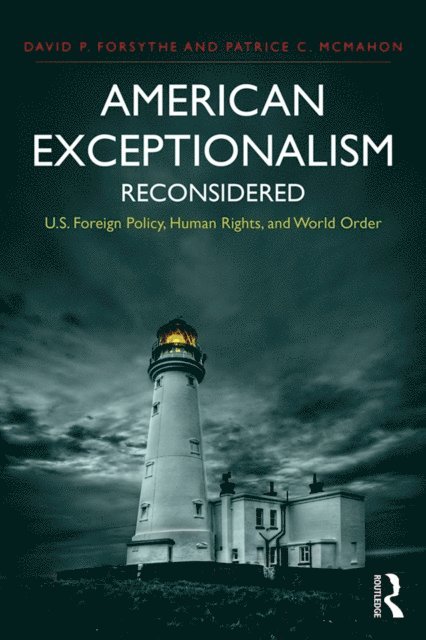
Is the US really exceptional in terms of its willingness to take universal human rights seriously? According to the rhetoric of American political leaders, the United States has a unique and lasting commitment to human rights principles and to a liberal world order centered on rule of law and human dignity. But when push comes to shove—most recently in Libya and Syria--the United States failed to stop atrocities and dithered as disorder spread in both places. This book takes on the myths surrounding US foreign policy and the future of world order. Weighing impulses toward parochial nationalism against the ideal of cosmopolitan internationalism, the authors posit that what may be emerging is a new brand of American globalism, or a foreign policy that gives primacy to national self-interest but does so with considerable interest in and genuine attention to universal human rights and a willingness to suffer and pay for those outside its borders—at least on occasion. The occasions of exception—such as Libya and Syria—provide case studies for critical analysis and allow the authors to look to emerging dominant powers, especially China, for indicators of new challenges to the commitment to universal human rights and humanitarian affairs in the context of the ongoing clash between liberalism and realism.
The book is guided by four central questions: 1) What is the relationship between cosmopolitan international standards and narrow national self-interest in US policy on human rights and humanitarian affairs? 2) What is the role of American public opinion and does it play any significant role in shaping US policy in this dialectical clash? 3) Beyond public opinion, what other factors account for the shifting interplay of liberal and realist inclinations in Washington policy making? 4) In the 21st century and as global power shifts, what are the current views and policies of other countries when it comes to the application of human rights and humanitarian affairs?
746 kr
Läs direkt efter köp
Is the US really exceptional in terms of its willingness to take universal human rights seriously? According to the rhetoric of American political leaders, the United States has a unique and lasting commitment to human rights principles and to a liberal world order centered on rule of law and human dignity. But when push comes to shove—most recently in Libya and Syria--the United States failed to stop atrocities and dithered as disorder spread in both places. This book takes on the myths surrounding US foreign policy and the future of world order. Weighing impulses toward parochial nationalism against the ideal of cosmopolitan internationalism, the authors posit that what may be emerging is a new brand of American globalism, or a foreign policy that gives primacy to national self-interest but does so with considerable interest in and genuine attention to universal human rights and a willingness to suffer and pay for those outside its borders—at least on occasion. The occasions of exception—such as Libya and Syria—provide case studies for critical analysis and allow the authors to look to emerging dominant powers, especially China, for indicators of new challenges to the commitment to universal human rights and humanitarian affairs in the context of the ongoing clash between liberalism and realism.
The book is guided by four central questions: 1) What is the relationship between cosmopolitan international standards and narrow national self-interest in US policy on human rights and humanitarian affairs? 2) What is the role of American public opinion and does it play any significant role in shaping US policy in this dialectical clash? 3) Beyond public opinion, what other factors account for the shifting interplay of liberal and realist inclinations in Washington policy making? 4) In the 21st century and as global power shifts, what are the current views and policies of other countries when it comes to the application of human rights and humanitarian affairs?
1 604 kr
Skickas inom 10-15 vardagar
393 kr
Skickas inom 10-15 vardagar
317 kr
Läs direkt efter köp
317 kr
Läs direkt efter köp