Patrick Kenis – författare
Visar alla böcker från författaren Patrick Kenis. Handla med fri frakt och snabb leverans.
12 produkter
Managing AIDS
Organizational Responses in Seven European Countries
E-bok, 2018
475 kr
Lägg i varukorg
First published in 1997, this volume examines how, in the last 15 years, HIV/AIDS has become a challenge for public health, public policy and research. Reducing further HIV transmissions as well reducing the personal and social impact of HIV/AIDS requires a wide range of activities developed by a …
Managing AIDS
Organizational Responses in Seven European Countries
E-bok, 2018
485 kr
Lägg i varukorg
First published in 1997, this volume examines how, in the last 15 years, HIV/AIDS has become a challenge for public health, public policy and research. Reducing further HIV transmissions as well reducing the personal and social impact of HIV/AIDS requires a wide range of activities developed by a …
Managing AIDS
Organizational Responses in Seven European Countries
Inbunden, 2018
1518 kr
Lägg i varukorg
First published in 1997, this volume examines how, in the last 15 years, HIV/AIDS has become a challenge for public health, public policy and research. Reducing further HIV transmissions as well reducing the personal and social impact of HIV/AIDS requires a wide range of activities developed by a …
Managing AIDS
Organizational Responses in Seven European Countries
Häftad, 2020
414 kr
Lägg i varukorg
First published in 1997, this volume examines how, in the last 15 years, HIV/AIDS has become a challenge for public health, public policy and research. Reducing further HIV transmissions as well reducing the personal and social impact of HIV/AIDS requires a wide range of activities developed by a …
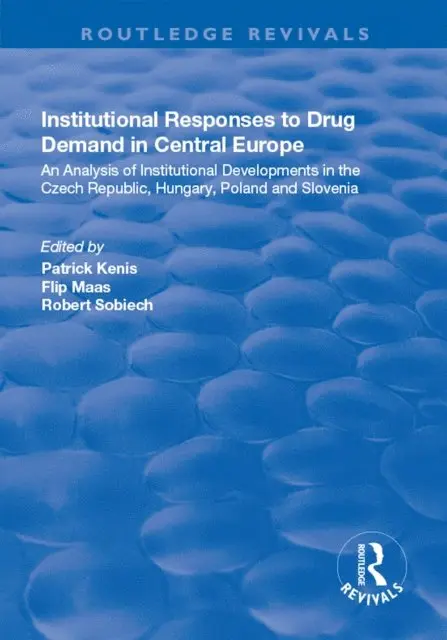
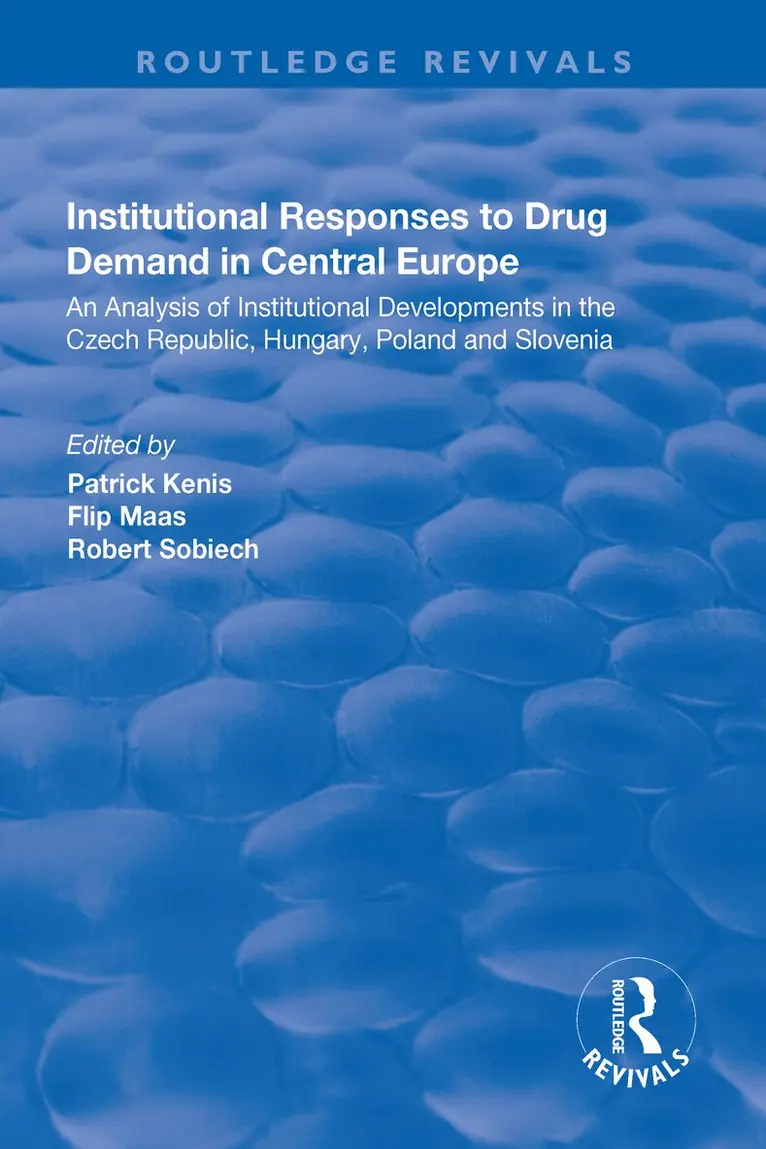
Institutional Responses to Drug Demand in Central Europe
Inbunden, 2019
1563 kr
Lägg i varukorg
This title was first first published in 2002: Understanding the link between institutional contexts and drug problems is crucial to the process of developing appropriate drug policies and drug demand reduction strategies. However, this link is too often taken for granted, with most drug-related …
Institutional Responses to Drug Demand in Central Europe
E-bok, 2018
1000 kr
Lägg i varukorg
This title was first first published in 2002: Understanding the link between institutional contexts and drug problems is crucial to the process of developing appropriate drug policies and drug demand reduction strategies. However, this link is too often taken for granted, with most drug-related …
Institutional Responses to Drug Demand in Central Europe
E-bok, 2018
1022 kr
Lägg i varukorg
This title was first first published in 2002: Understanding the link between institutional contexts and drug problems is crucial to the process of developing appropriate drug policies and drug demand reduction strategies. However, this link is too often taken for granted, with most drug-related …
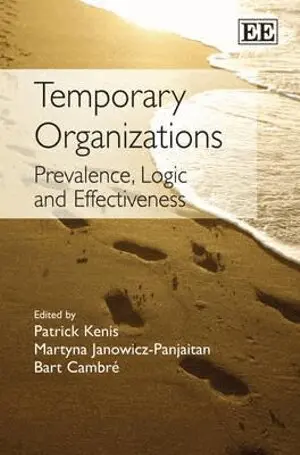
Temporary Organizations
Prevalence, Logic and Effectiveness
Av Patrick Kenis, Martyna Janowicz-Panjaitan m. fl.
Inbunden, 2009
2184 kr
Lägg i varukorg
This important and timely book provides a systematic treatment of temporary organizations - an increasingly prevalent organizational form in which organizations work together on a joint task - for example, a movie production, a rescue operation, development of a new product - for an ex ante limited …
Temporary Organizations
Prevalence, Logic and Effectiveness
Av Bart Cambre, Martyna Janowicz-Panjaitan m. fl.
E-bok, 2009
472 kr
Lägg i varukorg
This important and timely book provides a systematic treatment of temporary organizations - an increasingly prevalent organizational form in which organizations work together on a joint task - for example, a movie production, a rescue operation, development of a new product - for an ex ante limited …
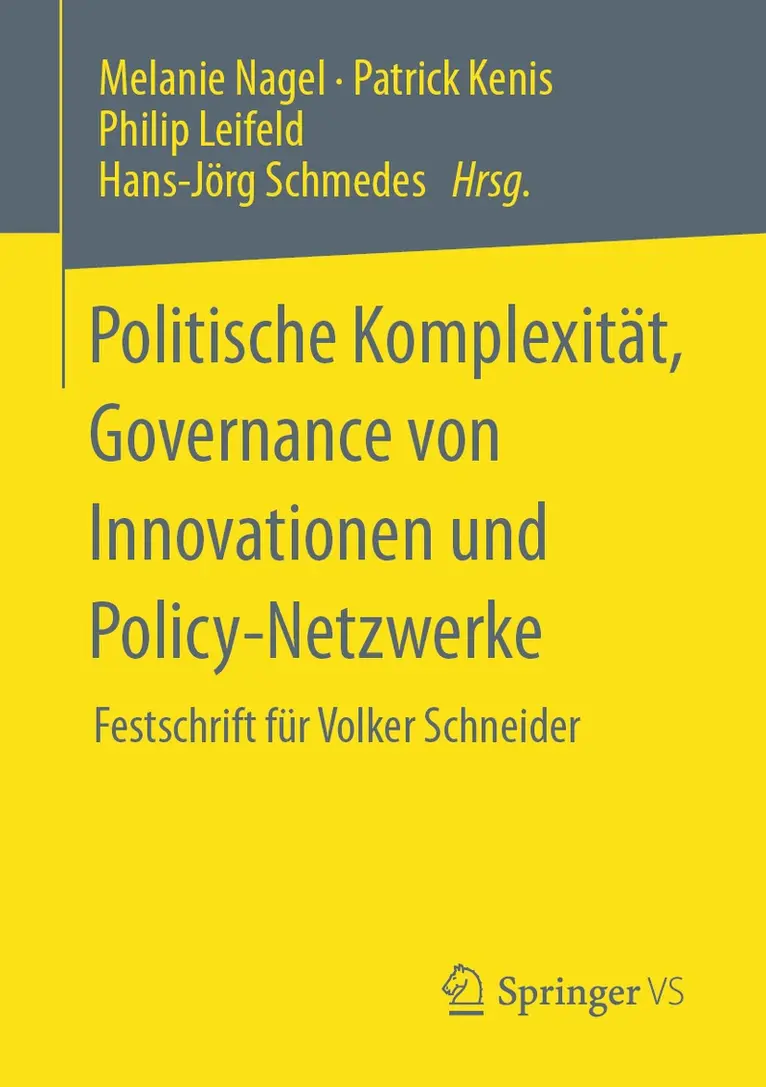
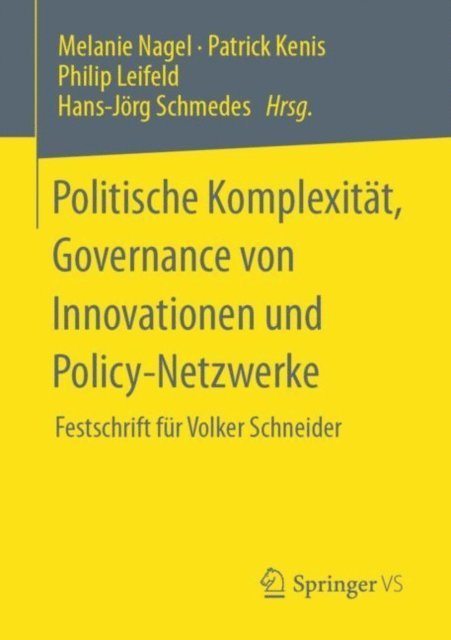
Politische Komplexität, Governance von Innovationen und Policy-Netzwerke
Festschrift für Volker Schneider
Av Melanie Nagel, Patrick Kenis m. fl.
Häftad, 2020
611 kr
Lägg i varukorg
Politische Komplexität, Governance von Innovationen und Policy-Netzwerke stehen im Mittelpunkt des akademischen Wirkens von Professor Dr. Volker Schneider. Aus Anlass seiner Emeritierung im Sommer 2020 versammelt diese Festschrift 20 Essays mit kreativen Forschungsdesigns und innovativen …
Politische Komplexität, Governance von Innovationen und Policy-Netzwerke
Festschrift für Volker Schneider
Av Hans-Jorg Schmedes, Philip Leifeld m. fl.
E-bok, 2020
717 kr
Lägg i varukorg
Politische Komplexität, Governance von Innovationen und Policy-Netzwerke stehen im Mittelpunkt des akademischen Wirkens von Professor Dr. Volker Schneider. Aus Anlass seiner Emeritierung im Sommer 2020 versammelt diese Festschrift 20 Essays mit kreativen Forschungsdesigns und innovativen …
Institutional Responses to Drug Demand in Central Europe
Häftad, 2019
450 kr
Tillfälligt slut
This title was first first published in 2002: Understanding the link between institutional contexts and drug problems is crucial to the process of developing appropriate drug policies and drug demand reduction strategies. However, this link is too often taken for granted, with most drug-related …