Patrick Kilby - Böcker
Visar alla böcker från författaren Patrick Kilby. Handla med fri frakt och snabb leverans.
10 produkter
10 produkter
756 kr
Skickas inom 10-15 vardagar
This book reviews the Green Revolution, starting with its inception and development from the 1940s to the 1970s, and leading to what is commonly referred to as a second Green Revolution in the 2000s. Building on the historical assessment, it draws insights for contemporary policy debates and demonstrates important lessons for the here and now. ‘Green Revolution’ refers to the technical measures employed to increase food (particularly grain) production, based mainly on improved seed varieties for higher yields and pest resistance. For it to be successful the Green Revolution often required land reform, investments in irrigation and fertilizer supply that were not available to women and marginal farmers. This book analyses three underlying principles that have guided green revolutions: the political environment in which they were set; how they contributed to both the successes and challenges the Green Revolution continues to face; and the systemic institutional barriers for access to these agricultural production advances, with a focus on how gender relations limit the inclusion of women even when they are the principle cultivators and farm managers. The book draws on experiences in Mexico, India and China, examining government policy, the role of the family farm, and key issues around the inclusion of women. In doing so, this book connects the history of the Green Revolution with contemporary policy debates on the developing world, particularly in relation to Africa and Asia, around foreign aid and agricultural research. It also specifically establishes that greater inclusivity for women and other marginalised farming communities will significantly enhance the effectiveness of these programs.Interlinking themes of development policy, gender, and agricultural research, this book will be of great interest to students and scholars of agricultural development, food security, and sustainable development, as well as policymakers and practitioners working in international aid and agri-food policies.
347 kr
Skickas inom 10-15 vardagar
This book reviews the Green Revolution, starting with its inception and development from the 1940s to the 1970s, and leading to what is commonly referred to as a second Green Revolution in the 2000s. Building on the historical assessment, it draws insights for contemporary policy debates and demonstrates important lessons for the here and now. ‘Green Revolution’ refers to the technical measures employed to increase food (particularly grain) production, based mainly on improved seed varieties for higher yields and pest resistance. For it to be successful the Green Revolution often required land reform, investments in irrigation and fertilizer supply that were not available to women and marginal farmers. This book analyses three underlying principles that have guided green revolutions: the political environment in which they were set; how they contributed to both the successes and challenges the Green Revolution continues to face; and the systemic institutional barriers for access to these agricultural production advances, with a focus on how gender relations limit the inclusion of women even when they are the principle cultivators and farm managers. The book draws on experiences in Mexico, India and China, examining government policy, the role of the family farm, and key issues around the inclusion of women. In doing so, this book connects the history of the Green Revolution with contemporary policy debates on the developing world, particularly in relation to Africa and Asia, around foreign aid and agricultural research. It also specifically establishes that greater inclusivity for women and other marginalised farming communities will significantly enhance the effectiveness of these programs.Interlinking themes of development policy, gender, and agricultural research, this book will be of great interest to students and scholars of agricultural development, food security, and sustainable development, as well as policymakers and practitioners working in international aid and agri-food policies.
Philanthropic Foundations in International Development
Rockefeller, Ford and Gates
Inbunden, Engelska, 2021
778 kr
Skickas inom 10-15 vardagar
This book focuses on the influence of philanthropic foundations in global development, and on how the global south has engaged with them. The idea of corporate philanthropy stretches back a long way, with the late 19th industrialist Andrew Carnegie seeing it as an important obligation of the very wealthy. In the modern day, Bill Gates has taken up this call, suggesting that the very wealthy should donate half their wealth to philanthropic causes, and endowing his own foundation with something in the order of $50 billion. This book brings together case studies of the most influential of these foundations over the last one hundred years: the Rockefeller, Ford, and Gates' Foundations, investigating their impact on education and research, health and agriculture. The book concludes by asking whether global south foundations such as Al Waleed Philanthropies, Tata Trusts, and those from China may point to the future of global philanthropic foundations. The sheer scale of resources that foundations can devote to their work results in significant influence in global politics, to the point that Foundations can drive and even set government policy. This influence is likely to grow in the post-Covid environment, making this book an important resource for researchers, practitioners and policy makers working on global development.
Philanthropic Foundations in International Development
Rockefeller, Ford and Gates
Häftad, Engelska, 2023
302 kr
Skickas inom 10-15 vardagar
This book focuses on the influence of philanthropic foundations in global development, and on how the global south has engaged with them. The idea of corporate philanthropy stretches back a long way, with the late 19th industrialist Andrew Carnegie seeing it as an important obligation of the very wealthy. In the modern day, Bill Gates has taken up this call, suggesting that the very wealthy should donate half their wealth to philanthropic causes, and endowing his own foundation with something in the order of $50 billion. This book brings together case studies of the most influential of these foundations over the last one hundred years: the Rockefeller, Ford, and Gates' Foundations, investigating their impact on education and research, health and agriculture. The book concludes by asking whether global south foundations such as Al Waleed Philanthropies, Tata Trusts, and those from China may point to the future of global philanthropic foundations. The sheer scale of resources that foundations can devote to their work results in significant influence in global politics, to the point that Foundations can drive and even set government policy. This influence is likely to grow in the post-Covid environment, making this book an important resource for researchers, practitioners and policy makers working on global development.
674 kr
Skickas inom 10-15 vardagar
A PDF version of this book is available for free in open access via www.tandfebooks.com as well as the OAPEN Library platform, www.oapen.org. It has been made available under a Creative Commons Attribution-Non Commercial-No Derivatives 3.0 license and is part of the OAPEN-UK research project.By examining how NGOs operate in Southern India in the early 2000’s, this book discusses the challenges faced by small, local NGOs in the uncertain times of changing aid dynamics. The key findings focus on what empowerment means for Indian women, and how NGO accountability to these groups is an important part of the empowerment being realised.The notion of community empowerment, in which the ‘solidarity’ of a group can be a path to individual empowerment, is discussed, as well as analysing how empowerment can be a useful concept in development. Based on case studies of 15 NGOs as well as in-depth interviews with 80 women’s self-help groups, the book highlights the key features of effective empowerment programs. The author uses innovative statistical analysis tools to show how a key factor in empowerment of marginalised women is the accountability relationship between themselves and the supporting NGO. The book goes on to discuss the ways that NGOs can work with communities in the future, and recognises the limitations of a donor-centric accountability framework. It provides a useful contribution to studies on South Asia as well as Gender and Development Studies.
2 165 kr
Skickas inom 10-15 vardagar
A PDF version of this book is available for free in open access via www.tandfebooks.com as well as the OAPEN Library platform, www.oapen.org. It has been made available under a Creative Commons Attribution-Non Commercial-No Derivatives 3.0 license and is part of the OAPEN-UK research project.By examining how NGOs operate in Southern India in the early 2000’s, this book discusses the challenges faced by small, local NGOs in the uncertain times of changing aid dynamics. The key findings focus on what empowerment means for Indian women, and how NGO accountability to these groups is an important part of the empowerment being realised.The notion of community empowerment, in which the ‘solidarity’ of a group can be a path to individual empowerment, is discussed, as well as analysing how empowerment can be a useful concept in development. Based on case studies of 15 NGOs as well as in-depth interviews with 80 women’s self-help groups, the book highlights the key features of effective empowerment programs. The author uses innovative statistical analysis tools to show how a key factor in empowerment of marginalised women is the accountability relationship between themselves and the supporting NGO. The book goes on to discuss the ways that NGOs can work with communities in the future, and recognises the limitations of a donor-centric accountability framework. It provides a useful contribution to studies on South Asia as well as Gender and Development Studies.
Del 77 - Policy Studies
China and the United States as Aid Donors: Past and Future Trajectories
Häftad, Engelska, 2017
170 kr
Skickas inom 3-6 vardagar
2 098 kr
Skickas inom 10-15 vardagar
Rethinking Gender in Development Practice is about the ways in which issues of gender—including violence against women and girls, entrenched gender roles and expectations, the exclusion of non-binary genders, and the participation of disempowered genders—affect and are affected by development practice. This volume, which pulls together papers from Development in Practice, provides accounts from researchers and practitioners working with women in countries from Africa to the Pacific. The book offers a global perspective, but with the inclusion of local voices, on the way gender can impact daily living in the Global South. This book includes groundbreaking articles by some of development studies’ most well-known scholars, which are interspersed with more recent publications that address urgent issues of gender in development practice. Targeted at development practitioners and academics from across the world, this book reveals the plight of those from the Global South who do not identify as men, and offers examples of how NGOs, targeted programs, enhanced participation in decision-making processes, and the interrogation of established discourse on gender can assist in transforming lives.
633 kr
Skickas inom 10-15 vardagar
Rethinking Gender in Development Practice is about the ways in which issues of gender—including violence against women and girls, entrenched gender roles and expectations, the exclusion of non-binary genders, and the participation of disempowered genders—affect and are affected by development practice. This volume, which pulls together papers from Development in Practice, provides accounts from researchers and practitioners working with women in countries from Africa to the Pacific. The book offers a global perspective, but with the inclusion of local voices, on the way gender can impact daily living in the Global South. This book includes groundbreaking articles by some of development studies’ most well-known scholars, which are interspersed with more recent publications that address urgent issues of gender in development practice. Targeted at development practitioners and academics from across the world, this book reveals the plight of those from the Global South who do not identify as men, and offers examples of how NGOs, targeted programs, enhanced participation in decision-making processes, and the interrogation of established discourse on gender can assist in transforming lives.
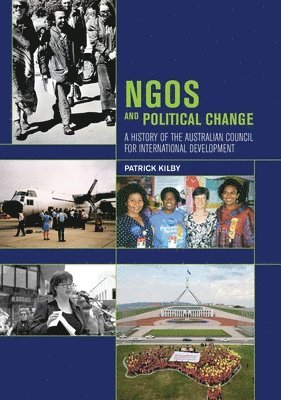
NGOs and Political Change: A History of the Australian Council for International Development
Häftad, Engelska, 2015
329 kr
Skickas inom 5-8 vardagar