Patrick M. Regan – författare
Visar alla böcker från författaren Patrick M. Regan. Handla med fri frakt och snabb leverans.
10 produkter
10 produkter
E-bok
PDF, Engelska, 2018378 kr
Läs direkt efter köp
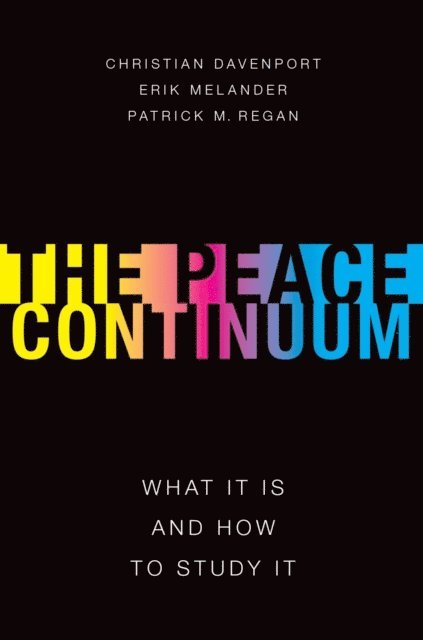
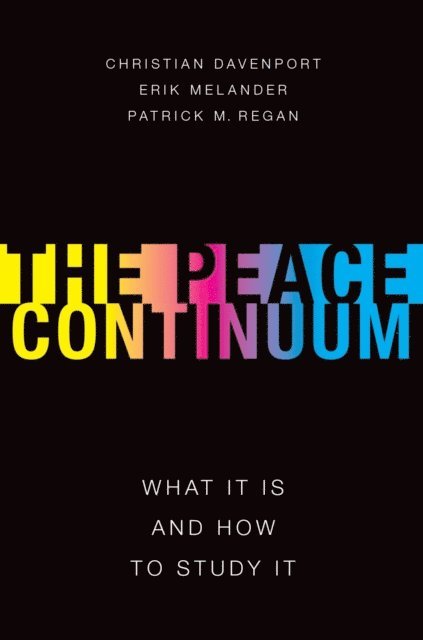
The idea of studying peace has gained considerable traction in the past few years after languishing in the shadows of conflict for decades but how should it be studied? The Peace Continuum offers a parallax view of how we think about peace and the complexities that surround the concept (i.e., the book explores the topic from different positions at the same time). Toward this end, we review existing literature and provide insights into how peace should be conceptualized - particularly as something more interesting than the absence of conflict. We provide an approach that can help scholars overcome what we see as the initial shock that comes with unpacking the ''zero'' in the war-peace model of conflict studies. Additionally, we provide a framework for understanding how peace and conflict have/have not been related to one another in the literature. To reveal how the Peace Continuum could be applied, we put forward three alternative ways that peace could be studied. With this approach, the book is less trying to control the emerging peace research agenda than it is trying to assist in/encourage thinking about the topic that we all have some opinion on but that has yet to be measured and analyzed in a way comparable to political conflict and violence. Indeed, we attempt to help facilitate a veritable explosion of approaches and efforts to study peace.
E-bok
Engelska, 2018378 kr
Läs direkt efter köp
The idea of studying peace has gained considerable traction in the past few years after languishing in the shadows of conflict for decades but how should it be studied? The Peace Continuum offers a parallax view of how we think about peace and the complexities that surround the concept (i.e., the book explores the topic from different positions at the same time). Toward this end, we review existing literature and provide insights into how peace should be conceptualized - particularly as something more interesting than the absence of conflict. We provide an approach that can help scholars overcome what we see as the initial shock that comes with unpacking the ''zero'' in the war-peace model of conflict studies. Additionally, we provide a framework for understanding how peace and conflict have/have not been related to one another in the literature. To reveal how the Peace Continuum could be applied, we put forward three alternative ways that peace could be studied. With this approach, the book is less trying to control the emerging peace research agenda than it is trying to assist in/encourage thinking about the topic that we all have some opinion on but that has yet to be measured and analyzed in a way comparable to political conflict and violence. Indeed, we attempt to help facilitate a veritable explosion of approaches and efforts to study peace.
E-bok
Engelska, 2015795 kr
Läs direkt efter köp
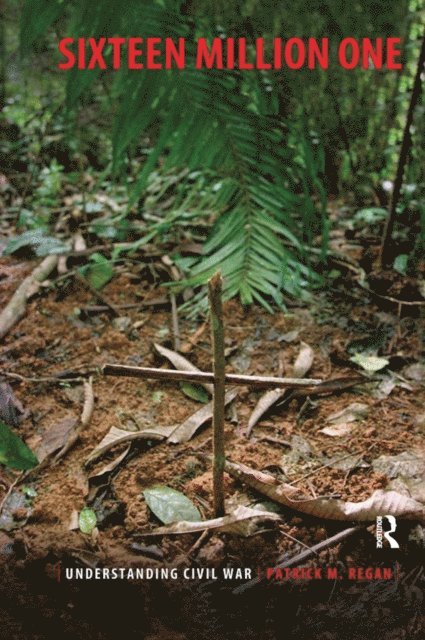
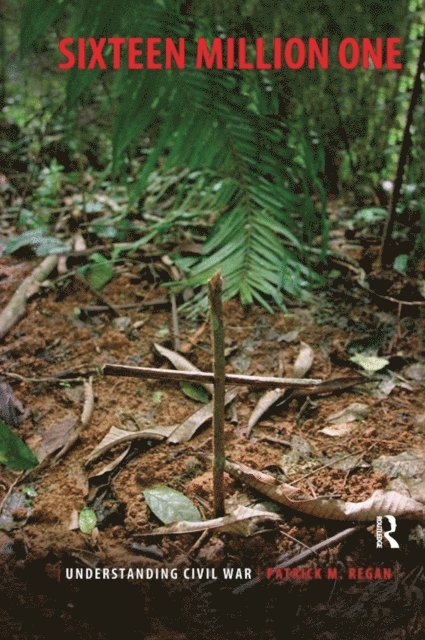
Sixteen million people have died in civil wars in the past 50 years. In view of that, civil wars may be the single most destabilizing force in world politics today. The only greater killer is the suffering that pushes individuals into them. Civil wars create regional and global instability that threatens economic initiatives and political continuity. Preventing civil wars is a challenge that the policy community is ill-equipped to handle. Rwanda is an example-a tragedy that the world did nothing to stop. Iraq and Afghanistan are tragedies the world did much to inflame. This book uses argument, evidence, and intuition born of experience to provide an account of civil wars and the steps we can take to reduce them.
E-bok
PDF, Engelska, 2015795 kr
Läs direkt efter köp
Sixteen million people have died in civil wars in the past 50 years. In view of that, civil wars may be the single most destabilizing force in world politics today. The only greater killer is the suffering that pushes individuals into them. Civil wars create regional and global instability that threatens economic initiatives and political continuity. Preventing civil wars is a challenge that the policy community is ill-equipped to handle. Rwanda is an example-a tragedy that the world did nothing to stop. Iraq and Afghanistan are tragedies the world did much to inflame. This book uses argument, evidence, and intuition born of experience to provide an account of civil wars and the steps we can take to reduce them.
E-bok
Engelska, 2015896 kr
Läs direkt efter köp
In 2009 the US House of Representatives passed legislation requiring reductions in greenhouse gas emissions by 18 percent over the coming decade. Later that year, President Obama went to Copenhagen to sign a treaty requiring reductions by 50 percent over a two-decade period. The President came back with nothing: no firm commitment to reduce emissions and only a vague target to hold global temperature rises to under 2 C. How does a President who has a 75-vote majority in the House and a 19-vote majority in the Senate who has pre-approval for a treaty reducing greenhouse gas production by 18 percent not achieve a treaty with at least the minimum goal of 18 percent reductions by 2020?Others have answered the puzzle by looking at institutional designs or negotiation dynamics. This book articulates a multilevel process that starts with local politics to explain how they can influence international negotiations and why President Obama s efforts in Copenhagen were doomed to fail. Understanding the role of local private interests can help form strategies for overcoming national resistance to climate change legislation and ultimately international agreements that could change the environmentally self-destructive course we are on.
E-bok
PDF, Engelska, 2015896 kr
Läs direkt efter köp
In 2009 the US House of Representatives passed legislation requiring reductions in greenhouse gas emissions by 18 percent over the coming decade. Later that year, President Obama went to Copenhagen to sign a treaty requiring reductions by 50 percent over a two-decade period. The President came back with nothing: no firm commitment to reduce emissions and only a vague target to hold global temperature rises to under 2 C. How does a President who has a 75-vote majority in the House and a 19-vote majority in the Senate who has pre-approval for a treaty reducing greenhouse gas production by 18 percent not achieve a treaty with at least the minimum goal of 18 percent reductions by 2020?Others have answered the puzzle by looking at institutional designs or negotiation dynamics. This book articulates a multilevel process that starts with local politics to explain how they can influence international negotiations and why President Obama s efforts in Copenhagen were doomed to fail. Understanding the role of local private interests can help form strategies for overcoming national resistance to climate change legislation and ultimately international agreements that could change the environmentally self-destructive course we are on.
Inbunden, Engelska, 2008
2 182 kr
Skickas inom 10-15 vardagar
Sixteen million people have died in civil wars in the past 50 years. In view of that, civil wars may be the single most destabilizing force in world politics today. The only greater killer is the suffering that pushes individuals into them. Civil wars create regional and global instability that threatens economic initiatives and political continuity. Preventing civil wars is a challenge that the policy community is ill-equipped to handle. Rwanda is an example-a tragedy that the world did nothing to stop. Iraq and Afghanistan are tragedies the world did much to inflame. This book uses argument, evidence, and intuition born of experience to provide an account of civil wars and the steps we can take to reduce them.
Häftad, Engelska, 2009
695 kr
Skickas inom 10-15 vardagar
Sixteen million people have died in civil wars in the past 50 years. In view of that, civil wars may be the single most destabilizing force in world politics today. The only greater killer is the suffering that pushes individuals into them. Civil wars create regional and global instability that threatens economic initiatives and political continuity. Preventing civil wars is a challenge that the policy community is ill-equipped to handle. Rwanda is an example-a tragedy that the world did nothing to stop. Iraq and Afghanistan are tragedies the world did much to inflame. This book uses argument, evidence, and intuition born of experience to provide an account of civil wars and the steps we can take to reduce them.
Inbunden, Engelska, 2014
2 603 kr
Skickas inom 10-15 vardagar
In 2009 the US House of Representatives passed legislation requiring reductions in greenhouse gas emissions by 18 percent over the coming decade. Later that year, President Obama went to Copenhagen to sign a treaty requiring reductions by 50 percent over a two-decade period. The President came back with nothing: no firm commitment to reduce emissions and only a vague target to hold global temperature rises to under 2 C. How does a President who has a 75-vote majority in the House and a 19-vote majority in the Senate who has pre-approval for a treaty reducing greenhouse gas production by 18 percent not achieve a treaty with at least the minimum goal of 18 percent reductions by 2020?Others have answered the puzzle by looking at institutional designs or negotiation dynamics. This book articulates a multilevel process that starts with local politics to explain how they can influence international negotiations and why President Obama s efforts in Copenhagen were doomed to fail. Understanding the role of local private interests can help form strategies for overcoming national resistance to climate change legislation and ultimately international agreements that could change the environmentally self-destructive course we are on.
Häftad, Engelska, 2015
849 kr
Skickas inom 10-15 vardagar
In 2009 the US House of Representatives passed legislation requiring reductions in greenhouse gas emissions by 18 percent over the coming decade. Later that year, President Obama went to Copenhagen to sign a treaty requiring reductions by 50 percent over a two-decade period. The President came back with nothing: no firm commitment to reduce emissions and only a vague target to hold global temperature rises to under 2 C. How does a President who has a 75-vote majority in the House and a 19-vote majority in the Senate who has pre-approval for a treaty reducing greenhouse gas production by 18 percent not achieve a treaty with at least the minimum goal of 18 percent reductions by 2020?Others have answered the puzzle by looking at institutional designs or negotiation dynamics. This book articulates a multilevel process that starts with local politics to explain how they can influence international negotiations and why President Obama s efforts in Copenhagen were doomed to fail. Understanding the role of local private interests can help form strategies for overcoming national resistance to climate change legislation and ultimately international agreements that could change the environmentally self-destructive course we are on.