Patrick Maynard - Böcker
Visar alla böcker från författaren Patrick Maynard. Handla med fri frakt och snabb leverans.
5 produkter
5 produkter
674 kr
Skickas inom 7-10 vardagar
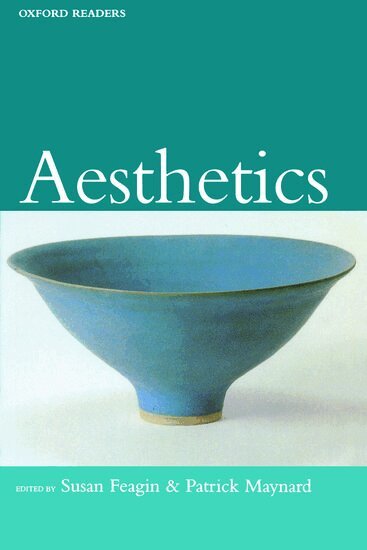
This new Reader offers an important new resource, combining classic accounts of the nature of aesthetics with the latests methods of approaching the subject. With its valuable multicultural approach, not confined to the consideration of fine art, it focuses on questions that examine why art and the aesthetic matter to us and how perceivers participate in and contribute to the experience of appreciating a work of art. Why have people thought it important to separate out a group of objects and call them `art'? Is it inappropriate to think of something as art when its creator would not have considered it in that way? Are the concepts of art and the aesthetic elitist? Can we ever understand an artwork or be objective about it? Including articles ranging from Aristotle and Xie-He to Jun'ichiro Tanizaki, Michael Baxandall and Susan Sontag, this Reader is unique in providing both Western and non-Western responses to aesthetics.
701 kr
Skickas inom 10-15 vardagar
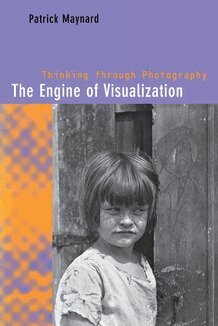
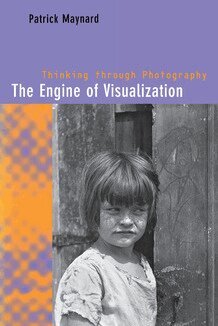
"An extremely fascinating study, packed with insights and illumination and astute observation. It is first-rate philosophy—clearheaded, imaginative, sophisticated, and resourceful. And in its historical and technological dimensions, it connects with the 'real world' in ways that are rare in philosophical studies."—Kendall Walton, University of Michigan"For Patrick Maynard photography is in the first instance a technology for marking surfaces, and from this insight flows the most original sustained analysis and argument yet produced in the history of thinking about the camera and its work. At once analytical and historical, scientific and aesthetic, as lucid and witty as it is learned, The Engine of Visualization spells out the simplest general principles necessary for a clear understanding of what photography—also technology, image, and art—is and does. This is a signal achievement, and a simply lovely book."—Alan Trachtenberg, Yale UniversityIn the first philosophical book wholly about photography, Patrick Maynard dispels some basic, persistent confusions by treating photography as a technology—a way to enhance and filter human power. Once photography is understood as a kind of technology, Maynard argues, insights about technology may be applied to provide the general perspective on photography that has been missing.
1 518 kr
Skickas inom 10-15 vardagar
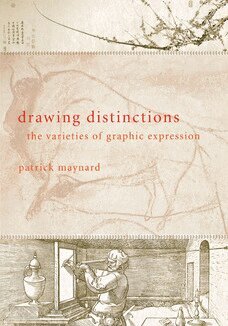
"If our procedure is to work steadily in the direction of drawing as fine art, rather than (as we so often find) beginning from examples of such art, where shall we begin? One attractive possibility is to begin at the beginning—not the beginning in prehistory, which is already wonderful art, but with our personal beginnings as children. From there it will be the ambitious project of this book to investigate 'the course of drawing,' from the first marks children make to the greatest graphic arts of different cultures."—from the IntroductionPatrick Maynard surveys the rich and varied practices of drawing, from the earliest markings on cave walls to the complex technical schematics that make the modern world possible, from cartoons and the first efforts of preschoolers to the works of skilled draftspeople and the greatest artists, East and West.Despite, or perhaps because of, its ubiquity, drawing as such has provoked remarkably little philosophical reflection. Nonphilosophical writing on the topic tends to be divided between specialties such as art history and mechanics. In this engagingly written and well-illustrated book, Maynard reveals the interconnections and developments that unite this fundamental autonomous human activity in all its diversity. Informed by close discussion of work in art history, art criticism, cognitive and developmental psychology, and aesthetics, Drawing Distinctions presents a theoretically sophisticated yet approachable argument that will improve comprehension and appreciation of drawing in its many forms, uses, and meanings.
567 kr
Skickas inom 10-15 vardagar
"If our procedure is to work steadily in the direction of drawing as fine art, rather than (as we so often find) beginning from examples of such art, where shall we begin? One attractive possibility is to begin at the beginning—not the beginning in prehistory, which is already wonderful art, but with our personal beginnings as children. From there it will be the ambitious project of this book to investigate 'the course of drawing,' from the first marks children make to the greatest graphic arts of different cultures."—from the IntroductionPatrick Maynard surveys the rich and varied practices of drawing, from the earliest markings on cave walls to the complex technical schematics that make the modern world possible, from cartoons and the first efforts of preschoolers to the works of skilled draftspeople and the greatest artists, East and West.Despite, or perhaps because of, its ubiquity, drawing as such has provoked remarkably little philosophical reflection. Nonphilosophical writing on the topic tends to be divided between specialties such as art history and mechanics. In this engagingly written and well-illustrated book, Maynard reveals the interconnections and developments that unite this fundamental autonomous human activity in all its diversity. Informed by close discussion of work in art history, art criticism, cognitive and developmental psychology, and aesthetics, Drawing Distinctions presents a theoretically sophisticated yet approachable argument that will improve comprehension and appreciation of drawing in its many forms, uses, and meanings.
487 kr
Skickas inom 10-15 vardagar
"An extremely fascinating study, packed with insights and illumination and astute observation. It is first-rate philosophy—clearheaded, imaginative, sophisticated, and resourceful. And in its historical and technological dimensions, it connects with the 'real world' in ways that are rare in philosophical studies."—Kendall Walton, University of Michigan"For Patrick Maynard photography is in the first instance a technology for marking surfaces, and from this insight flows the most original sustained analysis and argument yet produced in the history of thinking about the camera and its work. At once analytical and historical, scientific and aesthetic, as lucid and witty as it is learned, The Engine of Visualization spells out the simplest general principles necessary for a clear understanding of what photography—also technology, image, and art—is and does. This is a signal achievement, and a simply lovely book."—Alan Trachtenberg, Yale UniversityIn the first philosophical book wholly about photography, Patrick Maynard dispels some basic, persistent confusions by treating photography as a technology—a way to enhance and filter human power. Once photography is understood as a kind of technology, Maynard argues, insights about technology may be applied to provide the general perspective on photography that has been missing.