Patrick T. K. Woo - Böcker
Visar alla böcker från författaren Patrick T. K. Woo. Handla med fri frakt och snabb leverans.
9 produkter
9 produkter
3 007 kr
Skickas inom 7-10 vardagar
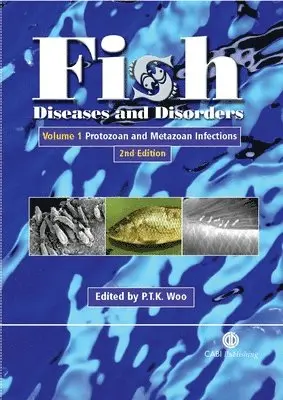
Fish is the principal source of protein for people in many parts of the world, particularly in developing countries. While most fish are caught from nature, aquaculture or fish farming is now making a significant contribution to total fish production. More intensive conditions of aquaculture often result in a higher incidence of fish diseases and disorders. As in the first edition, the focus of this second edition is on protozoan and metazoan parasites that cause disease in fish. Significant changes to this second edition include the addition of 3 new chapters and 4 of the original chapters have new authors.
1 782 kr
Skickas inom 7-10 vardagar
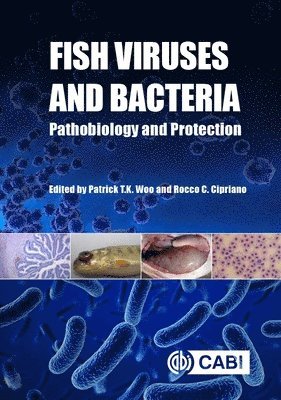
Taking a disease-based approach, Fish Viruses and Bacteria: Pathobiology and Protection focuses on the pathobiology of and protective strategies against the most common, major microbial pathogens of economically important marine and freshwater fish. The book covers well-studied, notifiable piscine viruses and bacteria, including new and emerging diseases which can become huge threats to local fish populations in new geographical regions if transported there via infected fish or eggs. A concise but thorough reference work, this book: - Covers key viral and bacterial diseases of notable fish species; - Reviews major well-established piscine pathogens as well as new, emerging and notifiable diseases; and - Contains the most up-to-date research contributed by a team of over fifty world experts. An invaluable bench book for fish health consultants, veterinarians and all those wanting instant access to information, this book is also a useful textbook for students specializing in fish health and research scientists initiating fish disease research programmes.
1 523 kr
Skickas inom 7-10 vardagar
Freshwater, brackish and marine ecosystems are particularly impacted by the effects of climate change and global warming. A global rise in water temperature and acidification of the aquatic environment will continue even if we can significantly reduce the current output of greenhouse gasses. Increases in water temperature will affect the life cycle, physiology, behaviours, distribution and community structure of aquatic organisms, especially fish. This important new text on climate change, and its effects on selected non-infectious disorders of fish, contains contributions by internationally recognized experts who have contributed significantly to our knowledge in this area. Comprehensive and thought provoking, the text details abiotic and biotic environmental changes associated with climate change and their effects on fish in tropical, subtropical and temperate waters. It proceeds to cover in detail developmental, physiological and metabolic disorders of fish. Outlining both current and expected changes in aquaculture systems due to climate change, plus suggestions for further studies, this contemporary text is key reading for biologists, aquatic ecologists, fish health consultants, veterinarians, policy makers and all those involved in fish health and the environment.
2 800 kr
Skickas inom 7-10 vardagar
Climate change with global warming is not disputed by the vast majority of scientists and the aquatic system is most affected. A global rise in water temperature and acidification of the aquatic environment will continue even if we can significantly reduce the current output of the two most important greenhouse gasses (carbon dioxide and methane). These and other environmental changes will affect fish health which includes infectious pathogens. This important new text is the second volume on climate change and fish health. It covers changes to the freshwater ecosystem and their current and expected effects on selected infectious diseases of fish. The book represents contributions by over 50 experts from 18 countries. Comprehensive and thought-provoking, the book details abiotic and biotic environmental changes in temperate and tropical freshwater ecosystems, sequestrations of atmospheric carbon dioxide and effects on infectious diseases (12 microbial and 10 parasitic) in economically important fish in tropical, subtropical and temperate waters. The text is key reading for fish disease scientists, aquatic ecologists, fish health consultants, veterinarians, policy makers and all who are interested in fish health and the environment.
2 142 kr
Skickas
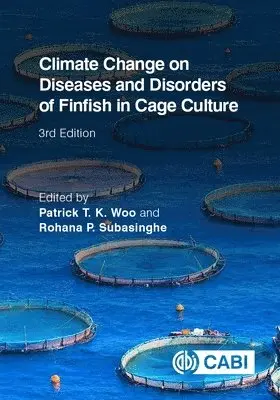
This, the third volume in the series Climate Change and Fish Health, describes how finfish in cage culture and their pathogens are directly or indirectly affected by ongoing changes to the environment. These changes, which include a global rise in water temperature with increased acidification and reduction in dissolved oxygen, will continue even if we can significantly reduce the current output of anthropogenic carbon dioxide and methane. The third edition of Diseases and Disorders of Finfish in Cage Culture has been renamed to be included in the series, and is completely updated and revised. It has: · Nine updated chapters with new expert contributions from around the world · A focus on the effects that climate change has, and will have, on finfish and their pathogens · New material includes chapters on algal blooms, biosecurity and fish welfare · An emphasis on practical recommendations and changes that can be made to improve fish health This book is key reading for all involved in cage culture of finfish, research scientists, ecologists, fish health consultants, veterinarians, policy makers and all who are interested in fish health and changes to the environment. It is a good reference text for 'workshops on fish health' and academic courses such as aquaculture and fish health. The other volumes in the Climate Change and Fish Health series are: Climate change and non-infectious fish disorders, Woo and Iwama (2020) Climate change and infectious fish diseases, Woo, Leong and Buchmann (2020).
2 450 kr
Kommande
With fish considered an important component of a well-balanced human diet in many industrialized nations and the primary source of animal protein in many less-developed countries, it is increasingly necessary to ensure the health of those aquatic species on which our food security relies. Focusing on protozoan and metazoan parasites that cause disease and mortality in economically important captive and wild fish populations, this second edition of Fish Parasites: Pathobiology and Protection provides an update on the latest research in the field of fish parasitology. It concentrates on parasites that have a financial impact on the aquaculture industry, those that have been introduced to new regions through infected fish, those that are pathogenic to groups of fish and detrimental to production, those that are highly adaptable and not host-specific with worldwide distributions and those that may serve as disease models for studies on other pathogens. For each parasite, this book provides: An introduction to the species, including description, life cycle, hosts, geographical distribution and impact on fish production. A pathobiology, such as diagnosis, clinical signs, lesions, disease mechanism, pathophysiology, and factors that enhance or reduce parasite multiplication. Protection and control strategies, including vaccination and protective mechanisms, chemotherapy and immunochemotherapy, environmental modification and vector control. Synthesizing more than a decade of further research and discovery since the publication of the first book, this new edition provides a vital resource for research scientists, fish health consultants and managers of laboratories working in the aquaculture sector. It is also valuable for fish health specialists and graduate students working on the diseases of aquatic organisms and anyone interested in aquaculture, fisheries or parasitology.
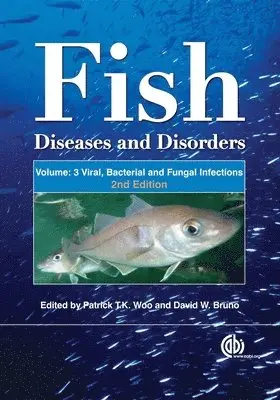
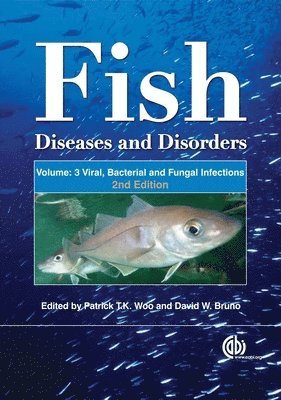
Fish Diseases and Disorders, Volume 3: Viral, Bacterial and Fungal Infections
Inbunden, Engelska, 2011
3 090 kr
Skickas inom 7-10 vardagar
This third and final volume in the acclaimed Fish Diseases and Disorders trilogy addresses infectious diseases of finfish and shellfish caused by viruses, bacteria and fungi. Topics covered include infectious pancreatic necrosis virus, infectious hematopoictic necrosis virus, viral diseases of cold and warm-water fish, rickettsial and chlamydial infections, furunculosis, motile aeromonads, vibriosis, flavobacterial diseases and shellfish diseases. Written by experts in each discipline and updated throughout to reflect new developments in the field, including new chapters on alphaviruses, oncogenic viruses and genomics and proteomics, this is a must-have reference for fish health specialists and veterinarians, microbiologists, zoologists and researchers and students in aquaculture.
5 608 kr
Tillfälligt slut
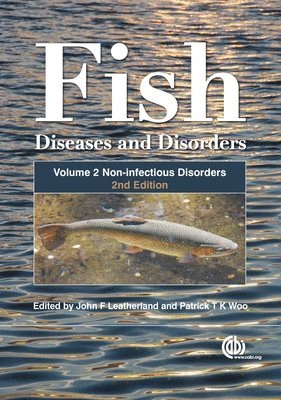
Fish Diseases and Disorders, 2nd Edition comprises fully updated information essential for fish health specialists, veterinarians and zoologists. Volume 1 (2006) presents protozoan and metazoan infections and molecular approaches to parasitology. Volume 2 (2010) covers non-infectious disorders, including a new chapter on the relationship between welfare issues and disorders associated with intensive fish culture. Volume 3 (2011) provides up to date information on viral, bacterial and fungal infections, and new chapters on alphaviruses, oncogenic viruses and genomics and proteomics. All three updated volumes of the acclaimed Fish Diseases and Disorders are now available to purchase together at a special price saving 20% on the individual volume prices.
1 728 kr
Skickas inom 11-20 vardagar
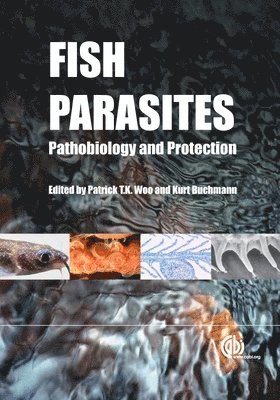
Focusing on pathobiology and protective strategies against protozoan and metazoan parasites of fish, this book reviews the latest research on important parasites: those that cause financial hardships to the aquaculture industry, have been introduced to new geographical regions through transportation of infected fish, are pathogenic to groups of finfish and detrimental to production, are highly adaptable and not host-specific with worldwide distributions, and that may serve as disease models for studies on other pathogens. It also highlights gaps in the knowledge to help direct future research.