Paul A. Hartog – författare
Visar alla böcker från författaren Paul A. Hartog. Handla med fri frakt och snabb leverans.
8 produkter
8 produkter
Häftad, Engelska, 2015
349 kr
Skickas inom 5-8 vardagar
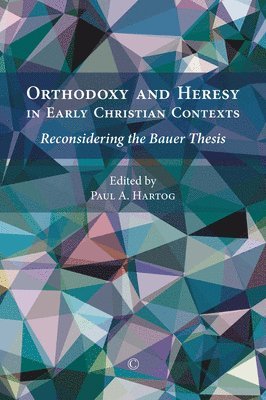
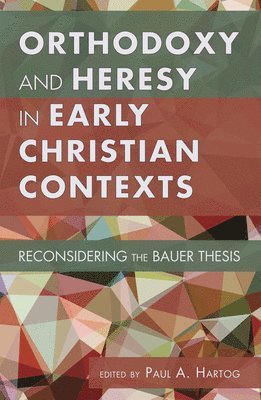
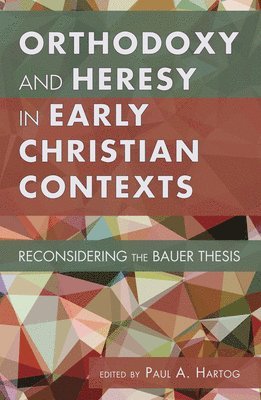
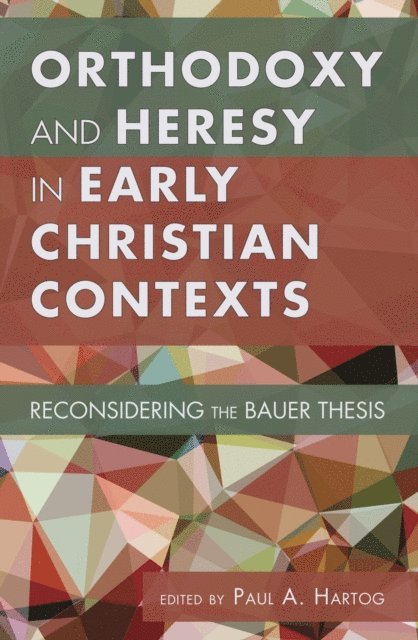
Eighty years ago, Walter Bauer promulgated a bold and provocative thesis about early Christianity. He argued that many forms of Christianity started the race, but one competitor pushed aside the others, until this powerful 'orthodox' version won the day. The victors rewrote history, marginalizing all other perspectives and silencing their voices, even though the alternatives possessed equal right to the title of normative Christianity. Bauer's influence still casts a long shadow on early Christian scholarship. Were heretical movements the original forms of Christianity? Did the heretics outnumber the orthodox? Did orthodox heresiologists accurately portray their opponents? And more fundamentally, how can one make any objective distinction between 'heresy' and 'orthodoxy'? Is such labeling merely the product of socially situated power? Did numerous, valid forms of Christianity exist without any validating norms of Christianity? This collection of essays, each written by a relevant authority, tackles such questions with scholarly acumen and careful attention to historical, cultural-geographical, and socio-rhetorical detail. Although recognizing the importance of Bauer's critical insights, innovative methodologies, and fruitful suggestions, the contributors expose numerous claims of the Bauer thesis (in both original and recent manifestations) that fall short of the historical evidence.
Inbunden, Engelska, 2015
522 kr
Skickas inom 5-8 vardagar
Del 9 - Evangelical Theological Society Monograph
Contemporary Church and the Early Church
Case Studies in Ressourcement
Inbunden, Engelska, 2010
500 kr
Skickas inom 5-8 vardagar
E-bok
Engelska, 2010503 kr
Läs direkt efter köp
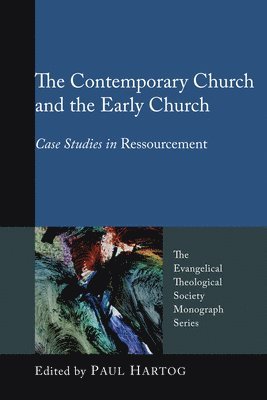
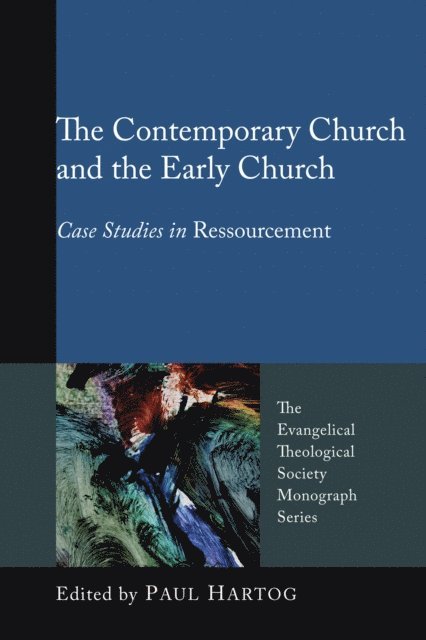
As evangelicals face future challenges, many are turning back to the ancient church for inspiration. But these ancient-future approaches remain diverse and sometimes even at odds with one another. This volume demonstrates and analyzes the complexity of such contemporary church-early church engagements. Six scholars share diverse insights from the Patristic period, including lessons on evangelism and discipleship, community formation and maintenance, use of the rule of faith, the preaching of social ethics, responses to cultural opposition, and Christological development. The volume closes with two critical responses, from confessional Lutheran and Baptist perspectives. These collected essays will remind contemporary readers of the importance of a reflective and responsible ressourcement of Patristic wisdom.
Häftad, Engelska, 2021
274 kr
Skickas inom 5-8 vardagar
Inbunden, Engelska, 2021
409 kr
Skickas inom 5-8 vardagar
Häftad, Engelska, 2015
364 kr
Skickas inom 5-8 vardagar
572 kr
Läs direkt efter köp
Eighty years ago, Walter Bauer promulgated a bold and provocative thesis about early Christianity. He argued that many forms of Christianity started the race, but one competitor pushed aside the others, until this powerful "orthodox" version won the day. The victors re-wrote history, marginalizing all other perspectives and silencing their voices, even though the alternatives possessed equal right to the title of normative Christianity. Bauer''s influence still casts a long shadow on early Christian scholarship. Were heretical movements the original forms of Christianity? Did the heretics outnumber the orthodox? Did orthodox heresiologists accurately portray their opponents? And more fundamentally, how can one make any objective distinction between "heresy" and "orthodoxy"? Is such labeling merely the product of socially situated power? Did numerous, valid forms of Christianity exist without any validating norms of Christianity? This collection of essays, each written by a relevant authority, tackles such questions with scholarly acumen and careful attention to historical, cultural-geographical, and socio-rhetorical detail. Although recognizing the importance of Bauer''s critical insights, innovative methodologies, and fruitful suggestions, the contributors expose numerous claims of the Bauer thesis (in both original and recent manifestations) that fall short of the historical evidence.