Paul A. Kelly – författare
Visar alla böcker från författaren Paul A. Kelly. Handla med fri frakt och snabb leverans.
9 produkter
9 produkter
Häftad, Engelska, 1990
1 091 kr
Skickas inom 10-15 vardagar
Endocrinology is a field in which enormous advances have been made in the last decade; the rate of discovery of new hormones, hormone-like molecules, receptors, and mechanisms of action is continually advancing. The development of techniques in immunology and molecular biology has led to the possibility of describing in detail the gene structure of many of the compounds involved in hormonal systems. Remarkable homology has been shown between oncogene products and various components of the endocrine network, leading to the asser tion that deregulation of hormonal function is involved in the generation and/or development of cancer. We now know that the central nervous system is both a target and a production site of many hormonal products, and that hormones, neurotransmitters, growth factors and immunopeptides all act through similar mechanisms. The only second messenger known ten years ago was cAMP; today calcium, derivatives of membrane phospholipids, and protein kinases are also known to be mediators of hormone action. The very concept of hormonal systems has been expanded to include not only endocrine secretions but also para- and autohormones and their mechanisms of action; an understanding of their functions will be central to the immediate future of medicine. The discovery of hormonal molecules and endocrine interactions and the subsequent understanding of hormone related pathophysiology has led to the development of new strategies in medical treatment such as fertility control and the management of diabetes.
Inbunden, Engelska, 2002
2 223 kr
Skickas inom 10-15 vardagar
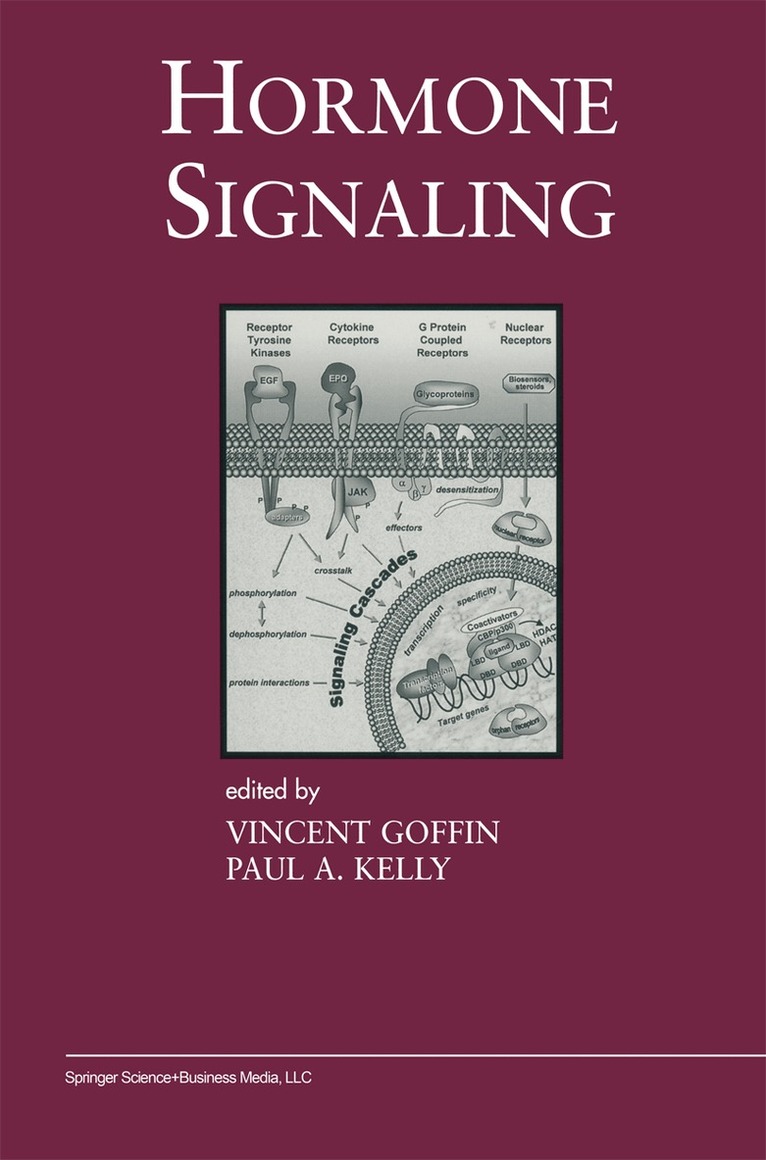
Multicellular organisms require a means of intracellular communication to organize and develop the complex body plan that occurs during embryogenesis and then for cell and organ systems to access and respond to an ever changing environmental milieu. Mediators of this constant exchange of information are growth factors, neurotransmmitters, peptide and protein hormones which bind to cell surface receptors and transduce their signals from the extracellular space to the intracellular compartment. Via multiple signaling pathways, receptors of this general class affect growth, development and differentiation. Smaller hydrophobic signaling molecules, such as steroids and non-steroid hormones, vitamins and metabolic mediators interact with a large family of nuclear receptors. These receptors function as transcription factors affecting gene expression, to regulate the multiple aspects of animal and human physiology, including development, reproduction and homeostasis.The aim of this book is to cover various aspects of intracellular signaling involving hormone receptors.
Inbunden, Engelska, 2026
385 kr
Skickas inom 5-8 vardagar
Häftad, Engelska, 2026
216 kr
Skickas inom 5-8 vardagar
Häftad, Engelska, 2011
2 241 kr
Skickas inom 10-15 vardagar
Multicellular organisms require a means of intracellular communication to organize and develop the complex body plan that occurs during embryogenesis and then for cell and organ systems to access and respond to an ever changing environmental milieu. Mediators of this constant exchange of information are growth factors, neurotransmmitters, peptide and protein hormones which bind to cell surface receptors and transduce their signals from the extracellular space to the intracellular compartment. Via multiple signaling pathways, receptors of this general class affect growth, development and differentiation. Smaller hydrophobic signaling molecules, such as steroids and non-steroid hormones, vitamins and metabolic mediators interact with a large family of nuclear receptors. These receptors function as transcription factors affecting gene expression, to regulate the multiple aspects of animal and human physiology, including development, reproduction and homeostasis.The aim of this book is to cover various aspects of intracellular signaling involving hormone receptors.
E-bok
PDF, Engelska, 20132 822 kr
Läs direkt efter köp
Multicellular organisms require a means of intracellular communication to organize and develop the complex body plan that occurs during embryogenesis and then for cell and organ systems to access and respond to an ever changing environmental milieu. Mediators of this constant exchange of information are growth factors, neurotransmmitters, peptide and protein hormones which bind to cell surface receptors and transduce their signals from the extracellular space to the intracellular compartment. Via multiple signaling pathways, receptors of this general class affect growth, development and differentiation. Smaller hydrophobic signaling molecules, such as steroids and non-steroid hormones, vitamins and metabolic mediators interact with a large family of nuclear receptors. These receptors function as transcription factors affecting gene expression, to regulate the multiple aspects of animal and human physiology, including development, reproduction and homeostasis.The aim of this book is to cover various aspects of intracellular signaling involving hormone receptors.
Inbunden, Engelska, 2005
1 634 kr
Skickas inom 10-15 vardagar
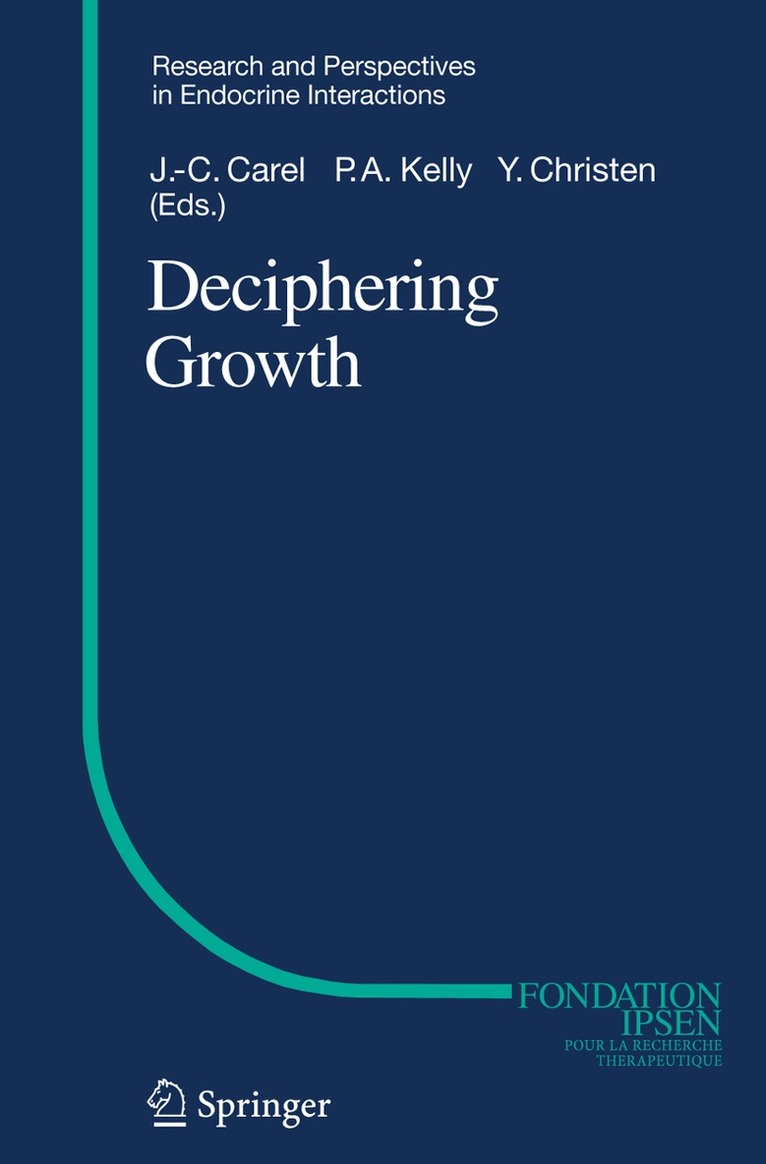
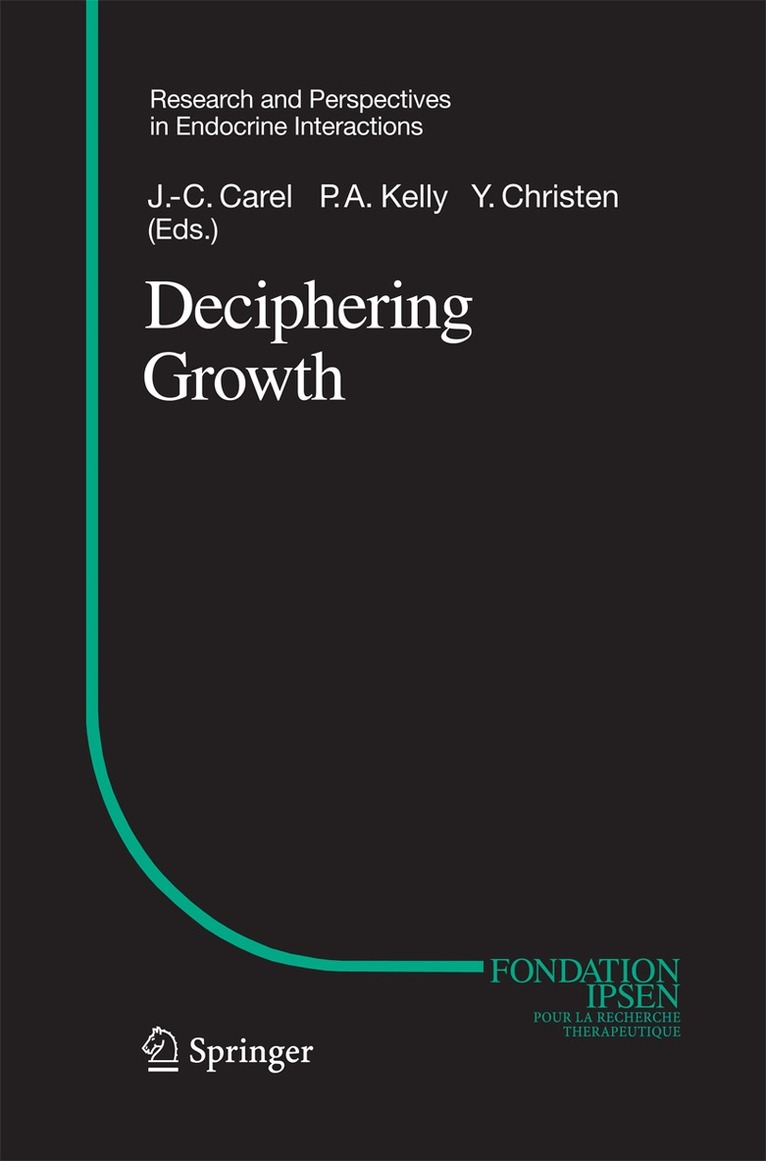
Growth is a complex process that is essential to life. Not only does size play an important role in the process of cellular proliferation, but body size is also a critical factor in determining which organisms live longer. Evolution has been characterised by a dramatic increase in an organism’s body size, which is not only limited to the size of the brain.
E-bok
PDF, Engelska, 20062 036 kr
Läs direkt efter köp
Growth is a complex process that is essential to life. Not only does size play an important role in the process of cellular proliferation, but body size is also a critical factor in determining which organisms live longer. Evolution has been characterised by a dramatic increase in an organism’s body size, which is not only limited to the size of the brain.
Häftad, Engelska, 2014
1 682 kr
Skickas inom 10-15 vardagar
Growth is a complex process that is essential to life. Not only does size play an important role in the process of cellular proliferation, but body size is also a critical factor in determining which organisms live longer. Evolution has been characterised by a dramatic increase in an organism’s body size, which is not only limited to the size of the brain.