Paul Beckerman – författare
Visar alla böcker från författaren Paul Beckerman. Handla med fri frakt och snabb leverans.
5 produkter
Economics of High Inflation
Inbunden, 1991
1128 kr
Lägg i varukorg
This book describes the complex of economic processes which sustains inflationary pressure in nations with severe inflation problems. Paul Beckerman uses an innovative approach to study the strategies inhabitants of economies with lengthy inflation experience use to maintain their purchasing power …
Crisis and Dollarization in Ecuador
Stability, Growth, and Social Equity
Av Paul Beckerman, Andres Solimano
Häftad, 2002
297 kr
Lägg i varukorg
Early in 2000, Ecuador, confronted with a serious economic and governance crises, adopted the U.S. dollar as its national currency. The economic situation was dire with high inflation, government intervention in the banking system including freezing of deposits to prevent further flight from the …
Economics of High Inflation
E-bok, 1991
1550 kr
Lägg i varukorg
This book describes the complex of economic processes which sustains inflationary pressure in nations with severe inflation problems. Paul Beckerman uses an innovative approach to study the strategies inhabitants of economies with lengthy inflation experience use to maintain their purchasing power …
Economics of High Inflation
Häftad, 1992
1095 kr
Lägg i varukorg
This book describes the complex of economic processes which sustains inflationary pressure in nations with severe inflation problems. Paul Beckerman uses an innovative approach to study the strategies inhabitants of economies with lengthy inflation experience use to maintain their purchasing power …
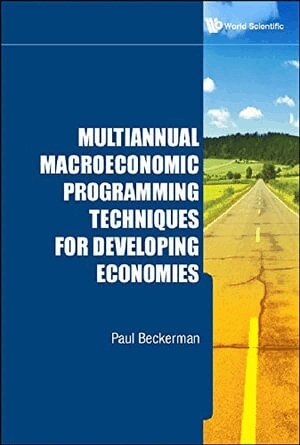
MULTIANNUAL MACROECONOMIC PROGRAMMING TECHNIQUES FOR DEVELOPING ECONOMIES
Inbunden, 2010
2281 kr
Lägg i varukorg
This book describes practical techniques to formulate multiannual macroeconomic projections for developing economies. The approach is broadly similar to that of well-known financial-programming “models”, but some of the material, including solution procedures for the external and fiscal projections …