Paul Cerrato – författare
441 kr
Skickas inom 10-15 vardagar
Protecting Patient Information: A Decision-Maker's Guide to Risk, Prevention, and Damage Control provides the concrete steps needed to tighten the information security of any healthcare IT system and reduce the risk of exposing patient health information (PHI) to the public. The book offers a systematic, 3-pronged approach for addressing the IT security deficits present in healthcare organizations of all sizes.
Healthcare decision-makers are shown how to conduct an in-depth analysis of their organization's information risk level. After this assessment is complete, the book offers specific measures for lowering the risk of a data breach, taking into account federal and state regulations governing the use of patient data. Finally, the book outlines the steps necessary when an organization experiences a data breach, even when it has taken all the right precautions.
Written for physicians, nurses, healthcare executives, and business associates who need to safeguard patient health information Shows how to put in place the information security measures needed to reduce the threat of data breach Teaches physicians that run small practices how to protect their patient's data Demonstrates to decision-makers of large and small healthcare organizations the urgency of investing in cybersecurity533 kr
Läs direkt efter köp
911 kr
Skickas inom 10-15 vardagar
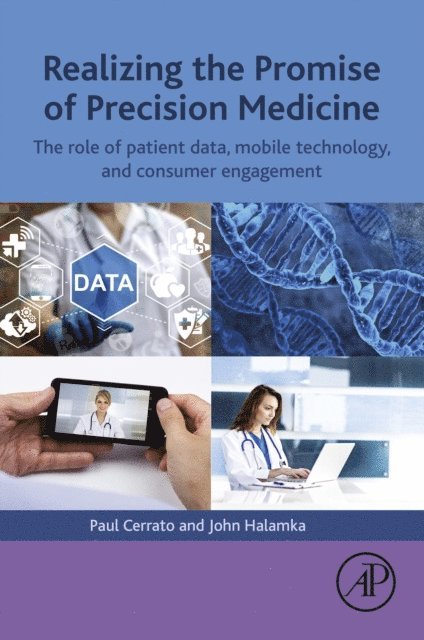
Realizing the Promise of Precision Medicine: The Role of Patient Data, Mobile Technology, and Consumer Engagement explains the potential of personalized medicine and the value of those approaches in making that potential a reality. The book helps transform one-size-fits-all healthcare into a system that focuses on individual needs and the unique needs of each family member, discussing topics such as U.S. sponsored precision medicine initiative, genomics, the role of electronic health records and mobile medicine, patient engagement and empowerment, health information exchange and patient data protection.
In addition, the book discusses the barriers and limitations of precision medicine and how to overcome them. Readers will find valuable insights into how big data, patient engagement, mobile technology, and genomics help individualize medical care and offer a pathway to help detect many undiscovered causes of diseases.
Provides drawings and flow charts to help readers visualize the breadth and depth of precision medicine Includes sidebars with more details on specific topics for a complementary, deeper understanding of the main text Uses case studies to turn abstract concepts into flesh and blood examples of how personalized medicine benefits patients813 kr
Läs direkt efter köp
1 221 kr
Skickas inom 10-15 vardagar
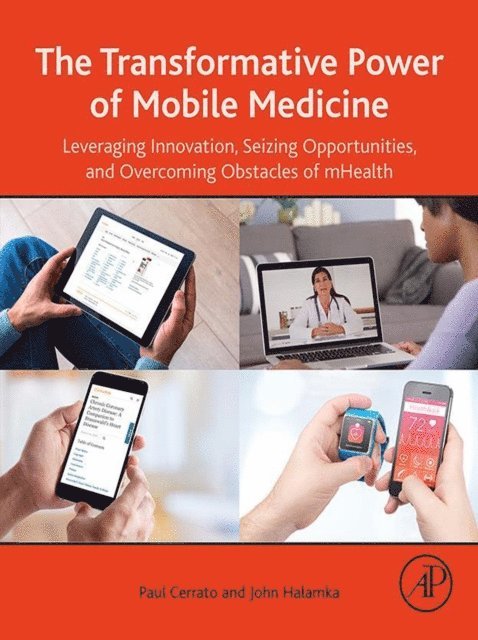
The Transformative Power of Mobile Medicine: Leveraging Innovation, Seizing Opportunities, and Overcoming Obstacles of mHealth addresses the rapid advances taking place in mHealth and their impact on clinicians and patients. It provides guidance on reliable mobile health apps that are based on sound scientific evidence, while also offering advice on how to stay clear of junk science. The book explores the latest developments, including the value of blockchain, the emerging growth of remote sensors in chronic patient care, the potential use of Amazon Alexa and Google Assistant as patient bedside assistants, the use of Amazon's IoT button, and much more.
This book enables physicians and nurses to gain a deep understanding of the strengths and weaknesses of mobile health and helps them choose evidence-based mobile medicine tools to improve patient care.
Provides clinicians and technologists with an update on the latest mobile health initiatives and tools, including the work done at Beth Israel Deaconess Medical Center/Harvard Medical School Encompasses case studies with real-world examples to turn abstract concepts into flesh and blood examples of how mHealth benefits the public Presents drawings, graphics and flow charts to help readers visualize the functionality and value of mobile medicine1 713 kr
Läs direkt efter köp
873 kr
Skickas inom 10-15 vardagar
613 kr
Skickas inom 10-15 vardagar
802 kr
Läs direkt efter köp
This book takes an in-depth look at the emerging technologies that are transforming the way clinicians manage patients, while at the same time emphasizing that the best practitioners use both artificial and human intelligence to make decisions.
AI and machine learning are explored at length, with plain clinical English explanations of convolutional neural networks, back propagation, and digital image analysis. Real-world examples of how these tools are being employed are also discussed, including their value in diagnosing diabetic retinopathy, melanoma, breast cancer, cancer metastasis, and colorectal cancer, as well as in managing severe sepsis.
With all the enthusiasm about AI and machine learning, it was also necessary to outline some of criticisms, obstacles, and limitations of these new tools. Among the criticisms discussed: the relative lack of hard scientific evidence supporting some of the latest algorithms and the so-called black box problem. A chapter on data analytics takes a deep dive into new ways to conduct subgroup analysis and how it’s forcing healthcare executives to rethink the way they apply the results of large clinical trials to everyday medical practice. This re-evaluation is slowly affecting the way diabetes, heart disease, hypertension, and cancer are treated. The research discussed also suggests that data analytics will impact emergency medicine, medication management, and healthcare costs.
An examination of the diagnostic reasoning process itself looks at how diagnostic errors are measured, what technological and cognitive errors are to blame, and what solutions are most likely to improve the process. It explores Type 1 and Type 2 reasoning methods; cognitive mistakes like availability bias, affective bias, and anchoring; and potential solutions such as the Human Diagnosis Project. Finally, the book explores the role of systems biology and precision medicine in clinical decision support and provides several case studies of how next generation AI is transforming patient care.
802 kr
Läs direkt efter köp
This book takes an in-depth look at the emerging technologies that are transforming the way clinicians manage patients, while at the same time emphasizing that the best practitioners use both artificial and human intelligence to make decisions.
AI and machine learning are explored at length, with plain clinical English explanations of convolutional neural networks, back propagation, and digital image analysis. Real-world examples of how these tools are being employed are also discussed, including their value in diagnosing diabetic retinopathy, melanoma, breast cancer, cancer metastasis, and colorectal cancer, as well as in managing severe sepsis.
With all the enthusiasm about AI and machine learning, it was also necessary to outline some of criticisms, obstacles, and limitations of these new tools. Among the criticisms discussed: the relative lack of hard scientific evidence supporting some of the latest algorithms and the so-called black box problem. A chapter on data analytics takes a deep dive into new ways to conduct subgroup analysis and how it’s forcing healthcare executives to rethink the way they apply the results of large clinical trials to everyday medical practice. This re-evaluation is slowly affecting the way diabetes, heart disease, hypertension, and cancer are treated. The research discussed also suggests that data analytics will impact emergency medicine, medication management, and healthcare costs.
An examination of the diagnostic reasoning process itself looks at how diagnostic errors are measured, what technological and cognitive errors are to blame, and what solutions are most likely to improve the process. It explores Type 1 and Type 2 reasoning methods; cognitive mistakes like availability bias, affective bias, and anchoring; and potential solutions such as the Human Diagnosis Project. Finally, the book explores the role of systems biology and precision medicine in clinical decision support and provides several case studies of how next generation AI is transforming patient care.
702 kr
Läs direkt efter köp
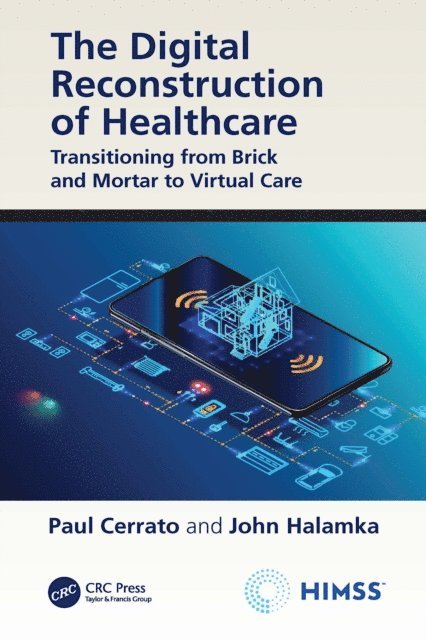
The complex challenges facing healthcare require innovative solutions that can make patient care more effective, easily available, and affordable. One such solution is the digital reconstruction of medicine that transitions much of patient care from hospitals, clinics, and offices to a variety of virtual settings. This reconstruction involves telemedicine, hospital-at-home services, mobile apps, remote sensing devices, clinical data analytics, and other cutting-edge technologies. The Digital Reconstruction of Healthcare: Transitioning from Brick and Mortar to Virtual Care takes a deep dive into these tools and how they can transform medicine to meet the unique needs of patients across the globe.
This book enables readers to peer into the very near future and prepare them for the opportunities afforded by the digital shift in healthcare. It is also a wake-up call to readers who are less than enthusiastic about these digital tools and helps them to realize the cost of ignoring these tools. It is written for a wide range of medical professionals including:
Physicians, nurses, and entrepreneurs who want to understand how to use or develop digital products and servicesIT managers who need to fold these tools into existing computer networks at hospitals, clinics, and medical offices
Healthcare executives who decide how to invest in these platforms and products
Insurers who need to stay current on the latest trends and the evidence to support their cost effectiveness
Filled with insights from international experts, this book also features Dr. John Halamka’s lessons learned from years of international consulting with government officials on digital health. It also taps into senior research analyst Paul Cerrato’s expertise in AI, data analytics, and machine learning. Combining these lessons learned with an in-depth analysis of clinical informatics research, this book aims to separate hyped AI "solutions" from evidence-based digital tools. Together, these two pillars support the contention that these technologies can, in fact, help solve many of the seemingly intractable problems facing healthcare providers and patients.
702 kr
Läs direkt efter köp
The complex challenges facing healthcare require innovative solutions that can make patient care more effective, easily available, and affordable. One such solution is the digital reconstruction of medicine that transitions much of patient care from hospitals, clinics, and offices to a variety of virtual settings. This reconstruction involves telemedicine, hospital-at-home services, mobile apps, remote sensing devices, clinical data analytics, and other cutting-edge technologies. The Digital Reconstruction of Healthcare: Transitioning from Brick and Mortar to Virtual Care takes a deep dive into these tools and how they can transform medicine to meet the unique needs of patients across the globe.
This book enables readers to peer into the very near future and prepare them for the opportunities afforded by the digital shift in healthcare. It is also a wake-up call to readers who are less than enthusiastic about these digital tools and helps them to realize the cost of ignoring these tools. It is written for a wide range of medical professionals including:
Physicians, nurses, and entrepreneurs who want to understand how to use or develop digital products and servicesIT managers who need to fold these tools into existing computer networks at hospitals, clinics, and medical offices
Healthcare executives who decide how to invest in these platforms and products
Insurers who need to stay current on the latest trends and the evidence to support their cost effectiveness
Filled with insights from international experts, this book also features Dr. John Halamka’s lessons learned from years of international consulting with government officials on digital health. It also taps into senior research analyst Paul Cerrato’s expertise in AI, data analytics, and machine learning. Combining these lessons learned with an in-depth analysis of clinical informatics research, this book aims to separate hyped AI "solutions" from evidence-based digital tools. Together, these two pillars support the contention that these technologies can, in fact, help solve many of the seemingly intractable problems facing healthcare providers and patients.
1 205 kr
Skickas inom 10-15 vardagar
700 kr
Skickas inom 10-15 vardagar
441 kr
Skickas inom 5-8 vardagar
92 kr
Läs direkt efter köp
295 kr
Skickas inom 3-6 vardagar
158 kr
Läs direkt efter köp