Paul Costa - Böcker
Visar alla böcker från författaren Paul Costa. Handla med fri frakt och snabb leverans.
4 produkter
4 produkter
671 kr
Skickas inom 10-15 vardagar
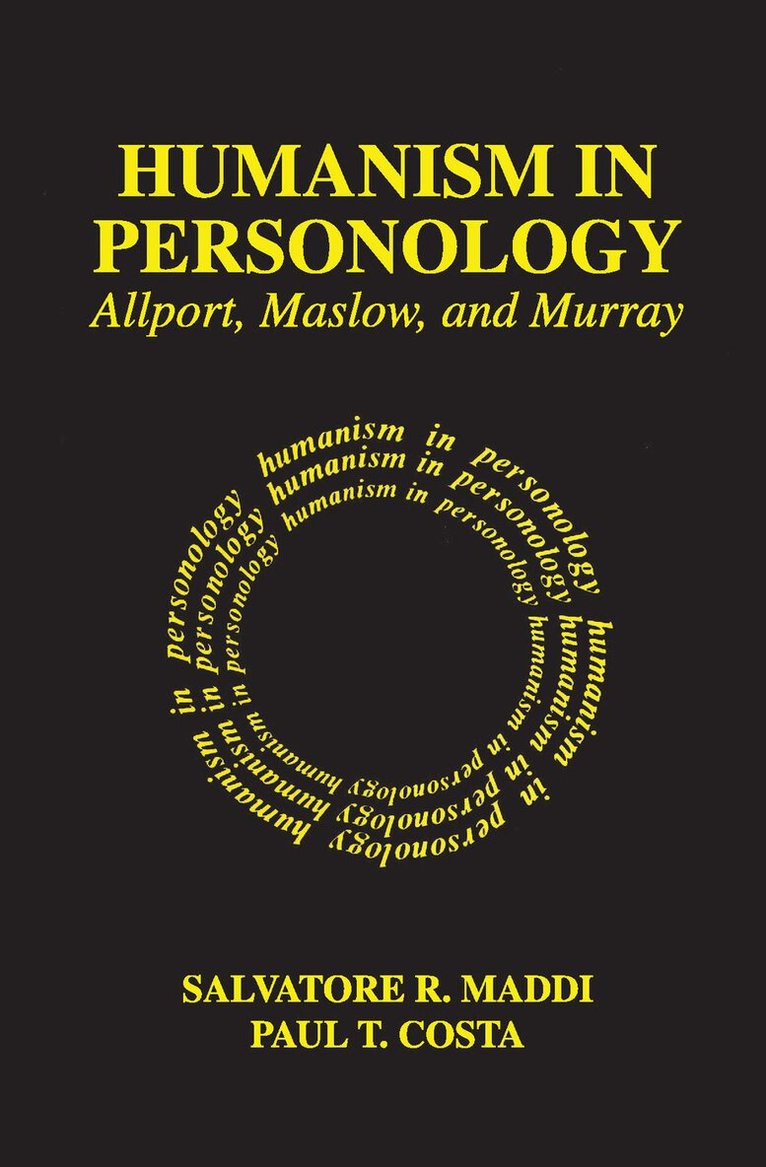
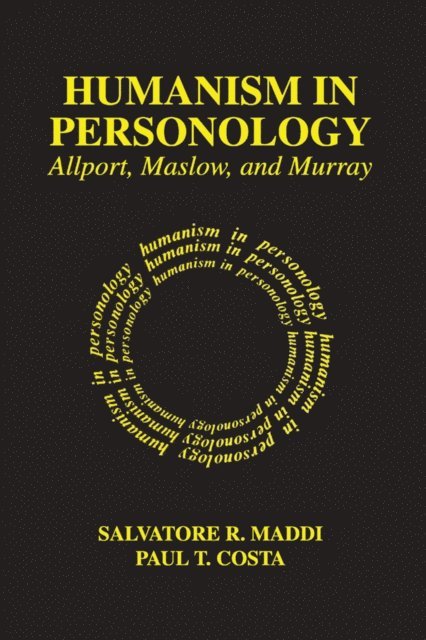
Through analysis of the lives and theories of the three major exponents of humanism, Allport, Maslow, and Murray, the authors have marshaled some compelling arguments for an alternative to the extreme behaviorism of Skinner and the logical positivism of Freud. This work is a concise, clear synthesis of both broad theoretical positions and specific concepts that underlie humanistic psychology.The "Third Force" (humanism) suggests that man possesses both freedom and dignity and that he possesses them in the face of an often hostile and coercive society. Thus, exponents of humanism conducted their personality experiments in a natural environment, imposing few, if any, external controls.A compact example of critical evaluation at its best, Humanism in Personology stands alone in its successful attempt to correlate the theory of humanism as it exists today with an incisive study of the men who shaped its course. Maddi and Costa proceed from the level of metatheory to a lucid presentation of the specific constructs of three personality psychologists.The book contains an extensive theoretical summary table explaining the theoretical differences between Allport, Maslow, and Murray. Also featured is a comprehensive glossary of personality terms which is exceedingly valuable for new students in the field. Intended as a supplementary text for undergraduate courses in personality, social psychology, human development, human socialization, or philosophy, this work is also a valuable resource for clinicians, teachers, guidance counselors, graduates, and undergraduates in psychology.
Del 15 - Advances in Cell Aging and Gerontology
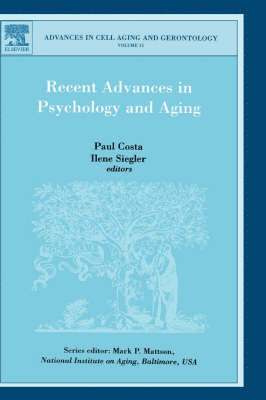
Recent Advances in Psychology and Aging
Inbunden, Engelska, 2003
1 684 kr
Skickas inom 5-8 vardagar
Recent Events in the Psychology of Aging documents the successful integration of aging into the mainstream of psychology. Leading psychologists present overviews of the key issues and research findings on mainstream topics. These include cognitive neuroscience, visual attention, learning, memory and cognition, as well as personality and happiness. The intersection of aging content with mainstream psychology is also prominent in the areas of emotions, personality, and social psychology as seen in the chapters on subjective well-being, emotional development, self-esteem and personality trajectories.The seven chapters of this book offer information on such topics as: the seven sins of memory, categorizing the common breakdowns of memory in everyday life and the special breakdown of sins that increase with aging; problems with attention and learning; and offers answers to questions such as do emotions get blunted with age; do older people focus more on positive feelings; and the age old question of whether older people are happier than younger people is given in the chapter on the evolving concept of subjective well-being and the multifaceted nature of happiness. Questions about what occurs to one's self-esteem and personality are also masterfully discussed and the answers may be surprising. The concluding seventh chapter provides a cultural lens on the biopsychosocial study of aging.
245 kr
Skickas inom 3-6 vardagar
2 088 kr
Skickas inom 10-15 vardagar
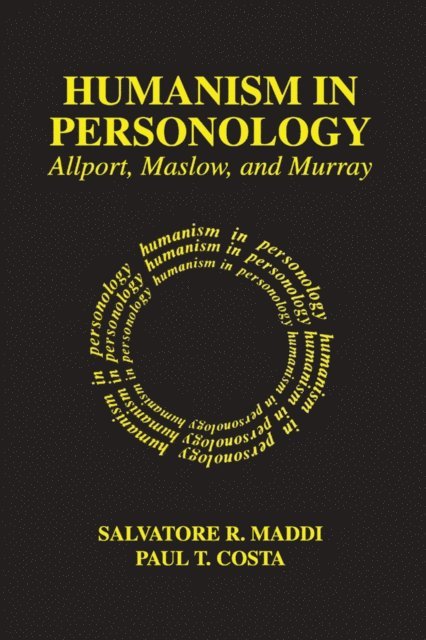
Through analysis of the lives and theories of the three major exponents of humanism, Allport, Maslow, and Murray, the authors have marshaled some compelling arguments for an alternative to the extreme behaviorism of Skinner and the logical positivism of Freud. This work is a concise, clear synthesis of both broad theoretical positions and specific concepts that underlie humanistic psychology.The "Third Force" (humanism) suggests that man possesses both freedom and dignity and that he possesses them in the face of an often hostile and coercive society. Thus, exponents of humanism conducted their personality experiments in a natural environment, imposing few, if any, external controls.A compact example of critical evaluation at its best, Humanism in Personology stands alone in its successful attempt to correlate the theory of humanism as it exists today with an incisive study of the men who shaped its course. Maddi and Costa proceed from the level of metatheory to a lucid presentation of the specific constructs of three personality psychologists.The book contains an extensive theoretical summary table explaining the theoretical differences between Allport, Maslow, and Murray. Also featured is a comprehensive glossary of personality terms which is exceedingly valuable for new students in the field. Intended as a supplementary text for undergraduate courses in personality, social psychology, human development, human socialization, or philosophy, this work is also a valuable resource for clinicians, teachers, guidance counselors, graduates, and undergraduates in psychology.