Paul D. Bridge – författare
Visar alla böcker från författaren Paul D. Bridge. Handla med fri frakt och snabb leverans.
6 produkter
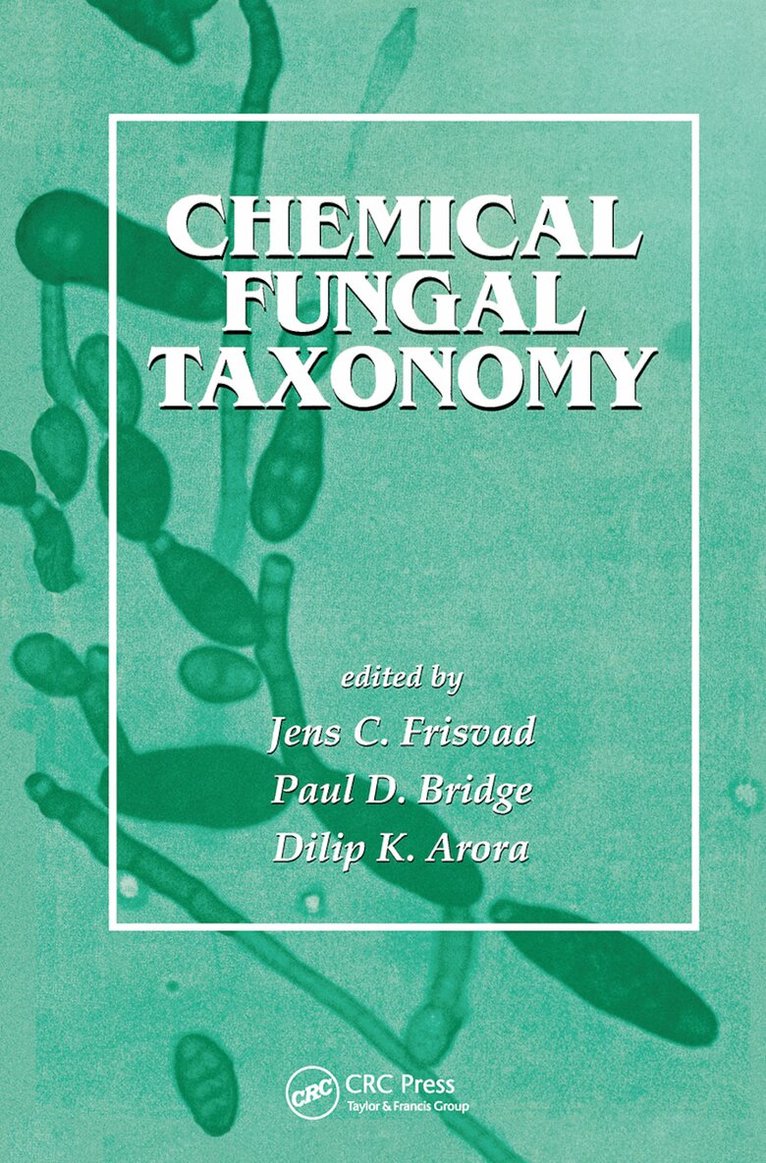
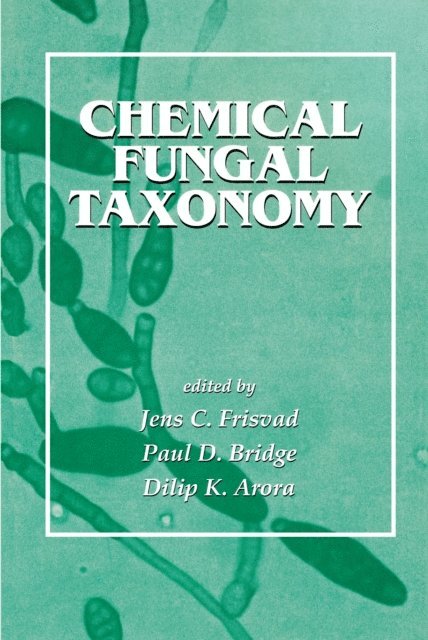
Chemical Fungal Taxonomy
Av Frisvad,, Jens C. Frisvad m. fl.
Häftad, 2019
1040 kr
Lägg i varukorg
Offers comprehensive coverage of the latest developments in both biochemical and physiological approaches to fungal systematics. Incorporates recent advances in molecular biology into systematics methods that can revolutionize taxonomic schemes.
Chemical Fungal Taxonomy
Av Dilip K. Arora, Jens C. Frisvad m. fl.
Inbunden, 1998
7574 kr
Lägg i varukorg
Offers comprehensive coverage of the latest developments in both biochemical and physiological approaches to fungal systematics. Incorporates recent advances in molecular biology into systematics methods that can revolutionize taxonomic schemes.
Molecular Variability of Fungal Pathogens
Av Paul D. Bridge, Yvonne Couteaudier m. fl.
Inbunden, 1998
2170 kr
Lägg i varukorg
This volume contains a series of contributions from established European researchers which consider aspects of molecular variability in fungal pathogens. Chapters are derived from a workshop held in Evian, France, in September 1997, supported by the EU Concerted Action Air 3-CT94-2448. The volume …
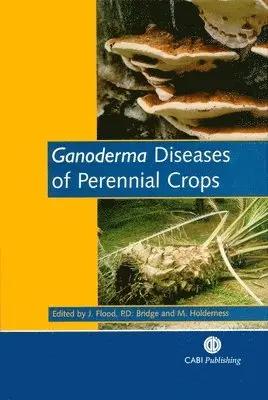
Ganoderma Diseases of Perennial Crops
Av Julie Flood, Paul D. Bridge m. fl.
Inbunden, 2000
2055 kr
Lägg i varukorg
Diseases caused by Ganoderma species cause major losses of palms and other perennial crops throughout the world, and these are particularly significant in Asia. Successive replanting of crop monocultures can be rapidly exploited by soil borne fungi such as Ganoderma, and the problem will become …
Chemical Fungal Taxonomy
Av Dilip K. Arora, Paul D. Bridge m. fl.
E-bok, 2020
1230 kr
Lägg i varukorg
Offers comprehensive coverage of the latest developments in both biochemical and physiological approaches to fungal systematics. Incorporates recent advances in molecular biology into systematics methods that can revolutionize taxonomic schemes.
Chemical Fungal Taxonomy
Av Dilip K. Arora, Paul D. Bridge m. fl.
E-bok, 2020
1230 kr
Lägg i varukorg
Offers comprehensive coverage of the latest developments in both biochemical and physiological approaches to fungal systematics. Incorporates recent advances in molecular biology into systematics methods that can revolutionize taxonomic schemes.