Paul D. Escott – författare
1 052 kr
Skickas inom 10-15 vardagar
843 kr
Skickas inom 10-15 vardagar
380 kr
Skickas inom 3-6 vardagar
484 kr
Skickas inom 10-15 vardagar
526 kr
Skickas inom 10-15 vardagar
442 kr
Skickas inom 10-15 vardagar
1 252 kr
Läs direkt efter köp
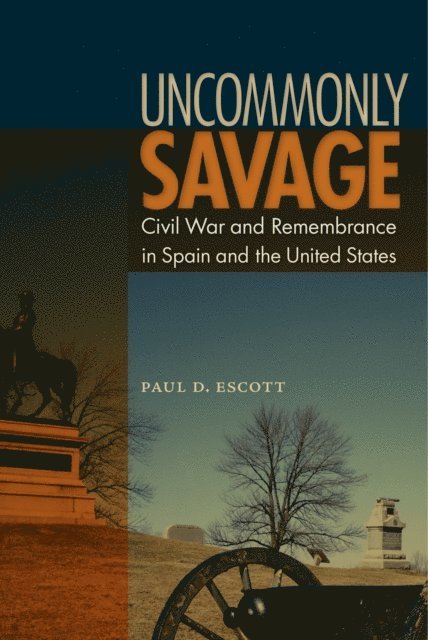
Spain and the United States both experienced extremely bloody and divisive civil wars that left social and emotional wounds, many of which still endure today. In Uncommonly Savage, award-winning historian Paul Escott considers the impact of internecine violence on memory and ideology, on politics, and on the process of reconciliation. He also examines debates over reparation or moral recognition, the rise of truth and reconciliation commissions, and the legal, psychological, and religious aspects of modern international law regarding amnesty.
This pioneering work—there are no other similar works on Spain and the United States—is based upon primary sources, including magazines, newspapers, public addresses, and policies of political leaders.
273 kr
Skickas inom 10-15 vardagar
417 kr
Läs direkt efter köp
“Truly impressive. Travels uncharted terrain, moving deftly through a vast scholarship in two languages. The research is sound, the prose crisp and accessible, and the subject unquestionably important.”—W. Fitzhugh Brundage, author of The Southern Past: A Clash of Race and Memory
“Illuminates the enduring potency of memory in shaping postwar societies for generations after the fighting ceased, reminding us that both losers and victors often had powerful motives to remember—and to forget.”—Caroline E. Janney, author of Remembering the Civil War
“Traces the dynamics of memory in the aftermath of the Spanish and American civil wars and demonstrates how similar processes of closure, willful blindness, and ideological inculcation worked out in the different contexts to produce sometimes similar but often radically different outcomes.” —Cillian McGrattan, author of Memory, Politics and Identity
“With an engaging narrative and deep research, the book is a model of the benefits derived from a truly comparative study.”—David Goldfield, author of Still Fighting the Civil War
Spain and the United States both experienced extremely bloody and divisive civil wars that left social and emotional wounds, many of which still endure today. In Uncommonly Savage, award-winning historian Paul Escott considers the impact of internecine violence on memory and ideology, politics, and process of reconciliation. He also examines debates over reparation or moral recognition, the rise of truth and reconciliation commissions, and the legal, psychological, and religious aspects of modern international law regarding amnesty.
531 kr
Läs direkt efter köp
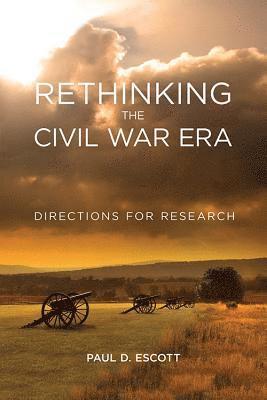
Arguably, no event since the American Revolution has had a greater impact on US history than the Civil War. This devastating and formative conflict occupies a permanent place in the nation''s psyche and continues to shape race relations, economic development, and regional politics. Naturally, an event of such significance has attracted much attention from historians, and tens of thousands of books have been published on the subject. Despite this breadth of study, new perspectives and tools are opening up fresh avenues of inquiry into this seminal era.
In this timely and thoughtful book, Paul D. Escott surveys the current state of Civil War studies and explores the latest developments in research and interpretation. He focuses on specific issues where promising work is yet to be done, highlighting subjects such as the deep roots of the war, the role of African Americans, and environmental history, among others. He also identifies digital tools which have only recently become available and which allow researchers to take advantage of information in ways that were never before possible. Rethinking the Civil War Era is poised to guide young historians in much the way that James M. McPherson and William J. Cooper Jr.''s Writing the Civil War: The Quest to Understand did for a previous generation. Escott eloquently charts new ways forward for scholars, offering ideas, questions, and challenges. His work will not only illuminate emerging research but will also provide inspiration for future research in a field that continues to adapt and change.
590 kr
Läs direkt efter köp
Arguably, no event since the American Revolution has had a greater impact on US history than the Civil War. This devastating and formative conflict occupies a permanent place in the nation''s psyche and continues to shape race relations, economic development, and regional politics. Naturally, an event of such significance has attracted much attention from historians, and tens of thousands of books have been published on the subject. Despite this breadth of study, new perspectives and tools are opening up fresh avenues of inquiry into this seminal era.
In this timely and thoughtful book, Paul D. Escott surveys the current state of Civil War studies and explores the latest developments in research and interpretation. He focuses on specific issues where promising work is yet to be done, highlighting subjects such as the deep roots of the war, the role of African Americans, and environmental history, among others. He also identifies digital tools which have only recently become available and which allow researchers to take advantage of information in ways that were never before possible. Rethinking the Civil War Era is poised to guide young historians in much the way that James M. McPherson and William J. Cooper Jr.''s Writing the Civil War: The Quest to Understand did for a previous generation. Escott eloquently charts new ways forward for scholars, offering ideas, questions, and challenges. His work will not only illuminate emerging research but will also provide inspiration for future research in a field that continues to adapt and change.
516 kr
Läs direkt efter köp
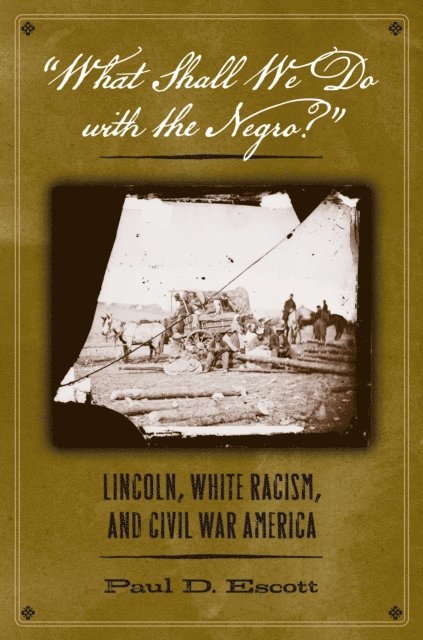
Throughout the Civil War, newspaper headlines and stories repeatedly asked some variation of the question posed by the New York Times in 1862, "What shall we do with the negro?" The future status of African Americans was a pressing issue for those in both the North and in the South. Consulting a broad range of contemporary newspapers, magazines, books, army records, government documents, publications of citizens’ organizations, letters, diaries, and other sources, Paul D. Escott examines the attitudes and actions of Northerners and Southerners regarding the future of African Americans after the end of slavery. "What Shall We Do with the Negro?" demonstrates how historians together with our larger national popular culture have wrenched the history of this period from its context in order to portray key figures as heroes or exemplars of national virtue.
Escott gives especial critical attention to Abraham Lincoln. Since the civil rights movement, many popular books have treated Lincoln as an icon, a mythical leader with thoroughly modern views on all aspects of race. But, focusing on Lincoln’s policies rather than attempting to divine Lincoln’s intentions from his often ambiguous or cryptic statements, Escott reveals a president who placed a higher priority on reunion than on emancipation, who showed an enduring respect for states’ rights, who assumed that the social status of African Americans would change very slowly in freedom, and who offered major incentives to white Southerners at the expense of the interests of blacks.Escott’s approach reveals the depth of slavery’s influence on society and the pervasiveness of assumptions of white supremacy. "What Shall We Do with the Negro?" serves as a corrective in offering a more realistic, more nuanced, and less celebratory approach to understanding this crucial period in American history.
358 kr
Läs direkt efter köp
The Civil War forced America finally to confront the contradiction between its founding values and human slavery. At the center of this historic confrontation was Abraham Lincoln. By the time this Illinois politician had risen to the office of president, the dilemma of slavery had expanded to the question of all African Americans’ future. In this fascinating new book Paul Escott considers the evolution of the president’s thoughts on race in relation to three other, powerful--and often conflicting--voices.
Lincoln’s fellow Republicans Charles Sumner and Montgomery Blair played crucial roles in the shaping of their party. While both Sumner and Blair were opposed to slavery, their motivations reflected profoundly different approaches to the issue. Blair’s antislavery stance stemmed from a racist dedication to remove African Americans from the country altogether. Sumner, in contrast, opposed slavery as a crusader for racial equality and a passionate abolitionist. Lincoln maintained close personal relationships with both men as he wrestled with the slavery question. In addition to these antislavery voices, Escott also weaves into his narrative the other extreme, of which Lincoln was politically aware: the virulent racism and hierarchical values that motivated not only the Confederates but surprisingly many Northerners and which were embodied by the president’s eventual assassin, John Wilkes Booth.
Sumner, Blair, and violent racists like Booth each represent forces with which Lincoln had to contend as he presided over a brutal civil war and faced the issues of slavery and equality lying at its root. Other books and films have provided glimpses of the atmosphere in which the president created his Emancipation Proclamation. Lincoln’s Dilemma evokes more fully and brings to life the men Lincoln worked with, and against, as he moved racial equality forward.
A Nation Divided: Studies in the Civil War Era
478 kr
Skickas inom 3-6 vardagar
337 kr
Skickas inom 3-6 vardagar
412 kr
Läs direkt efter köp
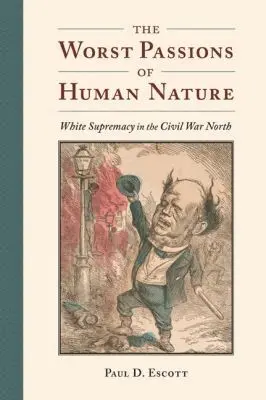
The American North’s commitment to preventing a southern secession rooted in slaveholding suggests a society united in its opposition to slavery and racial inequality. The reality, however, was far more complex and troubling. In his latest book, Paul Escott lays bare the contrast between progress on emancipation and the persistence of white supremacy in the Civil War North. Escott analyzes northern politics, as well as the racial attitudes revealed in the era’s literature, to expose the nearly ubiquitous racism that flourished in all of American society and culture.
Contradicting much recent scholarship, Escott argues that the North’s Democratic Party was consciously and avowedly "the white man’s party," as an extensive examination of Democratic newspapers, as well as congressional debates and other speeches by Democratic leaders, proves. The Republican Party, meanwhile, defended emancipation as a war measure but did little to attack racism or fight for equal rights. Most Republicans propagated a message that emancipation would not disturb northern race relations or the interests of northern white voters: freed slaves, it was felt, would either leave the nation or remain in the South as subordinate laborers.
Escott’s book uncovers the substantial and destructive racism that lay beyond the South’s borders. Although emancipation represented enormous progress, racism flourished in the North, and assumptions of white supremacy remained powerful and nearly ubiquitous throughout America.
406 kr
Läs direkt efter köp
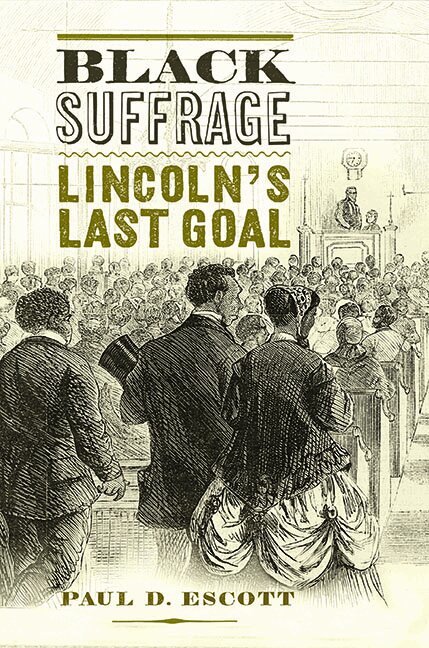
In April 1865, as the Civil War came to a close, Abraham Lincoln announced his support for voting rights for at least some of the newly freed enslaved people. Esteemed historian Paul Escott takes this milestone as an opportunity to explore popular sentiment in the North on this issue and, at the same time, to examine the vigorous efforts of Black leaders, in both North and South, to organize, demand, and work for their equal rights as citizens.
As Escott reveals, there was in the spring of 1865 substantial and surprisingly general support for Black suffrage, most notably through the Republican Party, which had succeeded in linking the suffrage issue to the securing of the Union victory. This would be met with opposition, however, from Lincoln’s successor, Andrew Johnson, and, just as important, from a Democratic Party—including Northern Democrats—that had failed during the course of the war to shed its racism. The momentum for Black suffrage would be further threatened by conflicts within the Republican Party over the issue.
Based on extensive research into Republican and Democratic newspapers, magazines, speeches, and addresses, Escott’s latest book illuminates the vigorous national debates in the pivotal year of 1865 over extending the franchise to all previously enslaved men—crucial debates that have not yet been examined in full—revealing both the nature and significance of growing support for Black suffrage and the depth of white racism that was its greatest obstacle.
1 129 kr
Skickas inom 10-15 vardagar
386 kr
Skickas inom 10-15 vardagar
482 kr
Läs direkt efter köp
Modeling his latest book on Richard Hofstadter’s 1948 classic The American Political Tradition and the Men Who Made It, the renowned historian Paul Escott has composed ten concise but deeply learned and incisive biographies of key Americans in the years leading up to the Civil War. Escott profiles Henry Clay, John C. Calhoun, Harriet Beecher Stowe, Frederick Douglass, Stephen A. Douglas, Jefferson Davis, Abraham Lincoln, Horace Greeley, Albion Tourgée, and Elizabeth Cady Stanton, illustrating how these men and women established, embodied, and advanced the opposing political and cultural trends that culminated in the great crisis of the nineteenth century.
Covering figures from across a wide political spectrum, Escott reveals numerous streams and facets of nineteenth-century American political thought to illuminate the forces, from slavery to suffrage, underlying this greatest of conflicts. Written accessibly and with a magisterial command of the subject, The Civil War Political Tradition is both a perfect introduction to this history and a penetrating new meditation on its players.
236 kr
Skickas inom 3-6 vardagar
902 kr
Läs direkt efter köp
902 kr
Läs direkt efter köp