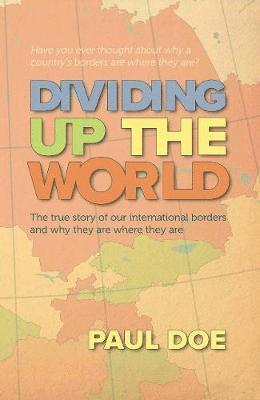
Have you ever thought about why a country’s borders are where they are? ‘Dividing up the World; the story of our international borders and why they are where they are’, is an utterly fascinating study of how borders have come about and the stories behind them.As well as unearthing tales and anecdotes relating to more familiar borders, the author also examines less well-known ones including the Drummully Polyp, the Scots Dike, the Medicine Line, the Gadsden Purchase, Neutral Moresnet, the Green Line, the Sand Wall, the Gambian ‘Ceded Mile’, the Caprivi Strip and an island that changes nationality twice a year.The result is a highly entertaining, meticulously-researched book, full of accounts of geography, maps, politics, colonialism, power, aggression and negotiation. After reading ‘Dividing up the World; the story of our international borders and why they are where they are’, you will never think of borders in the same way again.
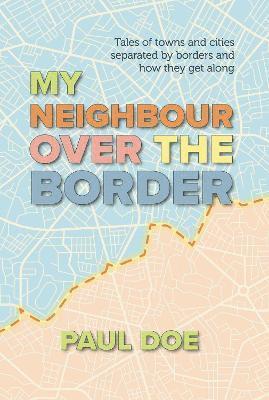
How do towns and cities divided by the harsh reality of an international border manage to get on with each other when their closest neighbour lives just next door, but in another country? Are they thriving or surviving? Utterly dependent on each other or with backs turned, socially and economically? We visit towns and cities that you may not have heard of or know little about. Places like distant Blagoveshchensk and Heihe, Narva and Ivangorod and Gorlitz and Zgorzelec. But also the better known Nicosia, Europe’s only divided capital, Detroit with its Canadian neighbour Windsor, Geneva and its French suburb Annemasse and the cities of Sarajevo and Mostar, divided not by international borders but ethnic divisions baked into everyday life.This is a fascinating and well-researched study of thirty-_six towns and cities from across the world that are separated by borders. Paul Doe delves into the way in which these divisions came about and how the separated towns and cities manage to get along, or not, buffeted as they are by geopolitics, ethnic differences and historical animosities.
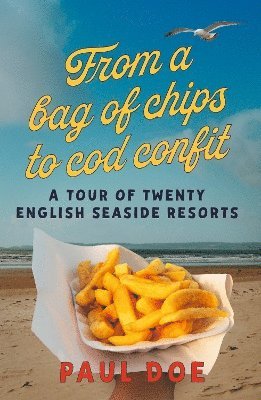
From a bag of chips to cod confit: a tour of twenty English seaside resortsWhat is it about the English seaside that drives us in our millions to stroll the promenades of the plethora of resorts we have in this country? How can we understand the allure of the gaudy and raucous funfair, sand in our toes and fish and chips in our hands. Or is it, in the words of Charles Dickens, the ocean that draws us in ‘winking in the sunlight like a drowsy lion’. When the author discovered that his home town had come bottom in a ‘Which?’ review of the best to worst seaside resorts in the UK, not once, or twice, but for three years on the trot, it spurred him on to go on his own tour of these resorts. He finds a wealth of fascinating histories, eccentricities and English quirkiness, mixed up with deep-seated problems of poverty, poor health and uncertain futures. But he also discovers that our resorts are diverse places, reinvigorated by creative thinking, new entrepreneurship and fresh investment.Our English seaside resorts are alive and well, carefully curating their brands and images, seeking out new ideas and funding and using the skills and abilities of their residents to drive changes with local impact. This book will encourage you to make your own visits and learn a little about the seaside resort, a curiously English creation that we all inspired, abandoned and then re-discovered.
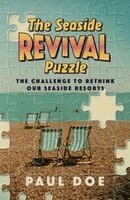
What is going on in our seasideresorts? Are they busy reinventing themselves, regenerating old heritageassets, innovating and rethinking beachside attractions, investing ininfrastructure, new hotels, restaurants and independent shops? Or are they in decline,struggling with changing tourist habits, unable to tackle their Victorianassets, watching their town centres shut down and old hotels turn into tinyrented flats?We go on a tour of sixteen of ourEnglish and Welsh resorts, searching for signs of a mooted revival in seasidefortunes. What we find is a puzzle, with each resort responding differently toits situation and search for revival. From the University impact on Aberystwythto the funky shops and art in Margate, the revived Butlins in Bognor Regis, thehome-grown heritage revitalisation of Great Yarmouth, the cafe's ofLittlehampton, the majestic De La Warr Pavilion in Bexhill, the quirky pier inSouthwold, the Agatha Christie trail in Torquay, the murals of New Brighton andthe oysters of Whitstable, there is a lot going on. Time to tackle the seasiderevival puzzle.
Have you ever thought about why a country’s borders are where they are? ‘Dividing up the World; the story of our international borders and why they are where they are’, is an utterly fascinating study of how borders have come about and the stories behind them.As well as unearthing tales and anecdotes relating to more familiar borders, the author also examines less well-known ones including the Drummully Polyp, the Scots Dike, the Medicine Line, the Gadsden Purchase, Neutral Moresnet, the Green Line, the Sand Wall, the Gambian ‘Ceded Mile’, the Caprivi Strip and an island that changes nationality twice a year.The result is a highly entertaining, meticulously-researched book, full of accounts of geography, maps, politics, colonialism, power, aggression and negotiation. After reading ‘Dividing up the World; the story of our international borders and why they are where they are’, you will never think of borders in the same way again.
How do towns and cities divided by the harsh reality of an international border manage to get on with each other when their closest neighbour lives just next door, but in another country? Are they thriving or surviving? Utterly dependent on each other or with backs turned, socially and economically? We visit towns and cities that you may not have heard of or know little about. Places like distant Blagoveshchensk and Heihe, Narva and Ivangorod and Gorlitz and Zgorzelec. But also the better known Nicosia, Europe’s only divided capital, Detroit with its Canadian neighbour Windsor, Geneva and its French suburb Annemasse and the cities of Sarajevo and Mostar, divided not by international borders but ethnic divisions baked into everyday life.This is a fascinating and well-researched study of thirty-_six towns and cities from across the world that are separated by borders. Paul Doe delves into the way in which these divisions came about and how the separated towns and cities manage to get along, or not, buffeted as they are by geopolitics, ethnic differences and historical animosities.
From a bag of chips to cod confit: a tour of twenty English seaside resortsWhat is it about the English seaside that drives us in our millions to stroll the promenades of the plethora of resorts we have in this country? How can we understand the allure of the gaudy and raucous funfair, sand in our toes and fish and chips in our hands. Or is it, in the words of Charles Dickens, the ocean that draws us in ‘winking in the sunlight like a drowsy lion’. When the author discovered that his home town had come bottom in a ‘Which?’ review of the best to worst seaside resorts in the UK, not once, or twice, but for three years on the trot, it spurred him on to go on his own tour of these resorts. He finds a wealth of fascinating histories, eccentricities and English quirkiness, mixed up with deep-seated problems of poverty, poor health and uncertain futures. But he also discovers that our resorts are diverse places, reinvigorated by creative thinking, new entrepreneurship and fresh investment.Our English seaside resorts are alive and well, carefully curating their brands and images, seeking out new ideas and funding and using the skills and abilities of their residents to drive changes with local impact. This book will encourage you to make your own visits and learn a little about the seaside resort, a curiously English creation that we all inspired, abandoned and then re-discovered.
What is going on in our seasideresorts? Are they busy reinventing themselves, regenerating old heritageassets, innovating and rethinking beachside attractions, investing ininfrastructure, new hotels, restaurants and independent shops? Or are they in decline,struggling with changing tourist habits, unable to tackle their Victorianassets, watching their town centres shut down and old hotels turn into tinyrented flats?We go on a tour of sixteen of ourEnglish and Welsh resorts, searching for signs of a mooted revival in seasidefortunes. What we find is a puzzle, with each resort responding differently toits situation and search for revival. From the University impact on Aberystwythto the funky shops and art in Margate, the revived Butlins in Bognor Regis, thehome-grown heritage revitalisation of Great Yarmouth, the cafe's ofLittlehampton, the majestic De La Warr Pavilion in Bexhill, the quirky pier inSouthwold, the Agatha Christie trail in Torquay, the murals of New Brighton andthe oysters of Whitstable, there is a lot going on. Time to tackle the seasiderevival puzzle.