Paul E. Walker – författare
Visar alla böcker från författaren Paul E. Walker. Handla med fri frakt och snabb leverans.
14 produkter
14 produkter
Häftad, Engelska, 2008
448 kr
Skickas inom 7-10 vardagar
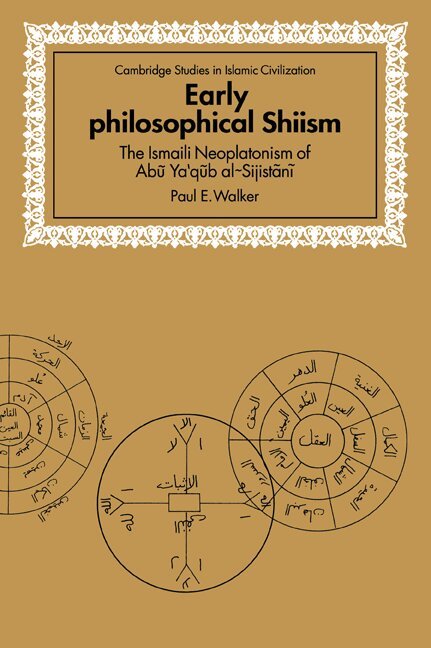
The Ismailis, among whom are the followers of the Aga Khan, rose to prominence during the fourth Islamic/tenth Christian century. They developed a remarkably successful intellectual programme to sustain and support their political activities, promoting demands of Islamic doctrine together with the then newly imported sciences from abroad. The high watermark of this intellectual movement is best illustrated in the writings of the Ismaili theoretician Abu Ya´qub al-Sijistani. Using both published and manuscript writings of al-Sijistani that have hitherto been largely hidden, forgotten or ignored, Dr Paul Walker reveals the scholar's major contribution to the development of philosophical Shiism. He analyses his role in the Ismaili mission (da'wa) of that time and critically assesses the major themes in his combination of philosophy and religious doctrine.
Inbunden, Engelska, 1993
1 253 kr
Skickas inom 7-10 vardagar
The Ismailis, among whom are the followers of the Aga Khan, rose to prominence during the fourth Islamic/tenth Christian century. They developed a remarkably successful intellectual programme to sustain and support their political activities, promoting demands of Islamic doctrine together with the then newly imported sciences from abroad. The high watermark of this intellectual movement is best illustrated in the writings of the Ismaili theoretician Abu Ya´qub al-Sijistani. Using both published and manuscript writings of al-Sijistani that have hitherto been largely hidden, forgotten or ignored, Dr Paul Walker reveals the scholar's major contribution to the development of philosophical Shiism. He analyses his role in the Ismaili mission (da'wa) of that time and critically assesses the major themes in his combination of philosophy and religious doctrine.
Häftad, Engelska, 2021
334 kr
Skickas inom 10-15 vardagar
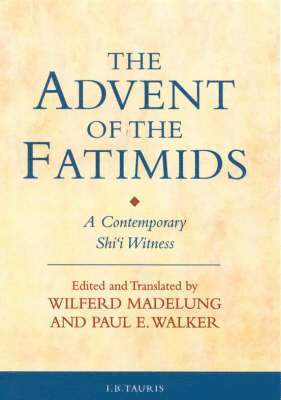
I.B. Tauris in association with the Institute of Ismaili StudiesThe two sermons edited and translated here for the first time are primary material from the years before the establishment of the Fatimid caliphate in 297/909. The authors have been identified as Abu ‘Abd Allah al-Shi'i and Abu’l-‘Abbas Muhammad, two brothers who were central to the success of the Ismaili da'wa in North Africa. Da'wa, a term used to describe how Muslims teach others about the beliefs and practices of their Islamic faith, therefore provide a unique view of the nature and development of Islam throughout history. In this case, the primary texts shed light on the development of Islam among the Berbers of the Maghreb. The first text by Abu ‘Abd Allah al-Shi'i shows how the arguments for belief in the 'imamate' of the family of the Prophet, that is, the Shi'a belief that all imams should be spiritual descendants of the Prophet Muhammad and his household, were developed and presented to bring new adherents to the cause. The Book of the Keys to Grace by his elder brother Abu’l-‘Abbas, too, concerns not only the centrality of the imam in the faith but also sheds light on the hierarchy of the da’wa in this early period and its organisational sophistication. Both texts also reveal the contemporary theology propagated by the Ismaili da’wa, including for instance, the powerful analogy of Moses/Aaron and Muhammad/’Ali, the awareness of a variety of religious traditions and the use of detailed Qur’anic quotations and a wide range of hadith. As such they constitute primary source material of interest not only for Ismaili history but for this early period of Islam in general.
Inbunden, Engelska, 2021
1 096 kr
Skickas inom 10-15 vardagar
I.B. Tauris in association with the Institute of Ismaili StudiesThe two sermons edited and translated here for the first time are primary material from the years before the establishment of the Fatimid caliphate in 297/909. The authors have been identified as Abu ‘Abd Allah al-Shi'i and Abu’l-‘Abbas Muhammad, two brothers who were central to the success of the Ismaili da'wa in North Africa. Da'wa, a term used to describe how Muslims teach others about the beliefs and practices of their Islamic faith, therefore provide a unique view of the nature and development of Islam throughout history. In this case, the primary texts shed light on the development of Islam among the Berbers of the Maghreb. The first text by Abu ‘Abd Allah al-Shi'i shows how the arguments for belief in the 'imamate' of the family of the Prophet, that is, the Shi'a belief that all imams should be spiritual descendants of the Prophet Muhammad and his household, were developed and presented to bring new adherents to the cause. The Book of the Keys to Grace by his elder brother Abu’l-‘Abbas, too, concerns not only the centrality of the imam in the faith but also sheds light on the hierarchy of the da’wa in this early period and its organisational sophistication. Both texts also reveal the contemporary theology propagated by the Ismaili da’wa, including for instance, the powerful analogy of Moses/Aaron and Muhammad/’Ali, the awareness of a variety of religious traditions and the use of detailed Qur’anic quotations and a wide range of hadith. As such they constitute primary source material of interest not only for Ismaili history but for this early period of Islam in general.
Häftad, Engelska, 2019
791 kr
Skickas inom 10-15 vardagar
The thirteen studies in this volume explore critical problems in Fatimid history and historiography, many specifically focused on the content of doctrinal writings produced by the Ismaili supporters and agents of this caliphate who worked on behalf of the dynasty both within the empire and outside. Several concern issues in disputes that separated the various factions of Medieval Islam and served to distinguish the Ismailis from the rest, often branding the Fatimids with the charge of heterodoxy. Others deal with the consequence of Shiite rule over a largely non-Shiite populace. Yet others involve the relationship between religious ideology and the administration of government. Among the themes featured in this collection there are separate investigations of institutions of learning, of succession to the imamate, the da`wa, the judiciary, relations with the Byzantines and with the Abbasids, and works on heresiography, doctrines of time and the accusation that the Ismailis upheld the metempsychosis of the human soul. The latter topics help to situate the Ismailis, and hence the Fatimids, within the broader context of Islamic thought.
Inbunden, Arabiska, 2007
1 368 kr
Skickas inom 10-15 vardagar
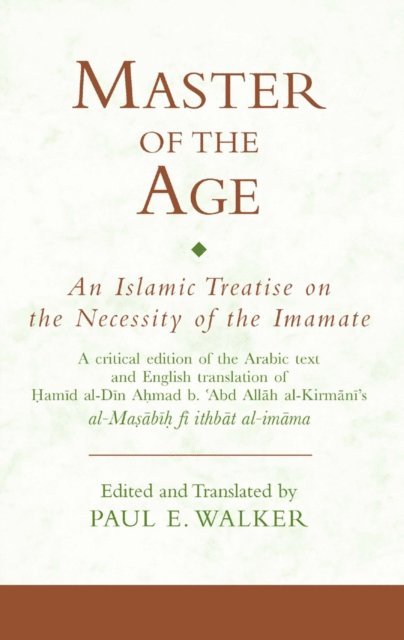
Few doctrines in Islam have engendered as much contention and disagreement as those surrounding the imamate, the office of supreme leader of the Muslim community after the death of the Prophet. In the medieval period while the caliphate still existed, rivalry among the claimants to that most lofty position was particularly intense. The early 5th/11th-century Ismaili da'i Hamid al-Din al-Kirmani worked for most of his life in the eastern lands of the Islamic world, principally within the hostile domain of the Abbasid caliphs and the Buyid amirs.At a critical point he was summoned by the da'wa to Egypt where he taught and wrote for several years before returning once again to Iran and Iraq. About 405/1015, just prior to his move from Iraq to Cairo, he composed a treatise he called Lights to Illuminate the Proof of the Imamate (al-Masabih fi ithbat al-imama) in the bold hope of convincing Fakhr al-Mulk, the Shi'i wazir of the Buyids in Baghdad, to abandon the Abbasids and support the Fatimid caliph al-Hakim. For that purpose he produced a long, interconnected series of philosophically sophisticated proofs, all leading logically to the absolute necessity of the imamate.This work is thus unique both in the precision of its doctrine and in the historical circumstance surrounding its composition. The text appears here in a modern critical edition of the Arabic original with a complete translation, introduction and notes.
Inbunden, Engelska, 2009
633 kr
Skickas inom 10-15 vardagar
The Fatimid empire was a highly sophisticated and cosmopolitan regime that flourished from the beginning of the 10th to the end of the 12th century. Under the enlightened rule of the Fatimid Caliphs, Cairo was founded as the nucleus of an imperium that extended from Arabia in the east to present-day Morocco in the west. Dynamic rulers like the the fourth caliph al-Mu'izz (who conquered Egypt and founded his new capital there) were remarkable not only for their extensive conquests but also for combining secular with religious legitimacy. As living imams of the Ismaili branch of Shi'ism, they exercised authority over both spiritual and secular domains. The sacred dimension of their mandate was manifested most powerfully twice a year, when the imam-Caliphs personally delivered sermons, or khutbas, to their subjects, to co-incide with the great feasts and festivals of fast-breaking and sacrifice.While few of these sermons have survived, those that have endured vividly evoke both of the atmosphere of the occasion and the words uttered on it.Paul E Walker here provides unique access to these orations by presenting the Arabic original and a complete English translation of all the khutbas now extant. He also offers a history of the festival sermons and explores their key themes and rhetorical strategies.
Inbunden, Engelska, 1999
600 kr
Skickas inom 10-15 vardagar
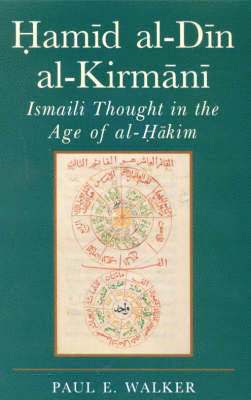
Among the most outstanding Ismaili thinkers, Hamid al-Din al-Kirmani was at the forefront of the intellectual advances of his time and almost on a par with his famous contemporary, Ibn Sina, with whom he shared many philosophical ideas. His ideas on the intellect and the order of creation are a departure from those expressed by early Ismaili thinkers which he endeavoured to amend, thus providing insights into early Ismaili debates about philosophical and scientific concepts. This book presents a systematic investigation of al-Kirmani's life and thought. It focuses on the principal themes of his writings: the nature of human recognition and veneration of God; an understanding of the cosmic order; and the repose and tranquillity of the intellect. The author also examines a number of problems in the biography of al-Kirmani, the affiliations between his metaphysical system of thought and those of al-Farabi and Ibn Sina, and the importance of his writings for the Ismaili da'wa during the late-10th and 11th centuries.
Inbunden, Engelska, 2000
728 kr
Skickas inom 10-15 vardagar
This work is a personal memoir composed by a medieval scholar in which he records details of his discourse with two Ismaili leaders who spearheaded the Fatimid revolution in North Africa in 909-10. By reporting at first hand the thoughts and activities of Abu `Abdallah al-Shi'i and his brother Abu'l-Abbas over a period of seven months, Ibn al-Haytham in his "Kitab al-Munazarat" (The Book of Discussions) provides an insider's view to our understanding of the foundations of the Fatimid state.
Inbunden, Engelska, 2002
633 kr
Skickas inom 10-15 vardagar
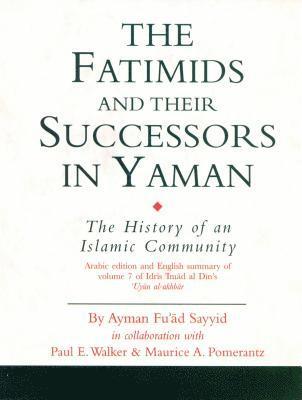
The "Uyun al-akhbar" is the most complete extant text by an Ismaili author on the history of the Ismaili community from its origins up to Idris 'Imad al-Din's own time in the 15th century. The seventh volume, edited here together with a summary English translation, deals in particular with the period of the three Fatimid caliphs - al-Mustansir, al-Musta'li and al-Amir - in addition to the Tayyibi Ismaili community in Yemen.
Inbunden, Engelska, 2002
892 kr
Skickas inom 10-15 vardagar
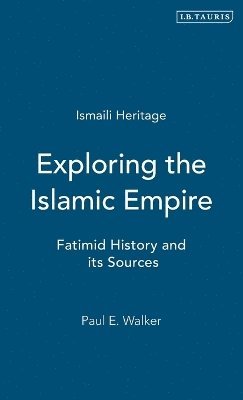
Exploring an Islamic Empire surveys the three main phases of Fatimid history, and examines various sources that provide information for historical analysis. These sources range from direct evidence such as coins, building dedications, documents and letters, eyewitness and contemporary accounts, histories and biographies, scientific and literary writings, to the work of modern scholars. An extensive bibliography of both medieval sources and modern studies makes this not only a valuable addition to the historiography of the Fatimids but essential reading for students and scholars of Islamic history.
Häftad, Engelska, 2001
384 kr
Skickas inom 10-15 vardagar
This work is a personal memoir composed by a medieval scholar in which he records details of his discourse with two Ismaili leaders who spearheaded the Fatimid revolution in North Africa in 909-10. By reporting at first hand the thoughts and activities of Abu `Abdallah al-Shi'i and his brother Abu'l-Abbas over a period of seven months, Ibn al-Haytham in his "Kitab al-Munazarat" (The Book of Discussions) provides an insider's view to our understanding of the foundations of the Fatimid state.
Häftad, Engelska, 2012
340 kr
Skickas inom 5-8 vardagar
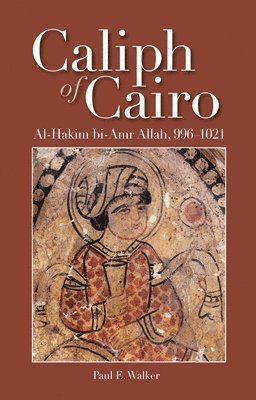
A new paperback edition of the most comprehensive biography to date of the controversial Fatimid ruler"A well-researched, unbiased and engaging exposé of a melodramatic subject."—Al Ahram WeeklyOne night in the year 411/1021, the powerful ruler of the Fatimid empire, al-Hakim bi-Amr Allah, rode out of the southern gates of Cairo and was never seen again. Was the caliph murdered, or could he have decided to abandon his royal life, wandering off to live alone and anonymous? Whatever the truth, the fact was that al-Hakim had literally vanished into the desert. Yet al-Hakim, though shrouded in mystery, has never been forgotten. To the Druze, he was (and is) God, and his disappearance merely indicated his reversion to non-human form. For Ismailis, al-Hakim was the sixteenth imam, descended from the Prophet, and infallible. Jews and Christians, by contrast, long remembered him as their persecutor, who ordered the destruction of many of their synagogues and churches. Using all the tools of modern scholarship, Paul Walker offers the most balanced and engaging biography yet to be published of this endlessly fascinating individual.To some, al-Hakim was God incarnate, to others an infallible imam, to still others he was a capricious tyrant. This book examines myth and fact, document and opinion, to present the most complete and detailed history yet written of the life and times of one of the medieval Islamic world’s most controversial figures.
Inbunden, Engelska, 2008
1 638 kr
Tillfälligt slut
The thirteen studies in this volume explore critical problems in Fatimid history and historiography, many specifically focused on the content of doctrinal writings produced by the Ismaili supporters and agents of this caliphate who worked on behalf of the dynasty both within the empire and outside. Several concern issues in disputes that separated the various factions of Medieval Islam and served to distinguish the Ismailis from the rest, often branding the Fatimids with the charge of heterodoxy. Others deal with the consequence of Shiite rule over a largely non-Shiite populace. Yet others involve the relationship between religious ideology and the administration of government. Among the themes featured in this collection there are separate investigations of institutions of learning, of succession to the imamate, the da`wa, the judiciary, relations with the Byzantines and with the Abbasids, and works on heresiography, doctrines of time and the accusation that the Ismailis upheld the metempsychosis of the human soul. The latter topics help to situate the Ismailis, and hence the Fatimids, within the broader context of Islamic thought.