Paul Freston – författare
Visar alla böcker från författaren . Handla med fri frakt och snabb leverans.
11 produkter
11 produkter
E-bok
Engelska, 2008338 kr
Läs direkt efter köp
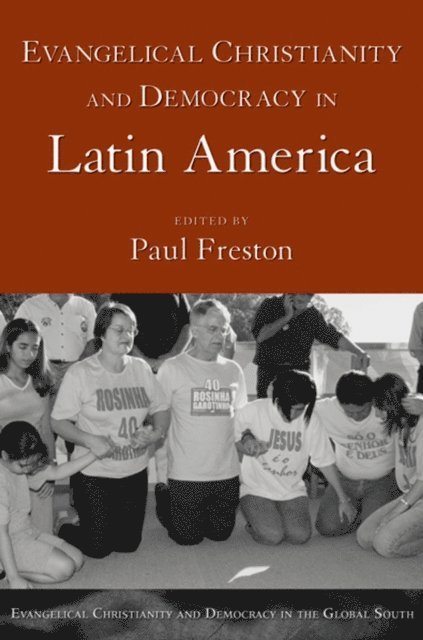
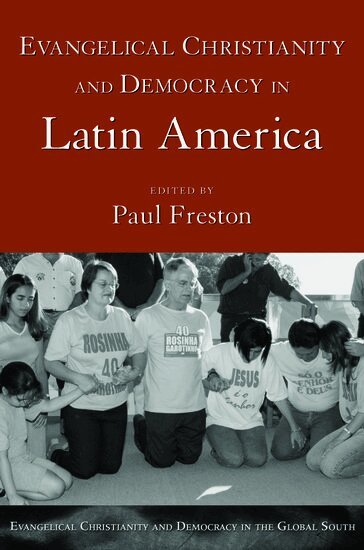
In Latin America, evangelical Protestantism poses an increasing challenge to Catholicism''s long-established religious hegemony. At the same time, the region is among the most generally democratic outside the West, despite often being labeled as ''underdeveloped.'' Scholars disagree whether Latin American Protestantism, as a fast-growing and predominantly lower-class phenomenon, will encourage a political culture that is repressive and authoritarian, or if it will have democratizing effects. Drawing from a range of sources, iEvangelical Christianity and Democracy in Latin America/i provides case studies of five countries: Brazil, Peru, Mexico, Guatemala, and Nicaragua. The contributors, mainly scholars based in Latin America, bring first hand-knowledge to their chapters. The result is a groundbreaking work that explores the relationship between Latin American evangelicalism and politics, its influences, manifestations, and prospects for the future.Evangelical Christianity and Democracy in Latin America is one of four volumes in the series Evangelical Christianity and Democracy in the Global South, which seeks to answer the question: What happens when a revivalist religion based on scriptural orthodoxy participates in the volatile politics of the Third World? At a time when the global-political impact of another revivalist and scriptural religion - Islam - fuels vexed debate among analysts the world over, these volumes offer an unusual comparative perspective on a critical issue: the often combustible interaction of resurgent religion and the developing world''s unstable politics.
Häftad, Engelska, 2008
404 kr
Skickas inom 5-8 vardagar
This is one of four projected volumes to emerge from a massive, Pew-funded study that sought to answer the question: What happens when a revivalist religion based on scriptural orthodoxy participates in the volatile politics of the Third World? Is the result a democratic politics of the ballot box, or is it more like an authoritarian politics of command from on high? Does the evangelical faith of the Bible hinder or promote a politics of the ballot box? At a time when the global-political impact of another revivalist and scriptural religion, Islam, fuels vexed debate among analysts the world over, these volumes offer an unusual comparative perspective on a critical issue: the often combustible interaction of resurgent religion and the developing world's unstable politics. The present volume considers the case of Latin America, where evangelical Protestantism is increasingly challenging the historical Catholic hegemony in the religious sphere.
E-bok
PDF, Engelska, 2008338 kr
Läs direkt efter köp
In Latin America, evangelical Protestantism poses an increasing challenge to Catholicism''s long-established religious hegemony. At the same time, the region is among the most generally democratic outside the West, despite often being labeled as ''underdeveloped.'' Scholars disagree whether Latin American Protestantism, as a fast-growing and predominantly lower-class phenomenon, will encourage a political culture that is repressive and authoritarian, or if it will have democratizing effects. Drawing from a range of sources, Evangelical Christianity and Democracy in Latin America provides case studies of five countries: Brazil, Peru, Mexico, Guatemala, and Nicaragua. The contributors, mainly scholars based in Latin America, bring first hand-knowledge to their chapters. The result is a groundbreaking work that explores the relationship between Latin American evangelicalism and politics, its influences, manifestations, and prospects for the future.Evangelical Christianity and Democracy in Latin America is one of four volumes in the series Evangelical Christianity and Democracy in the Global South, which seeks to answer the question: What happens when a revivalist religion based on scriptural orthodoxy participates in the volatile politics of the Third World? At a time when the global-political impact of another revivalist and scriptural religion - Islam - fuels vexed debate among analysts the world over, these volumes offer an unusual comparative perspective on a critical issue: the often combustible interaction of resurgent religion and the developing world''s unstable politics.
Häftad, Engelska, 2004
545 kr
Skickas inom 7-10 vardagar
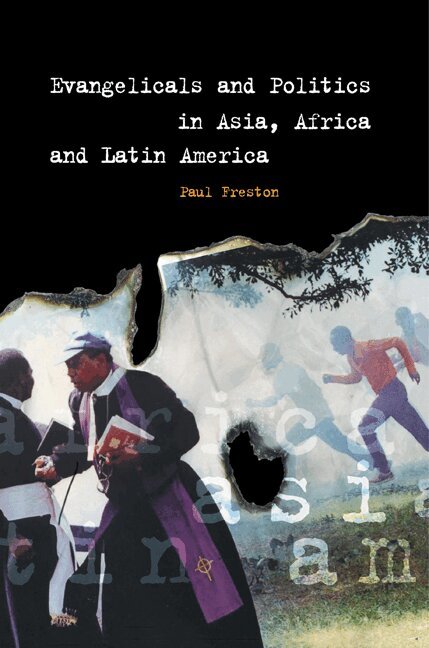
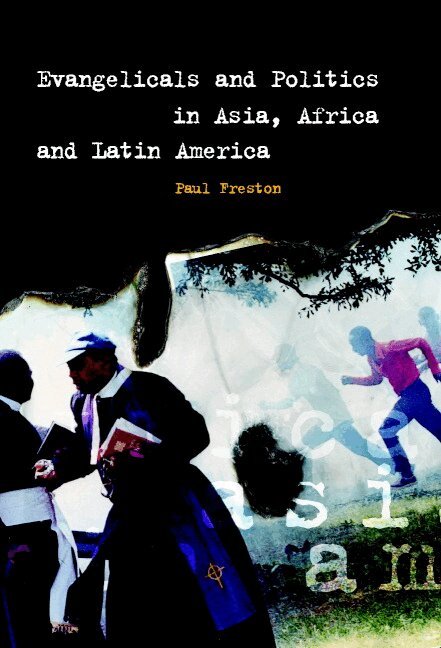
The global expansion of evangelical Christianity is one of the most important religious developments in recent decades, but its political dimension is little studied by the comparative literature on religion and world politics. Paul Freston's book is a pioneering comparative study of the political aspects of the new mass evangelical Protestantism of sub-Saharan Africa, Latin America and parts of Asia. The book examines twenty-seven countries from the three major continents of the Third World, burrowing deep into the specificities of each country's religious and political fields, but keeping in view the need for cross-continental comparisons. The conclusion looks at the implications of evangelical politics for democracy, nationalism and globalisation. This unique account of the politics of global evangelicalism will be of interest across disciplines and in many different parts of the world.
Inbunden, Engelska, 2016
3 357 kr
Skickas inom 7-10 vardagar
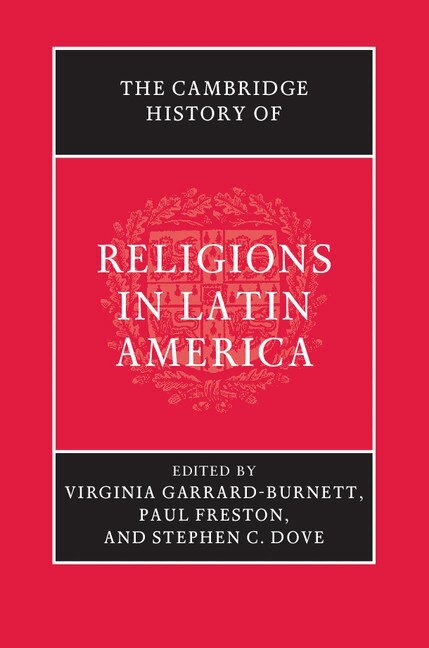
The Cambridge History of Religions in Latin America covers religious history in Latin America from pre-Conquest times until the present. This publication is important; first, because of the historical and contemporary centrality of religion in the life of Latin America; second, for the rapid process of religious change which the region is undergoing; and third, for the region's religious distinctiveness in global comparative terms, which contributes to its importance for debates over religion, globalization, and modernity. Reflecting recent currents of scholarship, this volume addresses the breadth of Latin American religion, including religions of the African diaspora, indigenous spiritual expressions, non-Christian traditions, new religious movements, alternative spiritualities, and secularizing tendencies.
Inbunden, Engelska, 2001
1 486 kr
Skickas inom 7-10 vardagar
The global expansion of evangelical Christianity is one of the most important religious developments in recent decades, but its political dimension is little studied by the comparative literature on religion and world politics. Paul Freston's book is a pioneering comparative study of the political aspects of the new mass evangelical Protestantism of sub-Saharan Africa, Latin America and parts of Asia. The book examines twenty-seven countries from the three major continents of the Third World, burrowing deep into the specificities of each country's religious and political fields, but keeping in view the need for cross-continental comparisons. The conclusion looks at the implications of evangelical politics for democracy, nationalism and globalisation. This unique account of the politics of global evangelicalism will be of interest across disciplines and in many different parts of the world.
Inbunden, Engelska, 2026
689 kr
Kommande
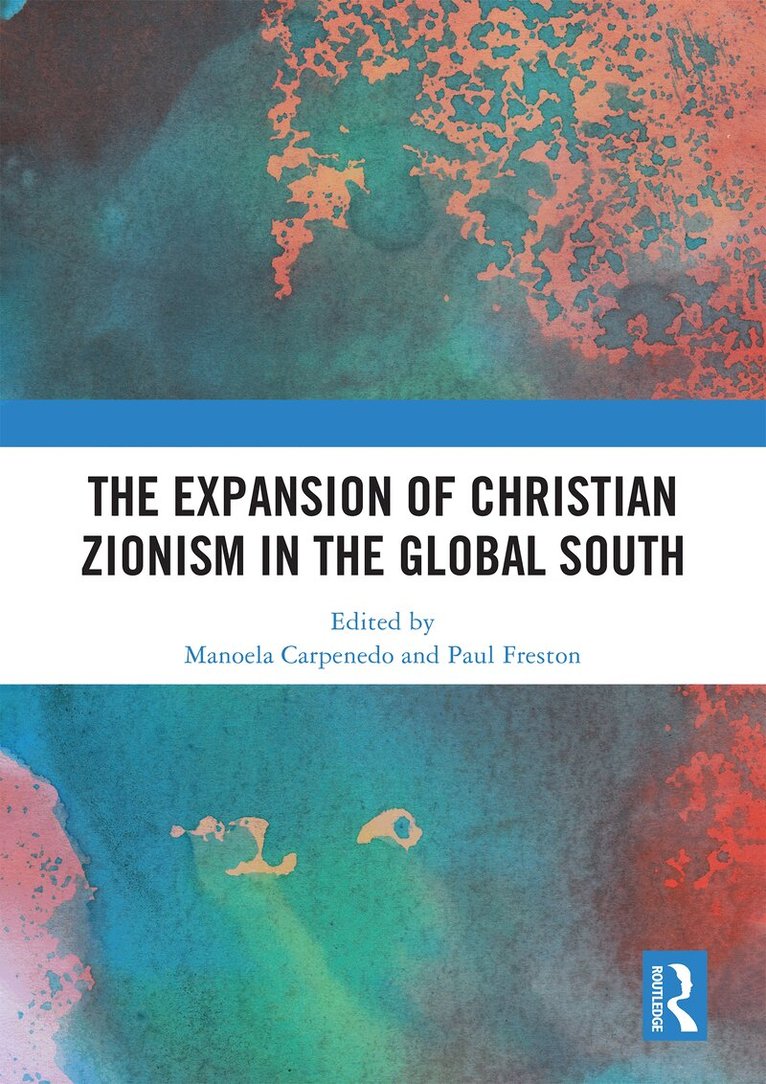
This book investigates the rise of Christian Zionism and philo-Semitism across the Global South, revealing a significant trend reshaping contemporary Christianity. In regions of Africa and Latin America, evangelical movements are increasingly engaging with Jewish rituals and Zionist political views, adapting Christian Zionism to fit diverse national aspirations and imagining national redemption through pro-Israel activism. While scholarly attention has traditionally focused on the movement's European origins and American strength, this groundbreaking collection challenges the narrative that Christian Zionism is merely an American export. It demonstrates how Christian communities in the Global South are not passively adopting but actively adapting and propagating Christian Zionist ideas in ways that reflect local contexts and aspirations. The volume reveals that what has recently come into controversial view represents only the tip of an iceberg whose true scale remains largely unappreciated. By examining the motivations and appropriations driving this phenomenon in new contexts, the collection offers a more globally representative perspective on a highly significant trend in twenty-first-century Christianity—one with profound implications for the Israel/Palestine conflict, global geopolitical stability, and unresolved dilemmas within the Christian tradition itself.The volume addresses religious studies, political theology, international relations, evangelical Christianity, postcolonial studies, and Middle Eastern politics. It will appeal to students, scholars of religion, political scientists, theologians, as well as policymakers and general readers seeking to understand the global dimensions of Christian Zionism and its impact on contemporary geopolitics.The chapters in this book were originally published as a special issue of Religion, State and Society.
E-bok
Engelska, 2016522 kr
Läs direkt efter köp
The Cambridge History of Religions in Latin America covers religious history in Latin America from pre-Conquest times until the present. This publication is important; first, because of the historical and contemporary centrality of religion in the life of Latin America; second, for the rapid process of religious change which the region is undergoing; and third, for the region''s religious distinctiveness in global comparative terms, which contributes to its importance for debates over religion, globalization, and modernity. Reflecting recent currents of scholarship, this volume addresses the breadth of Latin American religion, including religions of the African diaspora, indigenous spiritual expressions, non-Christian traditions, new religious movements, alternative spiritualities, and secularizing tendencies.
E-bok
PDF, Engelska, 2016522 kr
Läs direkt efter köp
The Cambridge History of Religions in Latin America covers religious history in Latin America from pre-Conquest times until the present. This publication is important; first, because of the historical and contemporary centrality of religion in the life of Latin America; second, for the rapid process of religious change which the region is undergoing; and third, for the region''s religious distinctiveness in global comparative terms, which contributes to its importance for debates over religion, globalization, and modernity. Reflecting recent currents of scholarship, this volume addresses the breadth of Latin American religion, including religions of the African diaspora, indigenous spiritual expressions, non-Christian traditions, new religious movements, alternative spiritualities, and secularizing tendencies.
E-bok
Engelska, 2017909 kr
Läs direkt efter köp
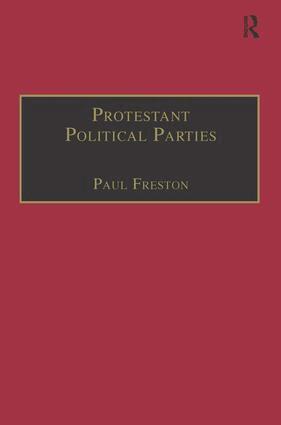
The recent global expansion of Protestant Christianity, and the increase in multiparty democracies, has led to the multiplication of Protestant political parties. One cannot talk of Protestant parties today without mentioning countries as diverse as Norway, Latvia, New Zealand, Indonesia, Zambia and Nicaragua. Whilst the well-established parties of the Netherlands and Scandinavia have long been studied, Paul Freston''s groundbreaking book is the first global survey of this phenomenon. After looking at the traditional Protestant heartlands of Europe and the English-speaking world, Freston traces the spread of the Protestant party model to post-communist countries, the Pacific, the Muslim world, southern Africa and Latin America. He examines the circumstances favouring such parties, and the political projects they represent. The conclusion analyses the diversity of Protestant parties due to different interpretations of Christian politics and varied contexts. This unique book will interest specialists and non-specialists, across disciplines and in many parts of the world.
E-bok
PDF, Engelska, 2017942 kr
Läs direkt efter köp
The recent global expansion of Protestant Christianity, and the increase in multiparty democracies, has led to the multiplication of Protestant political parties. One cannot talk of Protestant parties today without mentioning countries as diverse as Norway, Latvia, New Zealand, Indonesia, Zambia and Nicaragua. Whilst the well-established parties of the Netherlands and Scandinavia have long been studied, Paul Freston''s groundbreaking book is the first global survey of this phenomenon. After looking at the traditional Protestant heartlands of Europe and the English-speaking world, Freston traces the spread of the Protestant party model to post-communist countries, the Pacific, the Muslim world, southern Africa and Latin America. He examines the circumstances favouring such parties, and the political projects they represent. The conclusion analyses the diversity of Protestant parties due to different interpretations of Christian politics and varied contexts. This unique book will interest specialists and non-specialists, across disciplines and in many parts of the world.