Paul G. Schervish Director - Böcker
Visar alla böcker från författaren Paul G. Schervish Director. Handla med fri frakt och snabb leverans.
2 produkter
2 produkter
1 071 kr
Skickas inom 10-15 vardagar
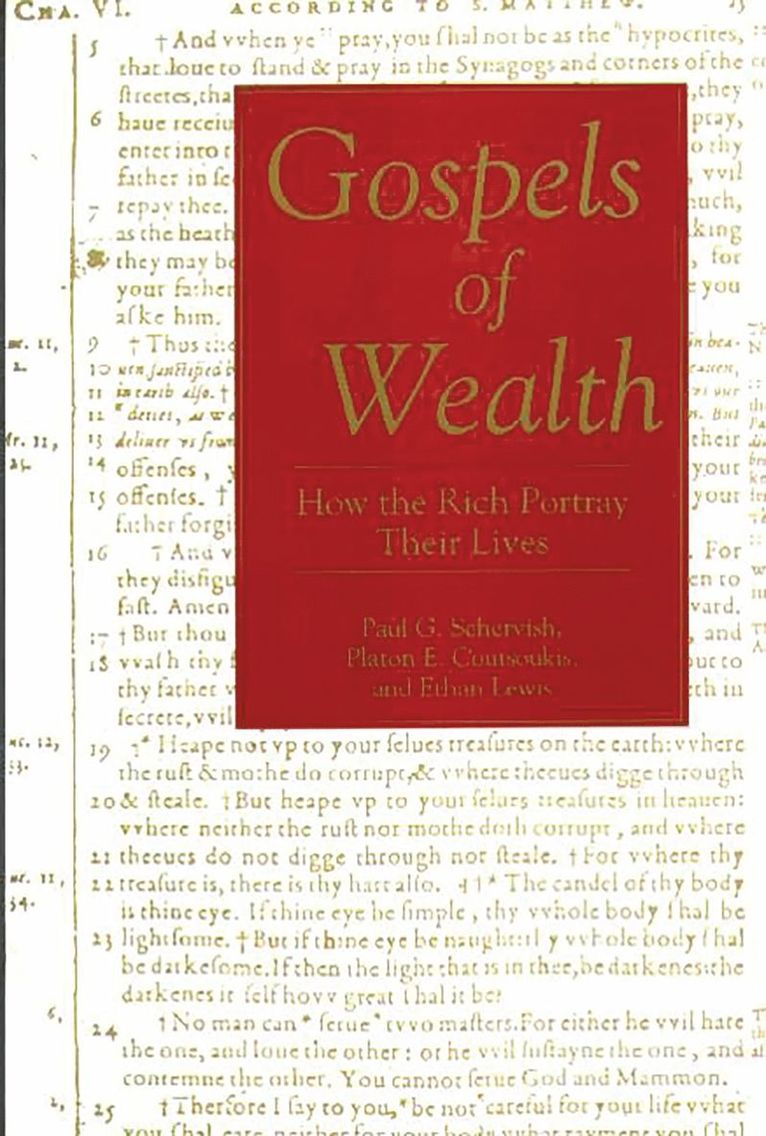
There is fascination and suspicion about the wealthy. Yet there is a dearth of material in which the wealthy speak for themselves about the meaning of their lives. Gospels of Wealth provides such narrative material. This book is a novel venture in social science. It is the first book to have a broad range of wealthy individuals recount their lives in detail, and, importantly, the first to formulate a sociology of wealth that goes beyond conventional, power-elite, Marxist, and status-group theories.The authors begin with an analytical framework for studying the biographical narratives of the wealthy. Next, 12 contemporary Americans directly and vividly recount how financial and spiritual aspects of their lives unfold and invariably intertwine. A concluding section explores rules for interpreting the truth of moral biographies and for undertaking a critical assessment of such narratives. The book's theoretical framework and first-person accounts will appeal to general readers as well as researchers in sociology, American studies, philanthropy, economic life, and cultural studies.
1 009 kr
Skickas inom 10-15 vardagar
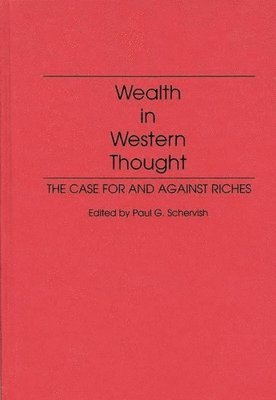
Based on roundtable discussions by a variety of scholars over a two-year period, these essays explore the complex and often contradictory matrix of sentiments, feelings, and beliefs that frame America's contemporary social doctrine of wealth. The seven Boston College faculty members whose writings comprise this volume are professors of classics, economics, ethics, history, literature, scripture, and sociology. Each scholar reviews a a range of writings and narratives that enunciate definite theses about the genesis and prospects as well as the uses and abuses of wealth. Today, as the discussion of wealth creation and distribution become framed less frequently under the rubrics of capitalism and socialism, it is propitious to examine other pieces of the debate that come to us from our Western classical, biblical, literary, and ethical traditions. The talk for and against wealth, so well articulated by Adam Smith and Karl Marx, is only one axis on which this important Western motif turns. Schervish and his contributors enable us to consult several other texts that can guide our repositioning on the controversies surrounding the moral status of wealth and the wealthy.