Paul Halpern – författare
Visar alla böcker från författaren Paul Halpern. Handla med fri frakt och snabb leverans.
25 produkter
The Allure of the Multiverse
Extra Dimensions, Other Worlds, and Parallel Universes
Av Paul Halpern
Inbunden, 2024, 12-15 år
301 kr
Lägg i varukorg
The long history of one of physics' most enticing ideas: that the universe we know isn't the only one? Our books, our movies-our imaginations-are obsessed with extra dimensions, alternate timelines, and the sense that all we see might not be all there is. In short, we can't stop thinking about the …
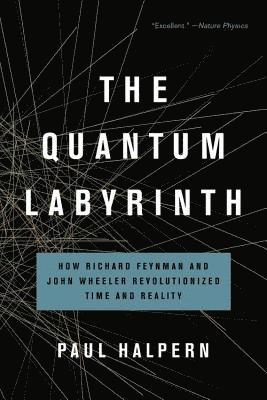
The Quantum Labyrinth
How Richard Feynman and John Wheeler Revolutionized Time and Reality
Av Paul Halpern
Häftad, 2018
169 kr
Lägg i varukorg
In Fall 1939, Richard Feynman, a brash and brilliant recent graduate of MIT, arrived in John Wheeler's Princeton office to report for duty as his teaching assistant. The prim and proper Wheeler timed their interaction with a watch placed on the table. Feynman caught on, and for the next meeting …
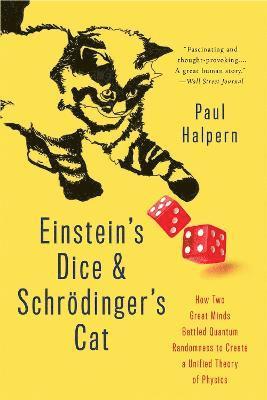
Einstein's Dice and Schrödinger's Cat
How Two Great Minds Battled Quantum Randomness to Create a Unified Theory of Physics
Av Paul Halpern
Häftad, 2016
277 kr
Lägg i varukorg
When the fuzzy indeterminacy of quantum mechanics overthrew the orderly world of Isaac Newton, Albert Einstein and Erwin Schrödinger were at the forefront of the revolution. Neither man was ever satisfied with the standard interpretation of quantum mechanics, however, and both rebelled against what …
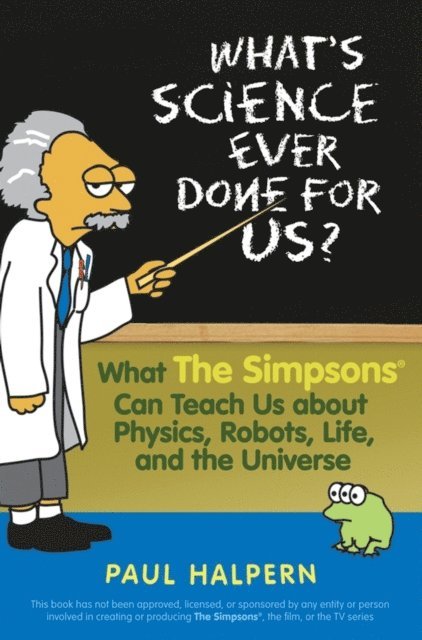
What's Science Ever Done For Us?
What the Simpsons Can Teach Us About Physics, Robots, Life, and the Universe
Av Paul Halpern
E-bok, 2007
126 kr
Lägg i varukorg
A playful and entertaining look at science on The Simpsons This amusing book explores science as presented on the longest-running and most popular animated TV series ever made: The Simpsons. Over the years, the show has examined such issues as genetic mutation, time travel, artificial intelligence, …
Collider
The Search for the World's Smallest Particles
Av Paul Halpern
Inbunden, 2009
329 kr
Lägg i varukorg
Collider
The Search for the World''s Smallest Particles
Av Paul Halpern
E-bok, 2009
138 kr
Lägg i varukorg
An accessible look at the hottest topic in physics and the experiments that will transform our understanding of the universe The biggest news in science today is the Large Hadron Collider, the world''s largest and most powerful particle-smasher, and the anticipation of finally discovering the Higgs …
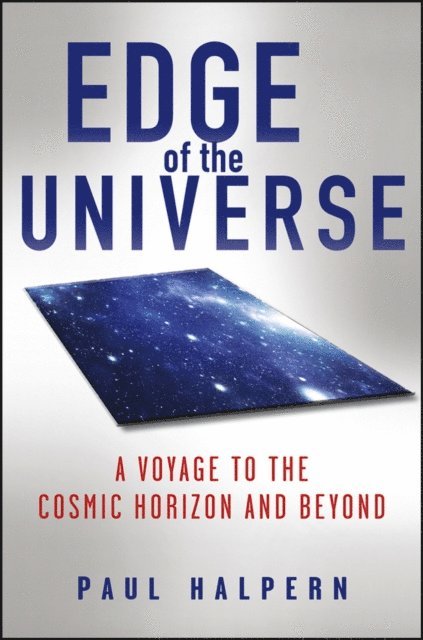
Edge of the Universe
A Voyage to the Cosmic Horizon and Beyond
Av Paul Halpern
Inbunden, 2012
347 kr
Lägg i varukorg
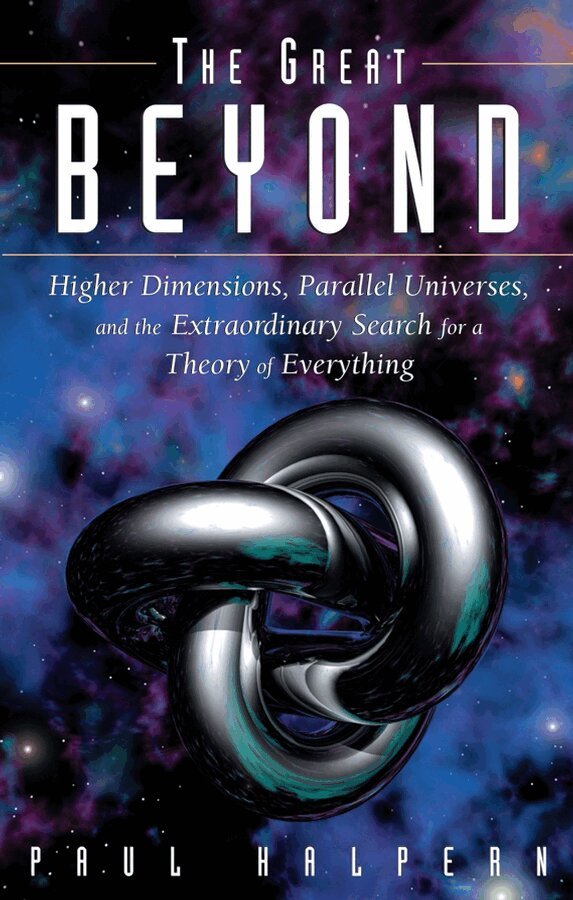
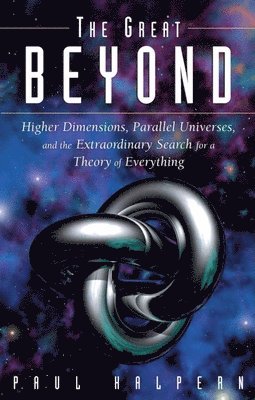
Great Beyond
Higher Dimensions, Parallel Universes and the Extraordinary Search for a Theory of Everything
Av Paul Halpern
E-bok, 2004
113 kr
Lägg i varukorg
The concept of multiple unperceived dimensions in the universe is one of the hottest topics in contemporary physics. It is essential to current attempts to explain gravity and the underlying structure of the universe. The Great Beyond begins with Einstein’s famous quarrel with Heisenberg and Bohr, …
Great Beyond
Higher Dimensions, Parallel Universes, and the Extraordinary Search for a Theory of Everything
Av Paul Halpern
Häftad, 2005
232 kr
Lägg i varukorg
What's the Matter with Pluto?: The Story of Pluto's Adventures with the Planet Club
Av Paul Halpern
Häftad
195 kr
Lägg i varukorg
Countdown To Apocalypse
A Scientific Exploration Of The End Of The World
Av Paul Halpern
Häftad, 2000
212 kr
Lägg i varukorg
Inspired by the end of the millennium, celebrated science writer Paul Halpern tackles the fate of human civilization and our planet in this meditation on the end of the world. Beginning with the religious origins of the idea of apocalypse, Halpern shows how science has borrowed the metaphor to …
Cyclical Serpent
Prospects For An Ever-repeating Universe
Av Paul Halpern
Häftad, 2003
235 kr
Lägg i varukorg
A comparative overview of common images of the universe from world art and folklore and their similarities to our current scientific understanding.
Quest For Alien Planets
Exploring Worlds Outside The Solar System
Av Paul Halpern
Häftad, 2003
235 kr
Lägg i varukorg
An amazing journey throughout the universe in a search for other planets and the possibility of extraterrestrial life.
Edge of the Universe
A Voyage to the Cosmic Horizon and Beyond
Av Paul Halpern
E-bok, 2012
233 kr
Lägg i varukorg
An accessible look at the mysteries that lurk at the edge of the known universe and beyond The observable universe, the part we can see with telescopes, is incredibly vast. Yet recent theories suggest that there is far more to the universe than what our instruments record—in fact, it could be …
Mediterranean Fleet, 1919-1929
Av Paul Halpern
E-bok, 2016
999 kr
Lägg i varukorg
Following the end of the First World War the Mediterranean Fleet found itself heavily involved in the Eastern Mediterranean, the Sea of Marmora, the Black Sea and to a lesser extent, the Adriatic. Naval commanders were faced with complex problems in a situation of neither war nor peace. The …
Mediterranean Fleet, 1919-1929
Av Paul Halpern
Inbunden, 2011
3165 kr
Lägg i varukorg
Following the end of the First World War the Mediterranean Fleet found itself heavily involved in the Eastern Mediterranean, the Sea of Marmora, the Black Sea and to a lesser extent, the Adriatic. Naval commanders were faced with complex problems in a situation of neither war nor peace. The …
Back from the Brink
Lessons from the Canadian Asset-Backed Commercial Paper Crisis
Av Paul Halpern, Caroline Cakebread m. fl.
Inbunden, 2016
428 kr
Lägg i varukorg
As global markets toppled during the 2008 financial crisis, the Canadian market for non-bank asset-backed commercial paper (ABCP) seemed on the verge of collapsing. Fueled by a top rating from DBRS, ABCP had found its way into the portfolios of some of Canada’s most sophisticated investors as well …
Back from the Brink
Lessons from the Canadian Asset-Backed Commercial Paper Crisis
Av Paul Halpern, Caroline Cakebread m. fl.
E-bok, 2016
554 kr
Lägg i varukorg
As global markets toppled during the 2008 financial crisis, the Canadian market for non-bank asset-backed commercial paper (ABCP) seemed on the verge of collapsing. Fueled by a top rating from DBRS, ABCP had found its way into the portfolios of some of Canada’s most sophisticated investors as well …
The Great Atom Debate
Ernst Mach, Ludwig Boltzmann, and the Battle for the Essence of Reality
Av Paul Halpern
Inbunden, 2027
328 kr
Kommande
The little-known story of how two of history's greatest physicists waged a war over the existence of the atom and the nature of reality itselfNearly 2,500 years ago, the Greek philosopher Democritus argued presciently, but without evidence, that all matter is made of tiny indivisible entities …
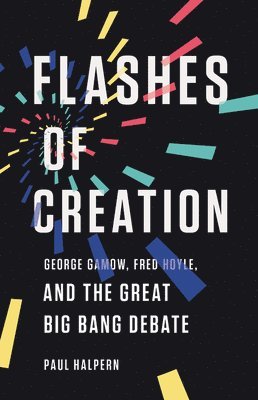
Flashes of Creation
George Gamow, Fred Hoyle, and the Great Big Bang Debate
Av Paul Halpern
Inbunden, 2021
4,0 utav 5 stjärnor. Totalt antal röster: (1)
277 kr
Lägg i varukorg
In the past decade, Paul Halpern has brought readers three stunning histories of science -- Einstein's Dice and Schroedinger's Cats, The Quantum Labyrinth, and Synchronicity -- that reveal the twisted, bizarre, and illuminating stories of physics' greatest thinkers and ideas. In Flashes of …
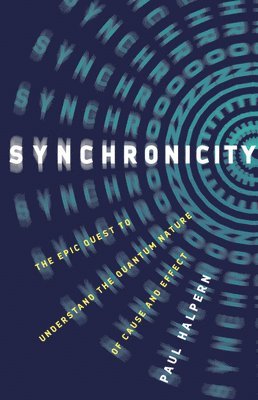
Synchronicity
The Epic Quest to Understand the Quantum Nature of Cause and Effect
Av Paul Halpern
Inbunden, 2020
4,0 utav 5 stjärnor. Totalt antal röster: (1)
277 kr
Lägg i varukorg
In Synchronicity Paul Halpern tells the little-known story of the unlikely friendship between the Nobel-prize-winning quantum physicist Wolfgang Pauli and the father of psychoanalysis, Carl Jung. In the 1930s, Pauli and Jung began collaborating on a unified theory of quantum and the mind, the …
Great Beyond
Higher Dimensions, Parallel Universes and the Extraordinary Search for a Theory of Everything
Av Paul Halpern
Inbunden, 2005
345 kr
Lägg i varukorg
Mediterranean Fleet, 1919-1929
Av Paul Halpern
Häftad, 2019
849 kr
Lägg i varukorg
Following the end of the First World War the Mediterranean Fleet found itself heavily involved in the Eastern Mediterranean, the Sea of Marmora, the Black Sea and to a lesser extent, the Adriatic. Naval commanders were faced with complex problems in a situation of neither war nor peace. The …