Paul Honigsheim - Böcker
Visar alla böcker från författaren Paul Honigsheim. Handla med fri frakt och snabb leverans.
5 produkter
5 produkter
671 kr
Skickas inom 10-15 vardagar
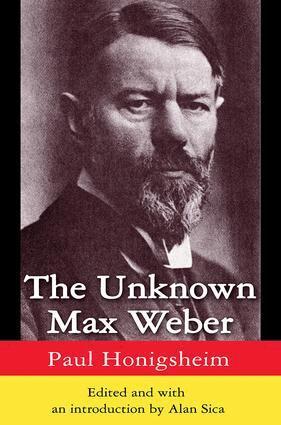
Edited and introduced by Alan Sica.Paul Honigsheim is unique. One of the select few who regularly participated in the Weber-Kreis in Heidelberg during the 1910s, Honigsheim's special place within Weber's world adds a degree of credibility to his writings matched by few others. In the late 1940s Honigsheim published four essays from what might be called Weber's "lost decade," the period during which Weber established his reputation in Germany as the most versatile and brilliant of the younger social scientists. Together in one volume for the first time, these essays reveal portions of Weber's work previously unavailable in English.In the opening essay, "Max Weber as Rural Sociologist," Honigsheim treats Weber's essays on Russia, Poland, and other works in economic history. He offers a point of departure for those wishing to probe Weber's celebrated and misconstrued distaste for traditional Slavic social structure. In "Max Weber as Applied Anthropologist," Honigsheim examines Weber's commitment to the study of race, ethnicity, and nationalism as mediated by ethnic attachments, social policy formation, handicraft economies, and what he calls "Ethno-Politics." "Max Weber as Historian of Agriculture and Rural Life" is a masterpiece of exegesis and comparative inquiry. The final essay, "Max Weber: His Religious and Ethical Background and Development," acts as a minor corrective and addendum to Marianne Weber's biography. The book concludes with Honigsheim's reminiscences of the Weber circle.Interest in the work and person of Max Weber grows with each year. From his writings the reader may glean the finer shades and contours of thoughts that arise from private exchanges between Honigsheim and Max Weber. This volume will interest a broad spectrum of social scientists.
1 132 kr
Tillfälligt slut
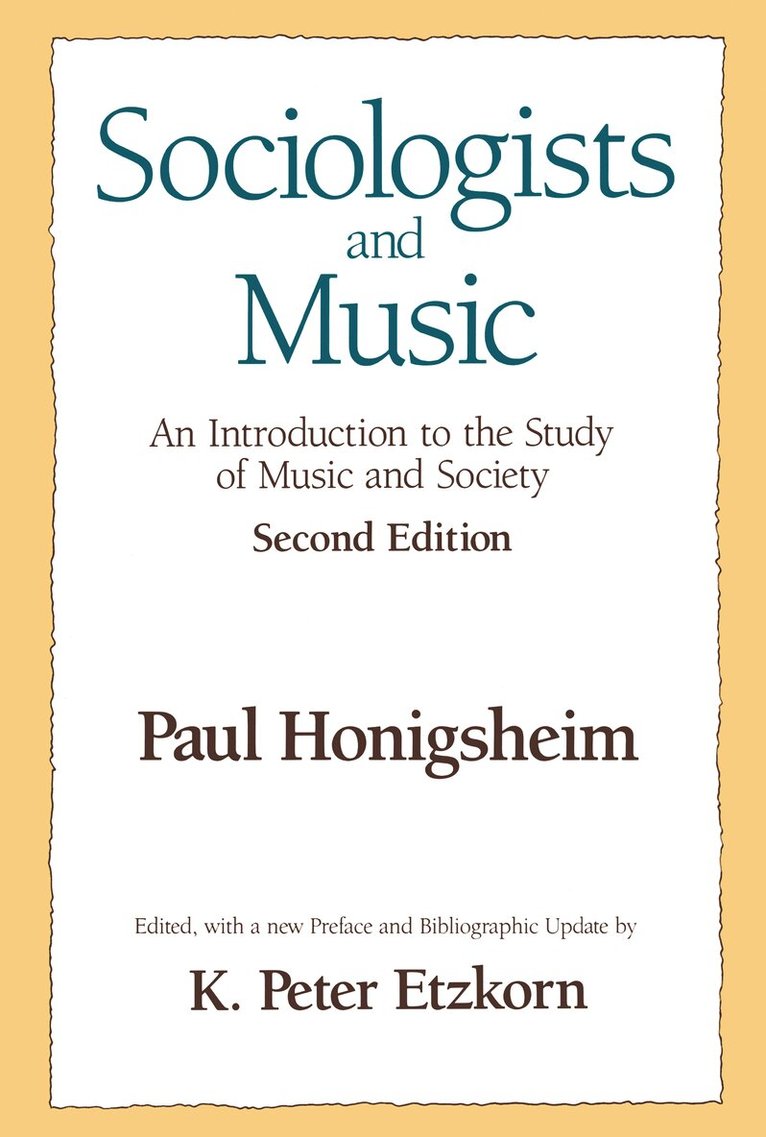
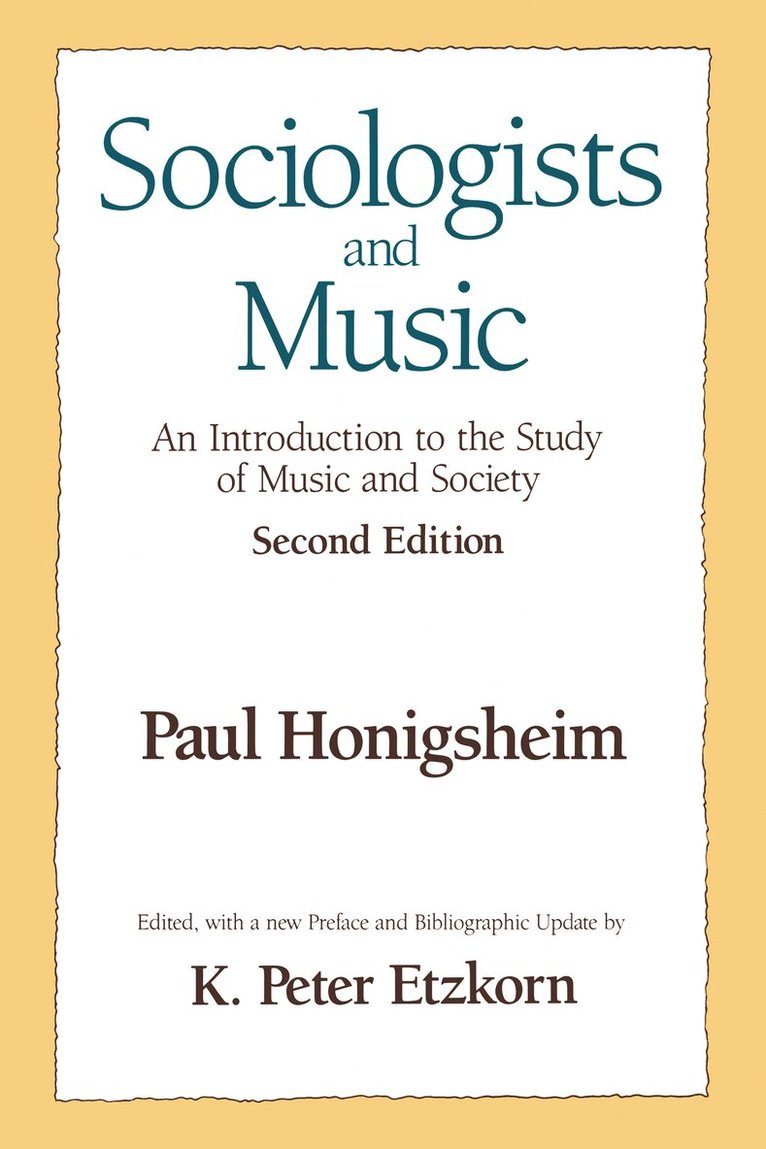
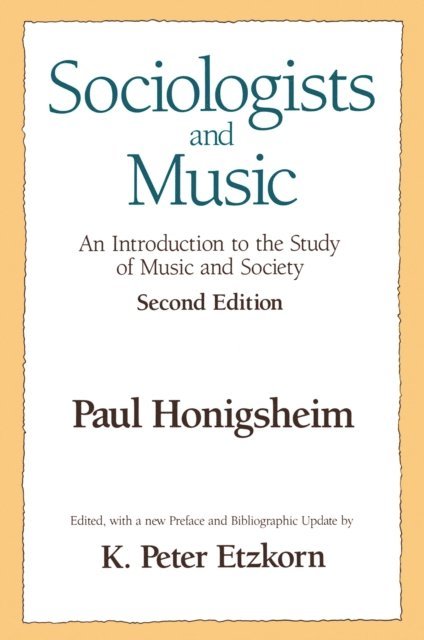
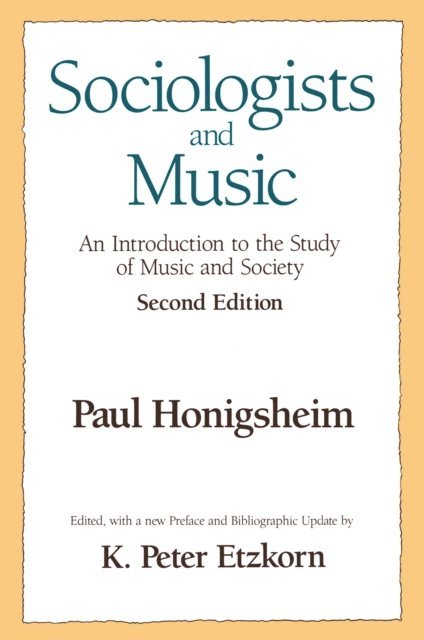
Sociologists have always been fascinated with music. In some way or another they have encountered music as an important social force in its own right, as an accompaniment or by-product of phenomena they studies (such as youth culture or the drug scene). This book goes one step towards culling the existing literature for building blocks toward introducing sociological synthesis and by presenting the English version of extensive writings on music and society by Paul Honisgsheim
635 kr
Skickas inom 10-15 vardagar
Sociologists have always been fascinated with music. In one way or another they have encountered music as an important social force in its own right, as an accompaniment or byproduct of phenomena they studied (such as youth culture or the drug scene), or as a means for obtaining social compliance (as in religious ceremonies or in the military). This book goes one step toward remedying this situation by culling the existing literature for building blocks toward introducing sociological synthesis and by presenting the English version of the extensive writings on music and society by Paul Honigsheim.
2 289 kr
Skickas inom 10-15 vardagar
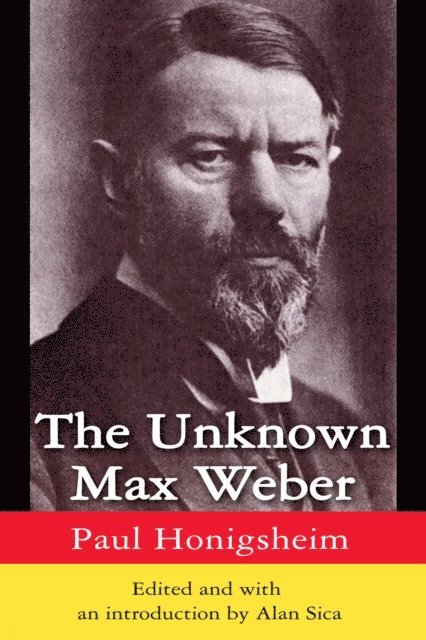
Paul Honigsheim is unique. One of the select few who regularly participated in the Weber-Kreis in Heidelberg during the 1910s, Honigsheim's special place within Weber's world adds a degree of credibility to his writings matched by few others. In the late 1940s Honigsheim published four essays from what might be called Weber's "lost decade," the period during which Weber established his reputation in Germany as the most versatile and brilliant of the younger social scientists. Together in one volume for the first time, these essays reveal portions of Weber's work previously unavailable in English.In the opening essay, "Max Weber as Rural Sociologist," Honigsheim treats Weber's essays on Russia, Poland, and other works in economic history. He offers a point of departure for those wishing to probe Weber's celebrated and misconstrued distaste for traditional Slavic social structure. In "Max Weber as Applied Anthropologist," Honigsheim examines Weber's commitment to the study of race, ethnicity, and nationalism as mediated by ethnic attachments, social policy formation, handicraft economies, and what he calls "Ethno-Politics." "Max Weber as Historian of Agriculture and Rural Life" is a masterpiece of exegesis and comparative inquiry. The final essay, "Max Weber: His Religious and Ethical Background and Development," acts as a minor corrective and addendum to Marianne Weber's biography. The book concludes with Honigsheim's reminiscences of the Weber circle.Interest in the work and person of Max Weber grows with each year. From his writings the reader may glean the finer shades and contours of thoughts that arise from private exchanges between Honigsheim and Max Weber. This volume will interest a broad spectrum of social scientists.
501 kr
Skickas inom 10-15 vardagar