Paul J. P. Sandul – författare
Visar alla böcker från författaren Paul J. P. Sandul. Handla med fri frakt och snabb leverans.
7 produkter
7 produkter
Häftad, Engelska, 2019
277 kr
Skickas inom 10-15 vardagar
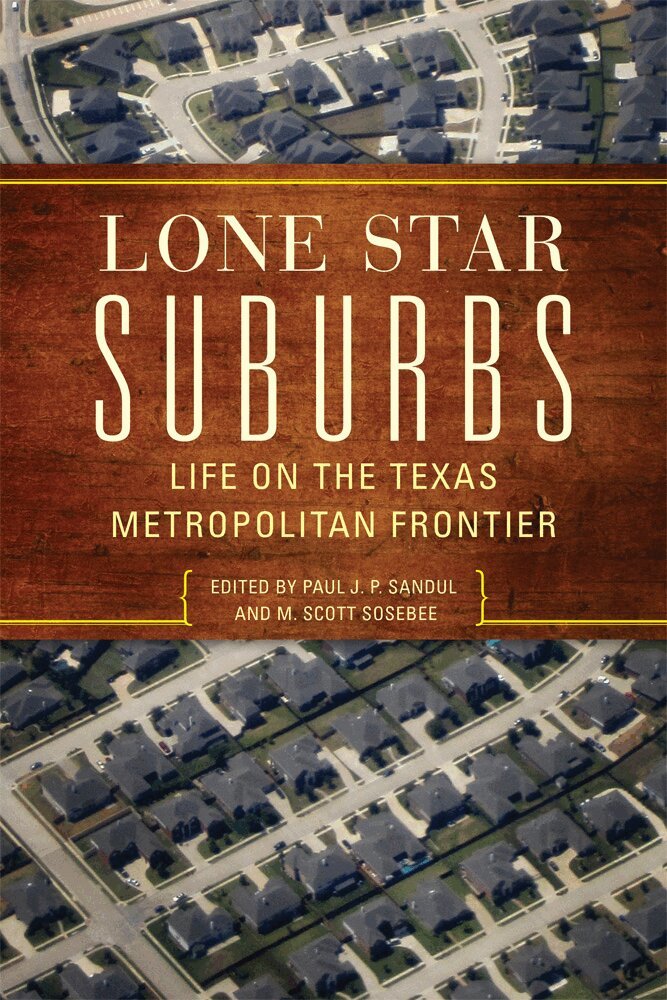
How is it that nearly 90 percent of the Texan population currently lives in metropolitan regions, but many Texans still embrace and promote a vision of their state's nineteenth-century rural identity? This is one of the questions the editors and contributors to Lone Star Suburbs confront. One answer, they contend, may be the long shadow cast by a Texas myth that has served the dominant culture while marginalizing those on the fringes. Another may be the criticism suburbia has endured for undermining the very romantic individuality that the Texas myth celebrates.From the 1950s to the present, cultural critics have derided suburbs as landscapes of sameness and conformity. Only recently have historians begun to document the multidimensional industrial and ethnic aspects of suburban life as well as the development of multifamily housing, services, and leisure facilities. In Lone Star Suburbs, urban historian Paul J. P. Sandul, Texas historian M. Scott Sosebee, and ten contributors move the discussion of suburbia well beyond the stereotype of endless blocks of white middle-class neighborhoods and fill a gap in our knowledge of the Lone Star State.This collection supports the claim that Texas is not only primarily suburban but also the most representative example of this urban form in the United States. Essays consider transportation infrastructure, urban planning, and professional sports as they relate to the suburban ideal; the experiences of African Americans, Asian Americans, and Latinos in Texas metropolitan areas; and the environmental consequences of suburbanization in the state.Texas is no longer the bastion of rural life in the United States but now - for better or worse - represents the leading edge of suburban living. This important book offers a first step in coming to grips with that reality.
Inbunden, Engelska, 2015
1 379 kr
Skickas inom 5-8 vardagar
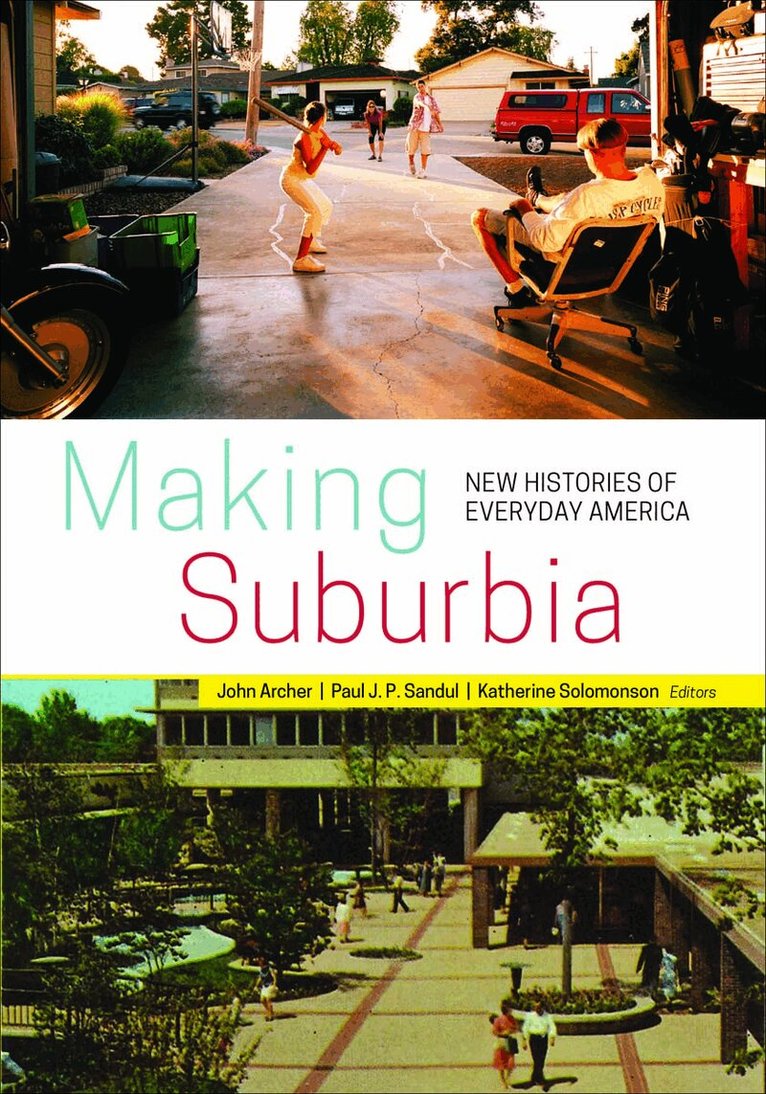
What are the suburbs? The popular vision of monotonous streets curving into culs-de-sac and emerald lawns unfurling from nearly identical houses would have us believe that suburbia is a boring, homogeneous, and alienating place. But this stereotypical portrayal of the suburbs tells us very little about the lives of the people who actually live there. Making Suburbia offers a diverse collection of essays that examine how the history and landscape of the American suburb is constructed through the everyday actions and experiences of its inhabitants.From home decor and garage rock to modernist shopping malls and holiday parades, contributors explore how suburbanites actively created the spaces of suburbia. The volume is divided into four parts, each of which addresses a distinct aspect of the ways in which suburbia is lived in and made. More than twenty essays range from Becky Nicolaides’s chronicle of cross-racial alliances in Pasadena, to Jodi Rios’s investigation of St. Louis residents’ debates over public space and behavior, to Andrew Friedman’s story of Cold War double agents who used the suburban milieu as a cover for their espionage.Presenting a wide variety of voices, Making Suburbia reveals that suburbs are a constantly evolving landscape for the articulation of American society and are ultimately defined not by planners but by their inhabitants.Contributors: Anna Vemer Andrzejewski, U of Wisconsin–Madison; Heather Bailey, History Colorado State Historical Fund; Gretchen Buggeln, Valparaiso U; Charity R. Carney, Western Governors U; Martin Dines, Kingston U London; Andrew Friedman, Haverford College; Beverly K. Grindstaff, San JosÉ State U; Dianne Harris, U of Illinois, Urbana–Champaign; Ursula Lang, U of Minnesota; Matthew Gordon Lasner, Hunter College; Willow Lung-Amam, U of Maryland, College Park; Becky Nicolaides, U of California, Los Angeles; Trecia Pottinger, Oberlin College; Tim Retzloff, Michigan State U; Jodi Rios, U of California, Berkeley; Christopher Sellers, Stony Brook U; David Smiley, Columbia U; Stacie Taranto, Ramapo College of New Jersey; Steve Waksman, Smith College; Holley Wlodarczyk, U of Minnesota.
Häftad, Engelska, 2015
385 kr
Skickas inom 5-8 vardagar
What are the suburbs? The popular vision of monotonous streets curving into culs-de-sac and emerald lawns unfurling from nearly identical houses would have us believe that suburbia is a boring, homogeneous, and alienating place. But this stereotypical portrayal of the suburbs tells us very little about the lives of the people who actually live there. Making Suburbia offers a diverse collection of essays that examine how the history and landscape of the American suburb is constructed through the everyday actions and experiences of its inhabitants.From home decor and garage rock to modernist shopping malls and holiday parades, contributors explore how suburbanites actively created the spaces of suburbia. The volume is divided into four parts, each of which addresses a distinct aspect of the ways in which suburbia is lived in and made. More than twenty essays range from Becky Nicolaides’s chronicle of cross-racial alliances in Pasadena, to Jodi Rios’s investigation of St. Louis residents’ debates over public space and behavior, to Andrew Friedman’s story of Cold War double agents who used the suburban milieu as a cover for their espionage.Presenting a wide variety of voices, Making Suburbia reveals that suburbs are a constantly evolving landscape for the articulation of American society and are ultimately defined not by planners but by their inhabitants.Contributors: Anna Vemer Andrzejewski, U of Wisconsin–Madison; Heather Bailey, History Colorado State Historical Fund; Gretchen Buggeln, Valparaiso U; Charity R. Carney, Western Governors U; Martin Dines, Kingston U London; Andrew Friedman, Haverford College; Beverly K. Grindstaff, San JosÉ State U; Dianne Harris, U of Illinois, Urbana–Champaign; Ursula Lang, U of Minnesota; Matthew Gordon Lasner, Hunter College; Willow Lung-Amam, U of Maryland, College Park; Becky Nicolaides, U of California, Los Angeles; Trecia Pottinger, Oberlin College; Tim Retzloff, Michigan State U; Jodi Rios, U of California, Berkeley; Christopher Sellers, Stony Brook U; David Smiley, Columbia U; Stacie Taranto, Ramapo College of New Jersey; Steve Waksman, Smith College; Holley Wlodarczyk, U of Minnesota.
Inbunden, Engelska, 2006
273 kr
Skickas inom 5-8 vardagar
Inbunden, Engelska, 2006
295 kr
Skickas inom 5-8 vardagar
E-bok
Engelska, 2014193 kr
Läs direkt efter köp
At the turn of the 20th century, the California dream was a suburban ideal where life on the farm was exceptional. Agrarian virtue existed alongside good roads, social clubs, cultural institutions, and business commerce. The California suburban dream was the ultimate symbol of progress and modernity. California Dreaming: Boosterism, Memory, and Rural Suburbs in the Golden State analyzes the growth, promotion, and agricultural colonization that fed this dream during the early 1900s. Through this analysis, Paul J. P. Sandul introduces a newly identified rural-suburban type: the agriburb, a rural suburb deliberately planned, developed, and promoted for profit. Sandul reconceptualizes California’s growth during this time period, establishing the agriburb as a suburban phenomenon that occurred long before the booms of the 1920s and 1950s. Sandul’s analysis contributes to a new suburban history that includes diverse constituencies and geographies and focuses on the production and construction of place and memory. Boosters purposefully “harvested” suburbs with an eye toward direct profit and metropolitan growth. State boosters boasted of unsurpassable idyllic communities while local boosters bragged of communities that represented the best of the best, both using narratives of place, class, race, lifestyle, and profit to avow images of the rural and suburban ideal. This suburban dream attracted people who desired a family home, nature, health, culture, refinement, and rural virtue. In the agriburb, a family could live on a small home grove while enjoying the perks of a progressive city. A home located within the landscape of natural California with access to urban amenities provided a good place to live and a way to gain revenue through farming. To uncover and dissect the agriburb, Sandul focuses on local histories from California’s Central Valley and the Inland Empire of Southern California, including Ontario near Los Angeles and Orangevale and Fair Oaks outside Sacramento. His analysis closely operates between the intersections of history, anthropology, geography, sociology, and the rural and urban, while examining a metanarrative that exposes much about the nature and lasting influence of cultural memory and public history upon agriburban communities.
E-bok
PDF, Engelska, 2014193 kr
Läs direkt efter köp
At the turn of the 20th century, the California dream was a suburban ideal where life on the farm was exceptional. Agrarian virtue existed alongside good roads, social clubs, cultural institutions, and business commerce. The California suburban dream was the ultimate symbol of progress and modernity. California Dreaming: Boosterism, Memory, and Rural Suburbs in the Golden State analyzes the growth, promotion, and agricultural colonization that fed this dream during the early 1900s. Through this analysis, Paul J. P. Sandul introduces a newly identified rural-suburban type: the agriburb, a rural suburb deliberately planned, developed, and promoted for profit. Sandul reconceptualizes California’s growth during this time period, establishing the agriburb as a suburban phenomenon that occurred long before the booms of the 1920s and 1950s. Sandul’s analysis contributes to a new suburban history that includes diverse constituencies and geographies and focuses on the production and construction of place and memory. Boosters purposefully “harvested” suburbs with an eye toward direct profit and metropolitan growth. State boosters boasted of unsurpassable idyllic communities while local boosters bragged of communities that represented the best of the best, both using narratives of place, class, race, lifestyle, and profit to avow images of the rural and suburban ideal. This suburban dream attracted people who desired a family home, nature, health, culture, refinement, and rural virtue. In the agriburb, a family could live on a small home grove while enjoying the perks of a progressive city. A home located within the landscape of natural California with access to urban amenities provided a good place to live and a way to gain revenue through farming. To uncover and dissect the agriburb, Sandul focuses on local histories from California’s Central Valley and the Inland Empire of Southern California, including Ontario near Los Angeles and Orangevale and Fair Oaks outside Sacramento. His analysis closely operates between the intersections of history, anthropology, geography, sociology, and the rural and urban, while examining a metanarrative that exposes much about the nature and lasting influence of cultural memory and public history upon agriburban communities.