Paul Kantor – författare
642 kr
Skickas inom 10-15 vardagar
489 kr
Skickas inom 5-8 vardagar
539 kr
Läs direkt efter köp
326 kr
Skickas inom 10-15 vardagar
730 kr
Läs direkt efter köp
Here is a book that makes sense of the L.A. riots, homelessness, tax giveaways, and the other big urban issues that are back in the national spotlight. In this streamlined and updated new edition of his classic book, The Dependent City, Paul Kantor now focuses on economic development and social welfare policies to reveal the key dilemmas of American urban politics. Returning to a political economy theme, Kantor explores how city governments have struggled to escape and accommodate the reality of their economic dependency in the policies that they''ve pursued. Revisiting cities across the nation, Kantor finds not only that they have become more dependent but also that the character of this dependency has changed and deepened. Exploring local regimes in the Frostbelt and Sunbelt and in suburbia, he finds that they frequently act more like captives of big business rather than as representatives of citizens. Local attempts to promote social justice increasingly run up against a wall of economic dependency created by federal policies and business power. This book signals how American cities can find ways of overcoming this dependency by working together with states and the federal government to promote healthy, democratic urban politics. The Dependent City Revisited is an accessible, provocative supplement for a wide variety of courses in urban studies and political economy as well as stimulating reading for anyone who is interested in understanding America''s urban mosaic.
757 kr
Läs direkt efter köp
Here is a book that makes sense of the L.A. riots, homelessness, tax giveaways, and the other big urban issues that are back in the national spotlight. In this streamlined and updated new edition of his classic book, The Dependent City, Paul Kantor now focuses on economic development and social welfare policies to reveal the key dilemmas of American urban politics. Returning to a political economy theme, Kantor explores how city governments have struggled to escape and accommodate the reality of their economic dependency in the policies that they''ve pursued. Revisiting cities across the nation, Kantor finds not only that they have become more dependent but also that the character of this dependency has changed and deepened. Exploring local regimes in the Frostbelt and Sunbelt and in suburbia, he finds that they frequently act more like captives of big business rather than as representatives of citizens. Local attempts to promote social justice increasingly run up against a wall of economic dependency created by federal policies and business power. This book signals how American cities can find ways of overcoming this dependency by working together with states and the federal government to promote healthy, democratic urban politics. The Dependent City Revisited is an accessible, provocative supplement for a wide variety of courses in urban studies and political economy as well as stimulating reading for anyone who is interested in understanding America''s urban mosaic.
1 965 kr
Skickas inom 3-6 vardagar
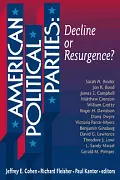
Powerful cross-currents of both decline and resurgence have been affecting American political parties over the past several decades. Is the era of decline that began in the late 1960s over and are the parties in a new era of rebuilding? In what direction are the parties headed and what does it mean for a healthy and well-functioning democracy?
American Political Parties brings together a distinguished team of contributors to explore these questions. Students are exposed to original, "state-of-the-art" research on the parties that is written to be accessible and engaging.
Presenting both historical and contemporary material on the changing U.S. parties, the book offers a balanced portrait and a wide variety of views concerning the continuing weaknesses of the parties and their concurrent signs of revitalization. Essays examine three important elements of parties—the parties in the mass public, the parties as electoral and political organizations, and the parties as governing groups. Two themes recur throughout—the first deals with party change (specifically realignment and dealignment) and the second with party responsibility in a democratic government. The concluding chapter places the contibutors' various findings and viewpoints in perspective. It offers several theories to help explain why the parties seem to be following their dual paths of development and considers the implications of this state of affairs for the future of American democracy.
1 116 kr
Skickas inom 10-15 vardagar
1 459 kr
Läs direkt efter köp