Paul L. Heck – författare
Visar alla böcker från författaren Paul L. Heck. Handla med fri frakt och snabb leverans.
6 produkter
6 produkter
1 147 kr
Skickas inom 5-8 vardagar
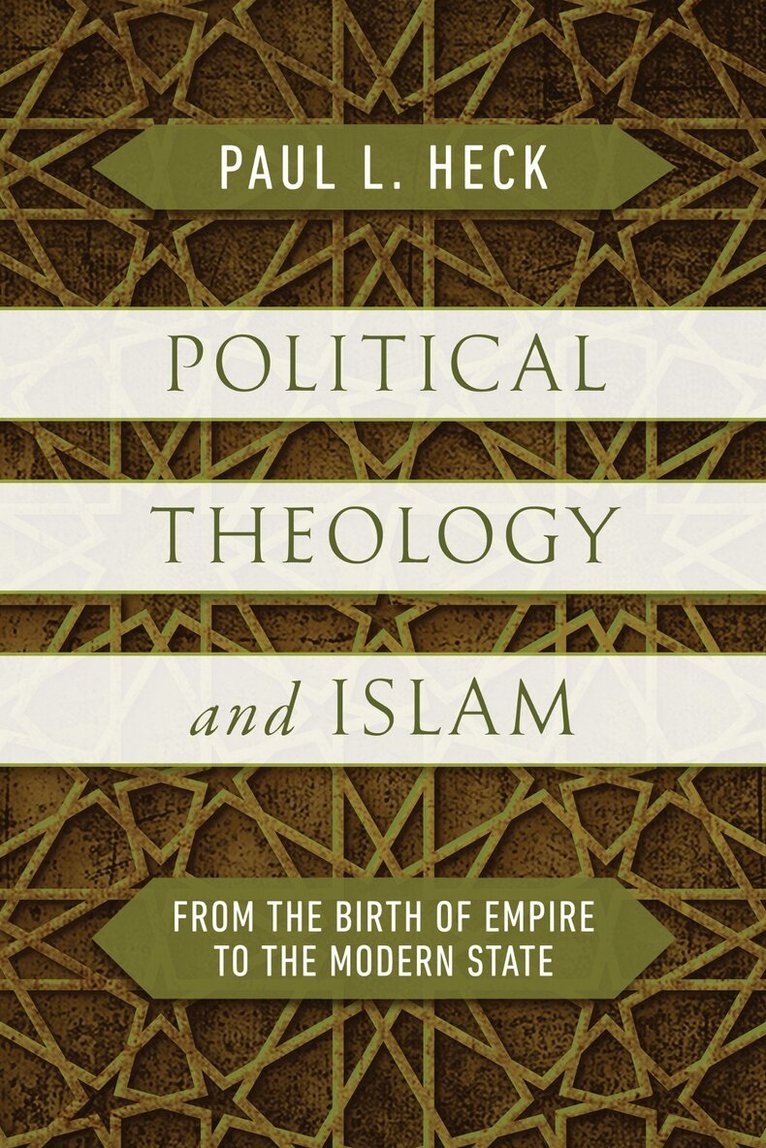
Paul L. Heck's Political Theology and Islam offers a sophisticated and comprehensive analysis of sovereignty in Islamic society, beginning with the origins of Islam and extending to the present.This wide-ranging study sets out to answer an unassumingly tricky question: What is politics in Islam? Paul L. Heck's answer takes the form of a close analysis of sovereignty across Islamic history, approaching this concept from the perspective of political theology. As he illustrates, the history of politics in Islam is best understood as an ongoing struggle for a moral order between those who occupy positions of rulership and religious voices that communicate the ethics of Islam and educate the public in their religious and moral devotions. In this sense, sovereignty in Islam is split between ruling powers and pious communities, whose interactions range from close cooperation to outright competition. Heck shows that it is precisely through these interactions that Islamic conceptions of sovereignty are constructed and negotiated.Political Theology and Islam's first section spells out the concepts and methods for the study of politics in Islam as a struggle for a moral order, one not only involving varied claims to sovereignty but also a general determination to realize the righteousness of Islam that stands at the heart of the message that the Prophet Muhammad conveyed to his society in seventh-century Arabia. The following sections demonstrate, through examples from both the past and today's worldwide Muslim community, the diverse ways in which the umma, the community of Muslims, has struggled for a moral order that recalls its prophetic message. Deftly moving in various political theaters and through a wide range of intellectual traditions, Heck's book will emerge as a touchstone of scholarship in the field of Muslim politics and intellectual thought.
469 kr
Skickas
Paul L. Heck's Political Theology and Islam offers a sophisticated and comprehensive analysis of sovereignty in Islamic society, beginning with the origins of Islam and extending to the present.This wide-ranging study sets out to answer an unassumingly tricky question: What is politics in Islam? Paul L. Heck's answer takes the form of a close analysis of sovereignty across Islamic history, approaching this concept from the perspective of political theology. As he illustrates, the history of politics in Islam is best understood as an ongoing struggle for a moral order between those who occupy positions of rulership and religious voices that communicate the ethics of Islam and educate the public in their religious and moral devotions. In this sense, sovereignty in Islam is split between ruling powers and pious communities, whose interactions range from close cooperation to outright competition. Heck shows that it is precisely through these interactions that Islamic conceptions of sovereignty are constructed and negotiated.Political Theology and Islam's first section spells out the concepts and methods for the study of politics in Islam as a struggle for a moral order, one not only involving varied claims to sovereignty but also a general determination to realize the righteousness of Islam that stands at the heart of the message that the Prophet Muhammad conveyed to his society in seventh-century Arabia. The following sections demonstrate, through examples from both the past and today's worldwide Muslim community, the diverse ways in which the umma, the community of Muslims, has struggled for a moral order that recalls its prophetic message. Deftly moving in various political theaters and through a wide range of intellectual traditions, Heck's book will emerge as a touchstone of scholarship in the field of Muslim politics and intellectual thought.
646 kr
Skickas inom 10-15 vardagar
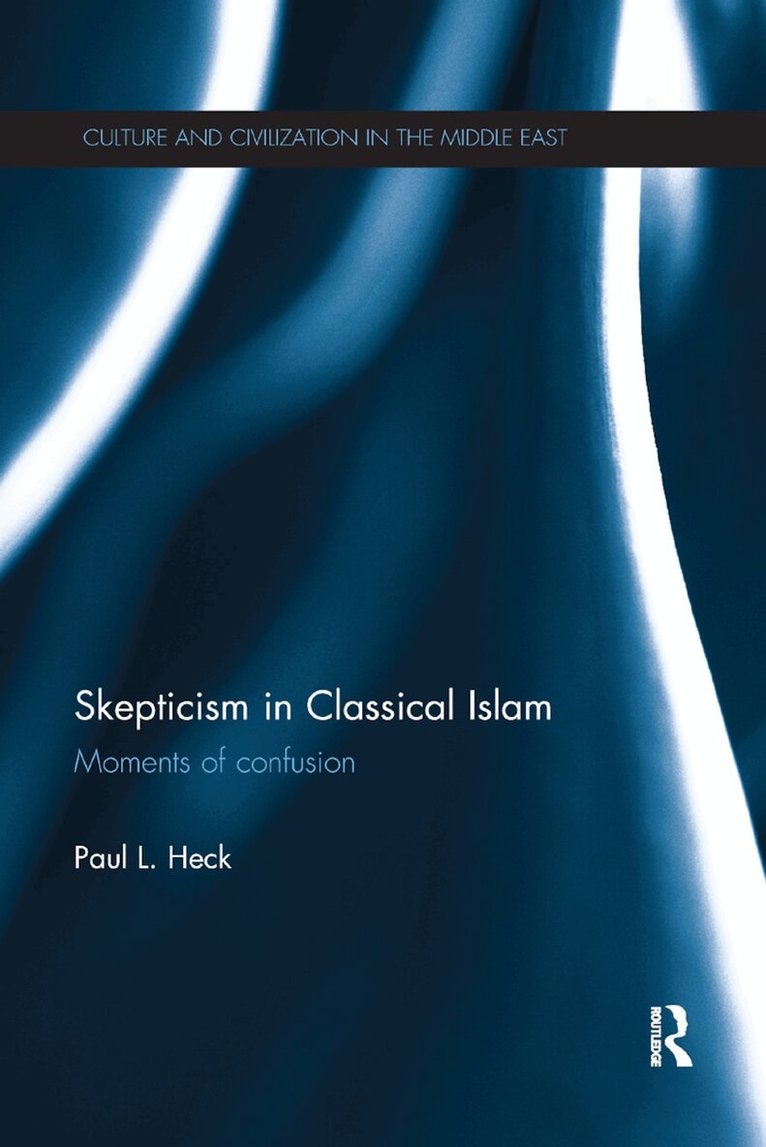
The first major treatment of skepticism in Islam, this book explores the critical role of skeptical thinking in the development of theology in Islam. It examines the way key thinkers in classical Islam faced perplexing questions about the nature of God and his relation to the world, all the while walking a fine line between belief in God’s message as revealed in the Qur’an, and the power of the mind to discover truths on its own. Skepticism in Classical Islam reveals how doubt was actually an integral part of scholarly life at this time. Skepticism is by no means synonymous with atheism. It is, rather, the admission that one cannot convincingly demonstrate a truth claim with certainty, and Islam’s scholars, like their counterparts elsewhere, acknowledged such impasses, only to be inspired to find new ways to resolve the conundrums they faced. Whilst their conundrums were unique, their admission of the limits of knowledge shares much with other scholarly traditions. Seeking to put Islam on the map of the broader study of the history of scepticism, this book will be of interest to scholars and students of Religion, History and Philosophy.
2 317 kr
Skickas inom 10-15 vardagar
The first major treatment of skepticism in Islam, this book explores the critical role of skeptical thinking in the development of theology in Islam. It examines the way key thinkers in classical Islam faced perplexing questions about the nature of God and his relation to the world, all the while walking a fine line between belief in God’s message as revealed in the Qur’an, and the power of the mind to discover truths on its own. Skepticism in Classical Islam reveals how doubt was actually an integral part of scholarly life at this time. Skepticism is by no means synonymous with atheism. It is, rather, the admission that one cannot convincingly demonstrate a truth claim with certainty, and Islam’s scholars, like their counterparts elsewhere, acknowledged such impasses, only to be inspired to find new ways to resolve the conundrums they faced. Whilst their conundrums were unique, their admission of the limits of knowledge shares much with other scholarly traditions. Seeking to put Islam on the map of the broader study of the history of scepticism, this book will be of interest to scholars and students of Religion, History and Philosophy.
349 kr
Skickas inom 3-6 vardagar
733 kr
Skickas inom 5-8 vardagar
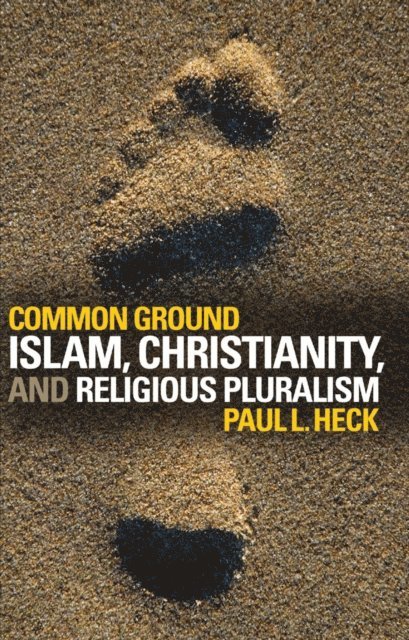
Christian-Muslim interaction is a reality today in all corners of the globe, but while many celebrate the commonality of these traditions, significant differences remain. If these religions cannot be easily reconciled, can we perhaps view them through a single albeit refractive lens? This is the approach Paul Heck takes in "Common Ground": to undertake a study of religious pluralism as a theological and social reality, and to approach the two religions in tandem as part of a broader discussion on the nature of the good society. Rather than compare Christianity and Islam as two species of faith, religious pluralism offers a prism through which a society as a whole - secular and religious alike - can consider its core beliefs and values. Christianity and Islam are not merely identities that designate particular communities, but reference points that all can comprehend and discuss knowledgeably. This analysis of how Islam and Christianity understand theology, ethics, and politics - specifically democracy and human rights - offers a way for that discussion to move forward.