Paul M. Harari – författare
Visar alla böcker från författaren Paul M. Harari. Handla med fri frakt och snabb leverans.
6 produkter
6 produkter
Inbunden, Engelska, 2007
1 681 kr
Skickas inom 10-15 vardagar
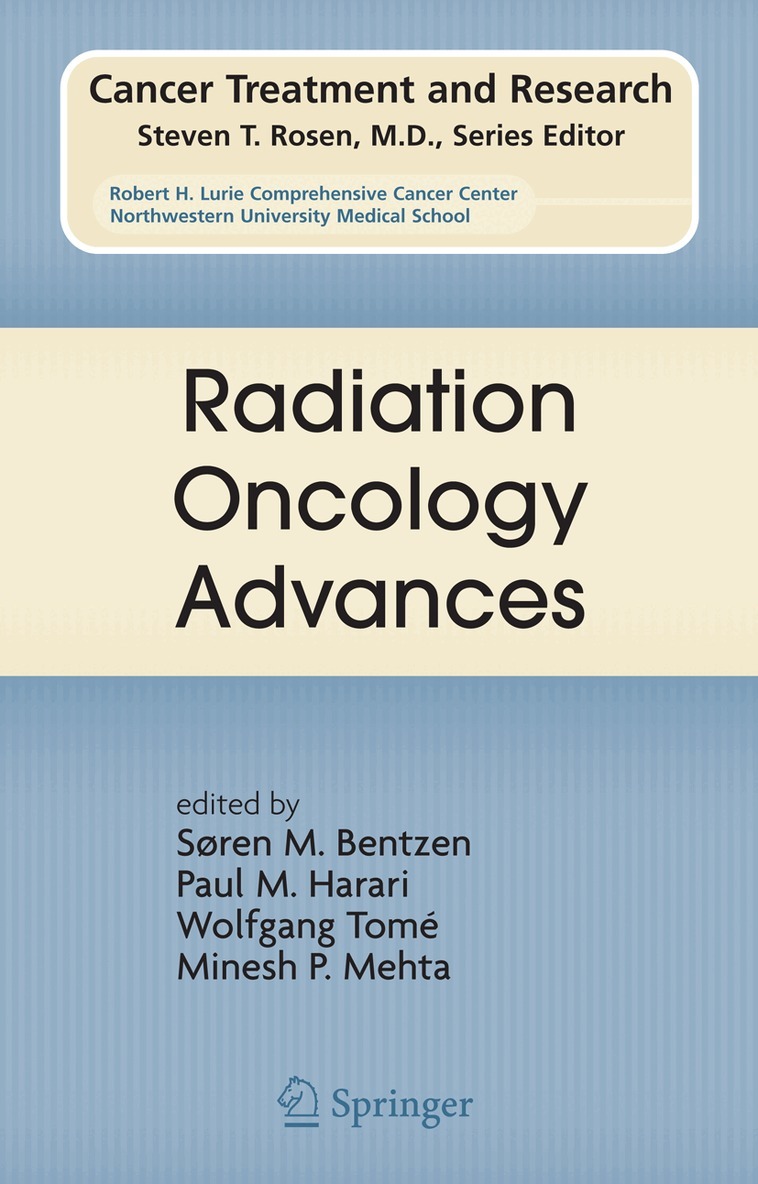
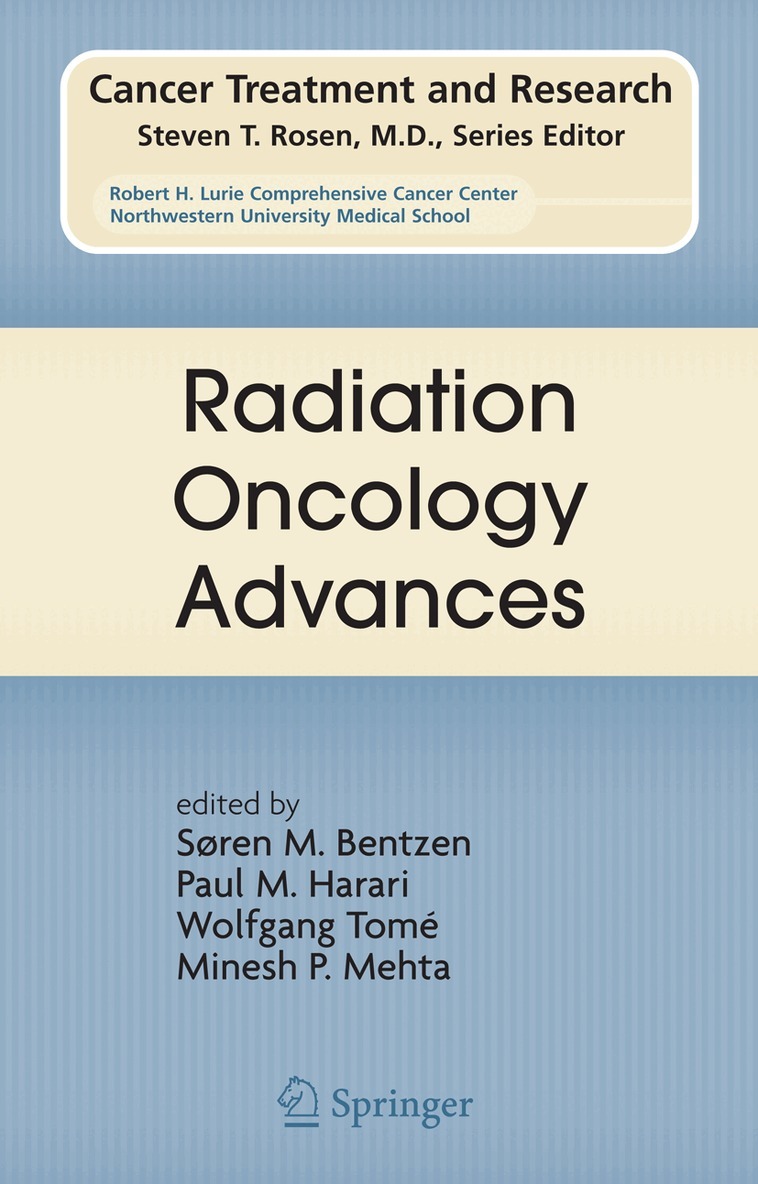
from combining radiation with a molecular targeted agent – namely cetuximab, a recombinant mouse/human chimeric monoclonal antibody against the Epidermal Growth Factor (EGF) receptor [4] Astsaturov, Cohen and Harari present a more indepth review of the biology of the EGF Receptor and its signaling pathway in Chap. 7 as a potential target in combination with fractionated radiotherap y for head and neck squamous cell carcinoma (HNSCC). A flurry of agents are under de velopment for targeting EGFR and in March 2006, the US Food and Drugs Administration approved cetuximab combined with radiation as a primary treatment option for patients with loco-regionally advanced HNSCC in whom chemoradiation therapy is deemed not to be an option. While blocking the EGF pathway during fractionated radiotherapy may seem an obvious strategy [5], the rationale for combining antiangiogenic and antivascular targeting agents with radiation may be less intuitive. However, recent research shows that there are several reasons why this could result in a therapeutic gain in practice. Chapter 8 is a review of this rapidly expanding field by Citrin and Camphausen. Targeted agents combined with radiation may offer new opportunities in the treatment of central nervous system malignancies, a tumor type where the outlook remains poor despite some recent progress [6]. Current attempts to overcome rad- tion resistance in these tumors on the basis of an improved understanding of their molecular biology are the topic of Chap. 9 by Chakravarti and Palanichamy.
E-bok
PDF, Engelska, 20071 565 kr
Läs direkt efter köp
from combining radiation with a molecular targeted agent – namely cetuximab, a recombinant mouse/human chimeric monoclonal antibody against the Epidermal Growth Factor (EGF) receptor [4] Astsaturov, Cohen and Harari present a more indepth review of the biology of the EGF Receptor and its signaling pathway in Chap. 7 as a potential target in combination with fractionated radiotherap y for head and neck squamous cell carcinoma (HNSCC). A flurry of agents are under de velopment for targeting EGFR and in March 2006, the US Food and Drugs Administration approved cetuximab combined with radiation as a primary treatment option for patients with loco-regionally advanced HNSCC in whom chemoradiation therapy is deemed not to be an option. While blocking the EGF pathway during fractionated radiotherapy may seem an obvious strategy [5], the rationale for combining antiangiogenic and antivascular targeting agents with radiation may be less intuitive. However, recent research shows that there are several reasons why this could result in a therapeutic gain in practice. Chapter 8 is a review of this rapidly expanding field by Citrin and Camphausen. Targeted agents combined with radiation may offer new opportunities in the treatment of central nervous system malignancies, a tumor type where the outlook remains poor despite some recent progress [6]. Current attempts to overcome rad- tion resistance in these tumors on the basis of an improved understanding of their molecular biology are the topic of Chap. 9 by Chakravarti and Palanichamy.
Häftad, Engelska, 2010
1 235 kr
Skickas inom 10-15 vardagar
from combining radiation with a molecular targeted agent – namely cetuximab, a recombinant mouse/human chimeric monoclonal antibody against the Epidermal Growth Factor (EGF) receptor [4] Astsaturov, Cohen and Harari present a more indepth review of the biology of the EGF Receptor and its signaling pathway in Chap. 7 as a potential target in combination with fractionated radiotherap y for head and neck squamous cell carcinoma (HNSCC). A flurry of agents are under de velopment for targeting EGFR and in March 2006, the US Food and Drugs Administration approved cetuximab combined with radiation as a primary treatment option for patients with loco-regionally advanced HNSCC in whom chemoradiation therapy is deemed not to be an option. While blocking the EGF pathway during fractionated radiotherapy may seem an obvious strategy [5], the rationale for combining antiangiogenic and antivascular targeting agents with radiation may be less intuitive. However, recent research shows that there are several reasons why this could result in a therapeutic gain in practice. Chapter 8 is a review of this rapidly expanding field by Citrin and Camphausen. Targeted agents combined with radiation may offer new opportunities in the treatment of central nervous system malignancies, a tumor type where the outlook remains poor despite some recent progress [6]. Current attempts to overcome rad- tion resistance in these tumors on the basis of an improved understanding of their molecular biology are the topic of Chap. 9 by Chakravarti and Palanichamy.
Inbunden, Engelska, 2009
1 681 kr
Skickas inom 10-15 vardagar
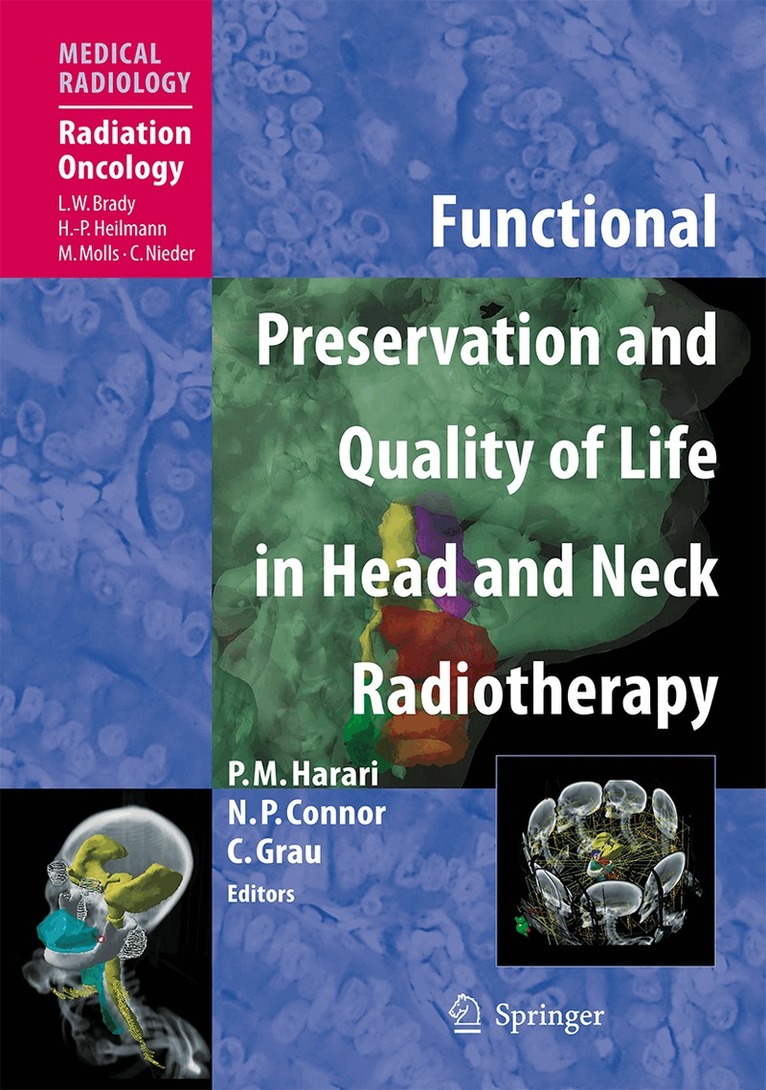
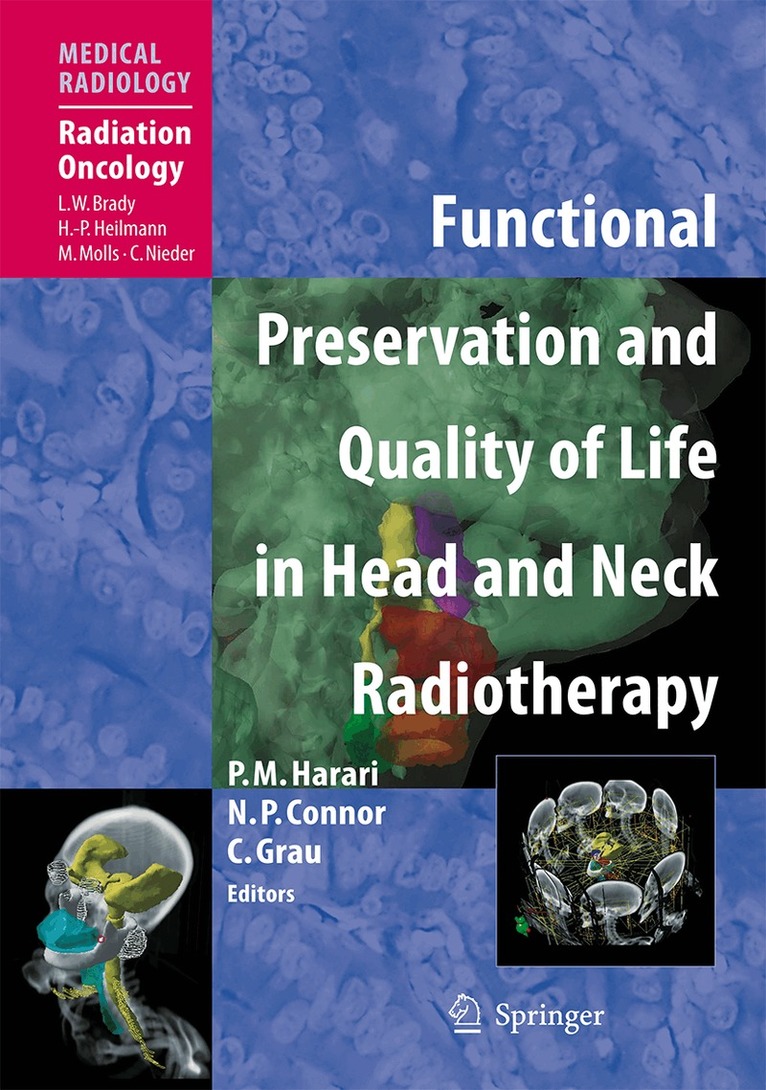
The emphasis on cancer management in the past was based primarily on control rates from multidisciplinary input in management. There has always been a recognition that one would like to achieve the best result with the least complication, but never has there been any major emphasis on evidence-based outcome studies, nor on functional preservation and quality of life. The authors of this book have dealt very effectively with the various tumor types in head and neck cancer with the experts in the ? eld of management. The contents range from epidemiology and treatment outcome, treatment techniques with the potential impact on the quality of life such as dysphagia, to the various options relative to high technology radiation therapy programs for mana- ment. The potential for improving form and function through surgical care as an integrated part of the program is dealt with very effectively as well as the potentials for chemotherapy and the use of targeted agents have on quality of life issues. The volume also addresses toxicity, quality of life, and techniques for prevention of adverse effects, as well as the potentials for rehabilitation and supportive care. The authors have clearly done an extraordinarily good job in addressing the mul- plicity of problems that impact upon the functional preservation and quality of life in head and neck radiation therapy. Philadelphia Luther W.
E-bok
PDF, Engelska, 20091 565 kr
Läs direkt efter köp
The emphasis on cancer management in the past was based primarily on control rates from multidisciplinary input in management. There has always been a recognition that one would like to achieve the best result with the least complication, but never has there been any major emphasis on evidence-based outcome studies, nor on functional preservation and quality of life. The authors of this book have dealt very effectively with the various tumor types in head and neck cancer with the experts in the ? eld of management. The contents range from epidemiology and treatment outcome, treatment techniques with the potential impact on the quality of life such as dysphagia, to the various options relative to high technology radiation therapy programs for mana- ment. The potential for improving form and function through surgical care as an integrated part of the program is dealt with very effectively as well as the potentials for chemotherapy and the use of targeted agents have on quality of life issues. The volume also addresses toxicity, quality of life, and techniques for prevention of adverse effects, as well as the potentials for rehabilitation and supportive care. The authors have clearly done an extraordinarily good job in addressing the mul- plicity of problems that impact upon the functional preservation and quality of life in head and neck radiation therapy. Philadelphia Luther W.
Häftad, Engelska, 2010
1 235 kr
Skickas inom 10-15 vardagar
The emphasis on cancer management in the past was based primarily on control rates from multidisciplinary input in management. There has always been a recognition that one would like to achieve the best result with the least complication, but never has there been any major emphasis on evidence-based outcome studies, nor on functional preservation and quality of life. The authors of this book have dealt very effectively with the various tumor types in head and neck cancer with the experts in the ? eld of management. The contents range from epidemiology and treatment outcome, treatment techniques with the potential impact on the quality of life such as dysphagia, to the various options relative to high technology radiation therapy programs for mana- ment. The potential for improving form and function through surgical care as an integrated part of the program is dealt with very effectively as well as the potentials for chemotherapy and the use of targeted agents have on quality of life issues. The volume also addresses toxicity, quality of life, and techniques for prevention of adverse effects, as well as the potentials for rehabilitation and supportive care. The authors have clearly done an extraordinarily good job in addressing the mul- plicity of problems that impact upon the functional preservation and quality of life in head and neck radiation therapy. Philadelphia Luther W.