Paul Rateau – författare
Visar alla böcker från författaren . Handla med fri frakt och snabb leverans.
4 produkter
4 produkter
Inbunden, Engelska, 2019
1 670 kr
Skickas inom 5-8 vardagar
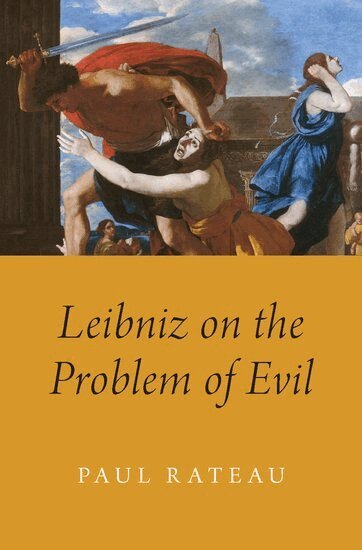
Paul Rateau traces the genesis and development of G.W. Leibniz's treatment of the problem of evil, from his earliest writings through the Essays on Theodicy (1710). By investigating Leibniz's early thinking about what evil is and where it comes from, Rateau reveals the deeply original nature of Leibniz's later work and the challenges it raises. Rateau explores the ways in which the Theodicy's theoretical project, which integrates numerous disciplines and various argumentative strategies, informs and is influenced by two more practical aims-justifying the end of denominational divisions between Catholics and Protestants, and inculcating "true piety" in believers. By paying equal attention to both Leibniz's intellectual and personal development, Rateau offers a holistic view of Leibniz's most profound and sophisticated work of philosophy.Rateau shows how the young Leibniz moves from suggesting that the author of evil is God himself to later defending an original theory of necessitarianism (in The Confession of a Philosopher), which makes God the first link in the chain of beings that constitute the world, but which ultimately denies God's responsibility for sin. By examining Leibniz's theoretical development after 1673, he demonstrates how Leibniz comes to a revised framework that forms the basis for the project of theodicy. After having examined the defensive and the doctrinal aspects of the Theodicy, Rateau shows how human freedom can be reconciled with divine freedom in Leibniz's system. Newly translated from the original French edition, Rateau's book offers a novel and important new interpretation of Leibniz and will appeal to scholars both of Leibniz and of early modern thought generally.

E-bok
PDF, Franska, 2012444 kr
Läs direkt efter köp
L''objet de ces contributions est d''étudier le devenir de la théodicée après Leibniz, dans la tradition allemande jusqu''à Kant. La théodicée dont Kant hérite et qu''il critique pourrait n''avoir de leibnizien que le nom et renvoyer, avant tout, à un genre philosophique, comprenant des doctrines très différentes. La référence, courante au XVIIIe siècle, sous le terme général d''«optimisme» ou de «système de l''optimisme», aux thèses de Leibniz et d''Alexander Pope, traduirait une extension et une transformation de la notion de théodicée, dont il s''agit de montrer les étapes et de mesurer les conséquences.Les textes sont rassemblés sous trois grands chapitres. Il s''agit tout d''abord de rendre compte de la nature et de la portée du projet de théodicée, tel qu''il fut conçu par Leibniz, ensuite de montrer la manière dont la question de la théodicée a été reprise et traitée dans le contexte de la controverse sur l''«optimisme», enfin d''apprécier l''évolution de la pensée kantienne de la période précritique au constat de l''échec de tout essai de théodicée «dogmatique». Figure en appendice une étude sur l''usage de la notion de théodicée par Hegel.
E-bok
PDF, Franska, 2015777 kr
Läs direkt efter köp
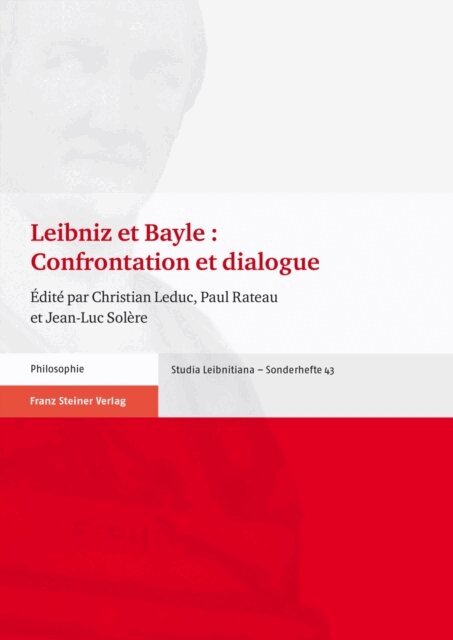
Les textes réunis dans ce volume visent à combler une importante lacune : l''absence d''étude d''ampleur consacrée spécifiquement aux relations entre Pierre Bayle (1647–1706) et Gottfried Wilhelm Leibniz (1646–1716), permettant d''évaluer l''influence qu''ils ont exercée l''un sur l''autre, par leurs écrits et leurs échanges, directs et indirects.Le but est de confronter ces deux philosophes majeurs du XVIIe siècle, en cherchant à dépasser l''opposition réductrice entre scepticisme d''un côté (Bayle) et rationalisme dogmatique de l''autre (Leibniz). L''étude de leurs rapports montre les différentes étapes et la fécondité de leurs échanges : d''abord autour de la critique de la physique de Descartes, ensuite à propos du « système de l''harmonie préétablie » défendu par Leibniz mais critiqué par Bayle dans son Dictionnaire historique et critique, enfin au sujet du rapport entre foi et raison, du problème du mal et de la justification de Dieu (thèmes des Essais de théodicée publiés par le philosophe de Hanovre en 1710).
Häftad, Franska
290 kr
Tillfälligt slut