Paul Redding - Böcker
Visar alla böcker från författaren Paul Redding. Handla med fri frakt och snabb leverans.
6 produkter
6 produkter
987 kr
Skickas inom 7-10 vardagar
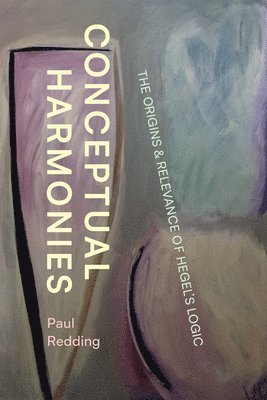
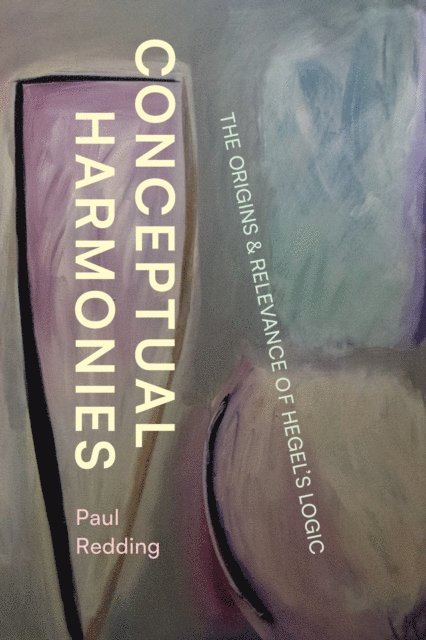
A new reading of Hegel’s Science of Logic through the history of European mathematics.Conceptual Harmonies develops an original account of G. W. F. Hegel’s perplexing Science of Logic from a simple insight: philosophical and mathematical thought have shaped each other since classical times. Situating Science of Logic within the rise of modern mathematics, Redding stresses Hegel’s attention to Pythagorean ratios, Platonic reason, and Aristotle’s geometrically inspired logic. He then explores how later traditions shaped Hegel’s world, through both Leibniz and new forms of algebraic geometry. This enlightening reading recovers an overlooked stream in Hegel’s philosophy that remains, Redding argues, important for contemporary conceptions of logic.
281 kr
Skickas inom 7-10 vardagar
A new reading of Hegel’s Science of Logic through the history of European mathematics.Conceptual Harmonies develops an original account of G. W. F. Hegel’s perplexing Science of Logic from a simple insight: philosophical and mathematical thought have shaped each other since classical times. Situating Science of Logic within the rise of modern mathematics, Redding stresses Hegel’s attention to Pythagorean ratios, Platonic reason, and Aristotle’s geometrically inspired logic. He then explores how later traditions shaped Hegel’s world, through both Leibniz and new forms of algebraic geometry. This enlightening reading recovers an overlooked stream in Hegel’s philosophy that remains, Redding argues, important for contemporary conceptions of logic.
2 096 kr
Skickas inom 10-15 vardagar
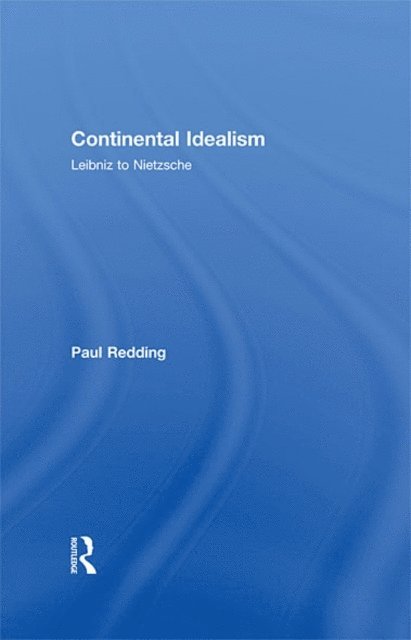
Standard accounts of nineteenth-century German philosophy often begin with Kant and assess philosophers after him in light of their responses to Kantian idealism. In Continental Idealism, Paul Redding argues that the story of German idealism begins with Leibniz. Redding begins by examining Leibniz's dispute with Newton over the nature of space, time and God, and stresses the way in which Leibniz incorporated Platonic and Aristotelian elements in his distinctive brand of idealism. Redding shows how Kant's interpretation of Leibniz's views of space and time consequently shaped his own 'transcendental' version of idealism. Far from ending here, however, Redding argues that post-Kantian idealists such as Fichte, Schelling and Hegel on the one hand and metaphysical sceptics such as Schopenhauer and Nietzsche on the other continued to wrestle with a form of idealism ultimately derived from Leibniz. Continental Idealism offers not only a new picture of one of the most important philosophical movements in the history of philosophy, but also a valuable and clear introduction to the origins of Continental and European philosophy.
721 kr
Skickas inom 10-15 vardagar
Standard accounts of nineteenth-century German philosophy often begin with Kant and assess philosophers after him in light of their responses to Kantian idealism. In Continental Idealism, Paul Redding argues that the story of German idealism begins with Leibniz. Redding begins by examining Leibniz's dispute with Newton over the nature of space, time and God, and stresses the way in which Leibniz incorporated Platonic and Aristotelian elements in his distinctive brand of idealism. Redding shows how Kant's interpretation of Leibniz's views of space and time consequently shaped his own 'transcendental' version of idealism. Far from ending here, however, Redding argues that post-Kantian idealists such as Fichte, Schelling and Hegel on the one hand and metaphysical sceptics such as Schopenhauer and Nietzsche on the other continued to wrestle with a form of idealism ultimately derived from Leibniz. Continental Idealism offers not only a new picture of one of the most important philosophical movements in the history of philosophy, but also a valuable and clear introduction to the origins of Continental and European philosophy.
428 kr
Skickas inom 7-10 vardagar
This 2007 book examines the possibilities for the rehabilitation of Hegelian thought within analytic philosophy. From its inception, the analytic tradition has in general accepted Bertrand Russell's hostile dismissal of the idealists, based on the claim that their metaphysical views were irretrievably corrupted by the faulty logic that informed them. These assumptions are challenged by the work of such analytic philosophers as John McDowell and Robert Brandom, who, while contributing to core areas of the analytic movement, nevertheless have found in Hegel sophisticated ideas that are able to address problems which still haunt the analytic tradition after a hundred years. Paul Redding traces the consequences of the displacement of the logic presupposed by Kant and Hegel by modern post-Fregean logic, and examines the developments within twentieth-century analytic philosophy which have made possible an analytic re-engagement with a previously dismissed philosophical tradition.
1 205 kr
Skickas inom 7-10 vardagar
This 2007 book examines the possibilities for the rehabilitation of Hegelian thought within analytic philosophy. From its inception, the analytic tradition has in general accepted Bertrand Russell's hostile dismissal of the idealists, based on the claim that their metaphysical views were irretrievably corrupted by the faulty logic that informed them. These assumptions are challenged by the work of such analytic philosophers as John McDowell and Robert Brandom, who, while contributing to core areas of the analytic movement, nevertheless have found in Hegel sophisticated ideas that are able to address problems which still haunt the analytic tradition after a hundred years. Paul Redding traces the consequences of the displacement of the logic presupposed by Kant and Hegel by modern post-Fregean logic, and examines the developments within twentieth-century analytic philosophy which have made possible an analytic re-engagement with a previously dismissed philosophical tradition.