Paul Richard Blum – författare
Visar alla böcker från författaren Paul Richard Blum. Handla med fri frakt och snabb leverans.
12 produkter
Philosophy of Religion in the Renaissance
Häftad, 2020
704 kr
Lägg i varukorg
The Philosophy of Religion is one result of the Early Modern Reformation movements, as competing theologies purported truth claims which were equal in strength and different in contents. Renaissance thought, from Humanism through philosophy of nature, contributed to the origin of the modern …
Philosophy of Religion in the Renaissance
Inbunden, 2016
2504 kr
Lägg i varukorg
The Philosophy of Religion is one result of the Early Modern Reformation movements, as competing theologies purported truth claims which were equal in strength and different in contents. Renaissance thought, from Humanism through philosophy of nature, contributed to the origin of the modern …
Philosophy in the Renaissance
An Anthology
Av Paul Richard Blum, James G. Snyder
Häftad, 2023
384 kr
Lägg i varukorg
The Renaissance was a period of great intellectual change and innovation as philosophers rediscovered the philosophy of classical antiquity and passed it on to the modern age. Renaissance philosophy is distinct both from the medieval scholasticism, based on revelation and authority, and from …
Philosophy of Religion in the Renaissance
E-bok, 2016
831 kr
Lägg i varukorg
The Philosophy of Religion is one result of the Early Modern Reformation movements, as competing theologies purported truth claims which were equal in strength and different in contents. Renaissance thought, from Humanism through philosophy of nature, contributed to the origin of the modern …
Philosophy of Religion in the Renaissance
E-bok, 2016
831 kr
Lägg i varukorg
The Philosophy of Religion is one result of the Early Modern Reformation movements, as competing theologies purported truth claims which were equal in strength and different in contents. Renaissance thought, from Humanism through philosophy of nature, contributed to the origin of the modern …
Soldier or Scholar
Stratocles or War
Av Jacobus Pontanus, Paul Richard Blum m. fl.
Häftad, 2009
262 kr
Lägg i varukorg
Über die Liebe oder Platons Gastmahl
Av Marsilio Ficino, Paul Richard Blum
E-bok, 2014
170 kr
Lägg i varukorg
»De amore sive in convivium Platonis«, dessen Wirkungsgeschichte bis weit ins 17. Jahrhundert reicht, ist Nachdichtung und Platon-Kommentar in einem und eines der bedeutendsten philosophischen Werke der Renaissance.Bei einem Bankett vorgeblich anlässlich von Platons Geburtstag stellen neun Gäste, …
Austreibung des triumphierenden Tieres
Zweisprachige Ausgabe
Av Giordano Bruno, Elisabeth Blum m. fl.
E-bok, 2009
499 kr
Lägg i varukorg
«?as uns hier vorgestellt wird, ist nicht eine Ethik, sondern Metaethik: eine Anleitung und Methode zur Wertung von Wertungen. Und somit wäre der »Spaccio« auch inhaltlich genau das, als was er dem äußeren Gewande nach erscheint: ein göttliches Gericht über die Götter und eine Reform des Himmels.« …
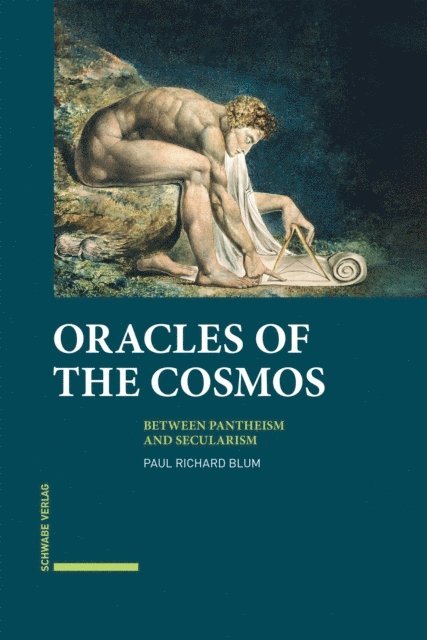
Oracles of the Cosmos
Between Pantheism and Secularism
E-bok, 2022
319 kr
Lägg i varukorg
The divide between science and religion has its roots in the early modern period. In the first part, the popular talk of oracles of reason is traced back to the ancient oracles published in the 15th century, and it is shown how this led to the emergence of a "natural" theology that does without …
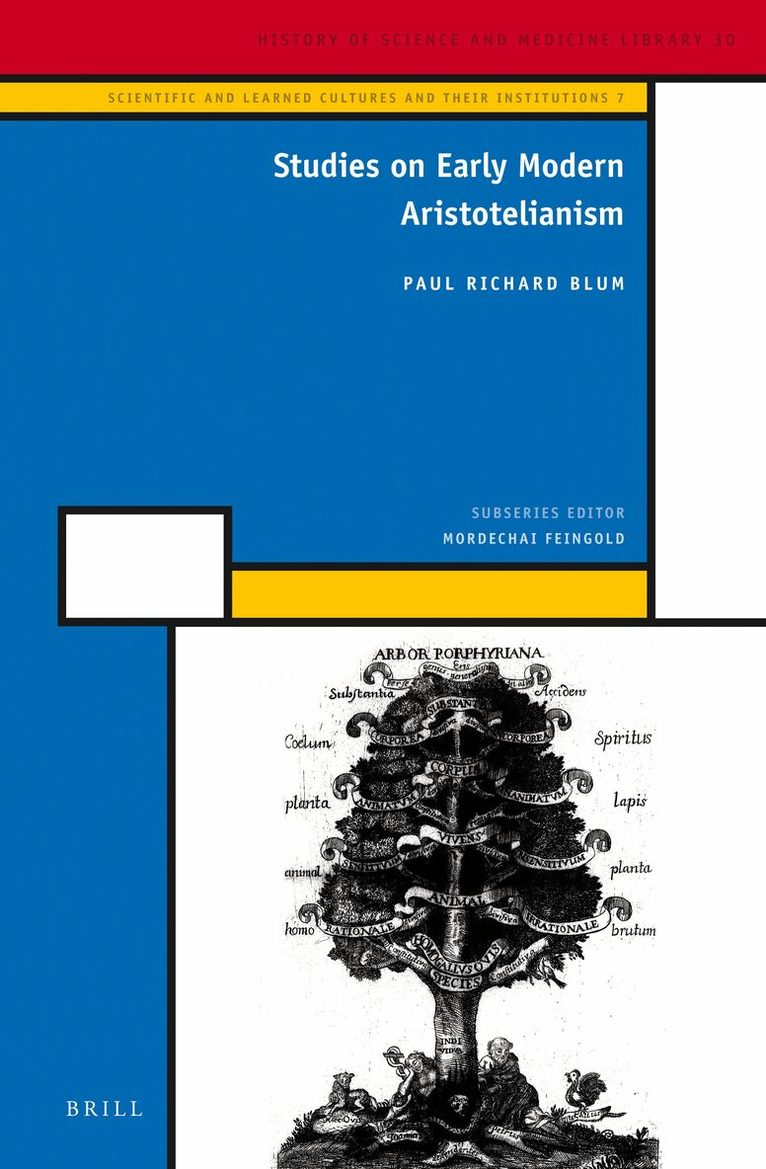
Studies on Early Modern Aristotelianism
Inbunden, 2012
3090 kr
Lägg i varukorg
In Studies on Early Modern Aristotelianism Paul Richard Blum shows that Aristotle’s thought remained the touchstone of modern philosophy; for it was the philosophy taught at universities. The concept of philosophy at Jesuit schools forms the first part of this book. Their impact on the sciences and …
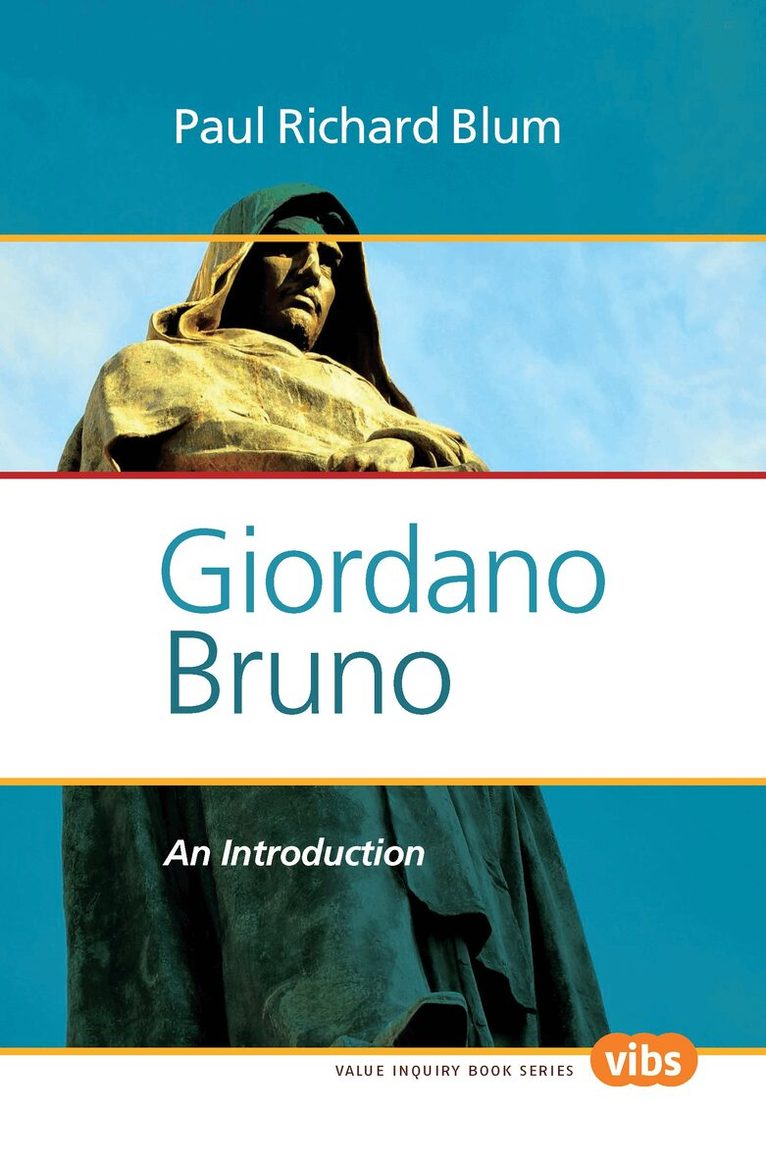
Giordano Bruno
An Introduction
Häftad, 2012
823 kr
Lägg i varukorg
Giordano Bruno (1548-1600) was a philosopher in his own right. However, he was famous through the centuries due to his execution as a heretic. His pronouncements against teachings of the Catholic Church, his defence of the cosmology of Nicholas Copernicus, and his provocative personality, all this …
Philosophers of the Renaissance
Häftad, 2010
384 kr
Tillfälligt slut
Philosophers of the Renaissance introduces readers to philosophical thinking from the end of the Middle Ages through the sixteenth century. International specialists portray the thought of twenty-one individual philosophers, illustrating their life and work and highlighting the importance of their …