Paul Sant Cassia - Böcker
Visar alla böcker från författaren Paul Sant Cassia. Handla med fri frakt och snabb leverans.
4 produkter
4 produkter
Del 77 - Cambridge Studies in Social and Cultural Anthropology
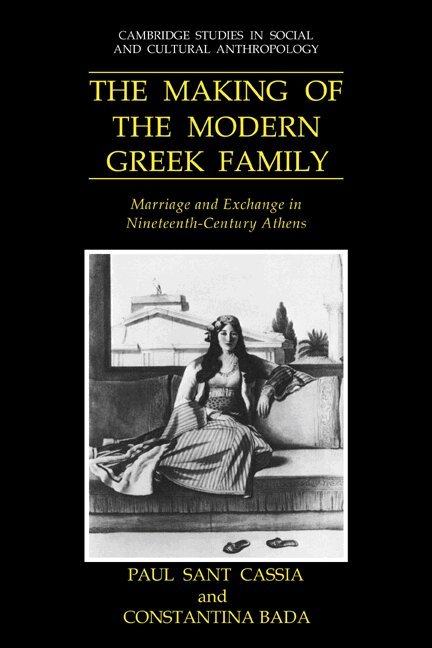
The Making of the Modern Greek Family
Marriage and Exchange in Nineteenth-Century Athens
Häftad, Engelska, 2006
534 kr
Skickas inom 7-10 vardagar
This 1991 study deals with a specific set of institutions in nineteenth-century Athens. Relying on matrimonial contracts, travellers' accounts, memoirs and popular literature, the authors show how distinctive forms of marriage, kinship and property transmission evolved in Athens in the nineteenth century. These forms then became a feature of wider Greek society which continued into the twentieth century. Greece was the first post-colonial modern nation state in Europe whose national identity was created largely by peasants who had migrated to the city. As Athenian society became less agrarian, a new mercantile group superseded and incorporated previous elites and went on to dominate and control the new resources of the nation state. Such groups developed their own, more mobile, systems of property transmission, mostly in response to external pressures of a political and economic character. This is a persuasive piece of detective work which has advanced our knowledge of modern Greece. It is a model for scholarship on the development of family and other 'intimate' ideologies where nation states encroach upon local consciousness.
Del 77 - Cambridge Studies in Social and Cultural Anthropology
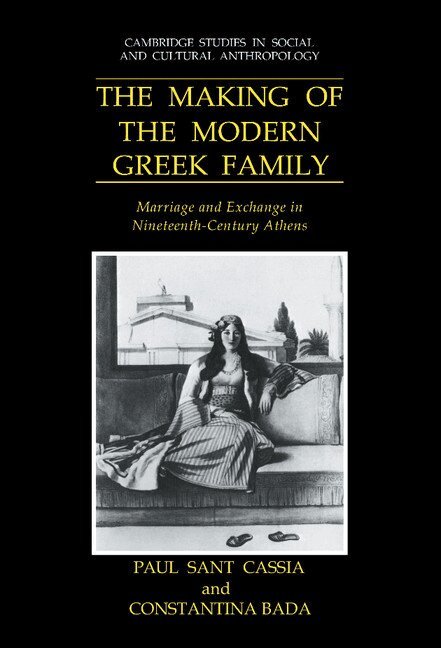
The Making of the Modern Greek Family
Marriage and Exchange in Nineteenth-Century Athens
Inbunden, Engelska, 1991
1 508 kr
Skickas inom 7-10 vardagar
This 1991 study deals with a specific set of institutions in nineteenth-century Athens. Relying on matrimonial contracts, travellers' accounts, memoirs and popular literature, the authors show how distinctive forms of marriage, kinship and property transmission evolved in Athens in the nineteenth century. These forms then became a feature of wider Greek society which continued into the twentieth century. Greece was the first post-colonial modern nation state in Europe whose national identity was created largely by peasants who had migrated to the city. As Athenian society became less agrarian, a new mercantile group superseded and incorporated previous elites and went on to dominate and control the new resources of the nation state. Such groups developed their own, more mobile, systems of property transmission, mostly in response to external pressures of a political and economic character. This is a persuasive piece of detective work which has advanced our knowledge of modern Greece. It is a model for scholarship on the development of family and other 'intimate' ideologies where nation states encroach upon local consciousness.
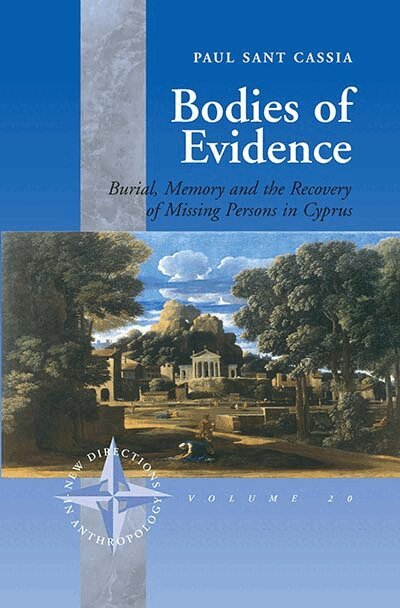
Bodies of Evidence
Burial, Memory and the Recovery of Missing Persons in Cyprus
Inbunden, Engelska, 2005
2 014 kr
Skickas inom 3-6 vardagar
In the course of hostilities between Greek and Turkish Cypriots between 1963 and 1974, over 2000 persons, both Greek and Turkish Cypriots, went "missing" in Cyprus, an island in the Mediterranean with a population distribution of 80% Greeks and 18% Turks. This represents a significant number for a population of only 600,000. Few bodies have been recovered; most will probably not be. All are still mourned by their surviving friends and relatives. The conflict has still not been resolved and the memories are still alive.
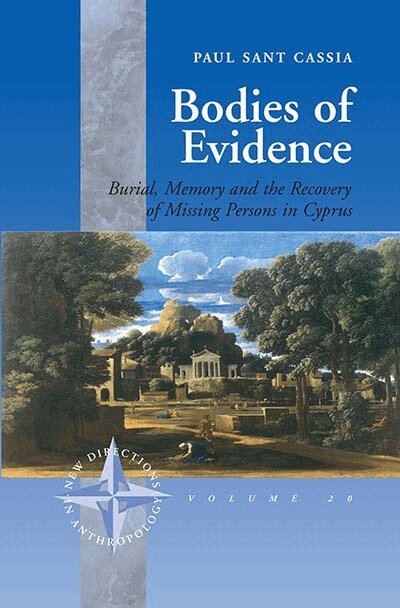
Bodies of Evidence
Burial, Memory and the Recovery of Missing Persons in Cyprus
Häftad, Engelska, 2007
583 kr
Skickas inom 3-6 vardagar
In the course of hostilities between Greek and Turkish Cypriots between 1963 and 1974, over 2000 persons, both Greek and Turkish Cypriots, went "missing" in Cyprus, an island in the Mediterranean with a population distribution of 80% Greeks and 18% Turks. This represents a significant number for a population of only 600,000. Few bodies have been recovered; most will probably not be. All are still mourned by their surviving friends and relatives. The conflict has still not been resolved and the memories are still alive.