
Häftad, Engelska, 2018
356 kr
Skickas inom 5-8 vardagar
356 kr
Skickas inom 5-8 vardagar
231 kr
Skickas inom 5-8 vardagar
276 kr
Skickas inom 5-8 vardagar
651 kr
Skickas inom 5-8 vardagar
228 kr
Skickas inom 5-8 vardagar

287 kr
Skickas inom 5-8 vardagar
299 kr
Skickas inom 5-8 vardagar
231 kr
Läs direkt efter köp
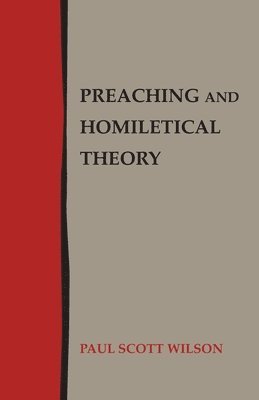
A look at what both our successes and failures in preaching can tell us about how to craft better sermons. Paul Wilson has long been one of the most important figures among those who seek a richer and more complete understanding of what preaching is, and how it might be made better. In this new book he draws on his broad and deep work in homiletics to show preachers how to craft a variety of types of sermons. How do you preach from the Old Testament? What are the particular needs and challenges of preaching the Good Friday, and then the Easter, sermon? What do you do when you want to address contemporary events? Recognizing that all sermons are in some ways "broken words," he includes in each chapter an illustrative sermon, some of which work well, yet others of which don''t. If you stand in the pulpit long, he reminds us, you''re going to preach your share of both. You would do well to learn, then, how either kind of sermon--the ones you''re proud of and the ones you want to forget--can provide ample opportunities to learn how to be a more effective and faithful preacher of the gospel. Readers will learn how to vary the sources, styles, and substance of their sermons. Key Benefits: Will empower the reader to move outside their comfort zone in preaching, thus engaging the broader possibilities for preaching; Will help the reader to learn how to assess both their strong and weak sermons, and learn from each.
402 kr
Läs direkt efter köp
208 kr
Skickas inom 5-8 vardagar
211 kr
Läs direkt efter köp
378 kr
Skickas inom 5-8 vardagar
389 kr
Läs direkt efter köp
Doing justice to the complexity of the preaching task and the questions that underlie it, author Paul Scott Wilson organizes both the preparation and the content of the sermon around its "four pages." Each "page" addresses a different theological and creative component of what happens in any sermon. Page One presents the trouble or conflict that takes place in or that underscores the biblical text itself. Page Two looks at similar conflict--sin or brokenness--in our own time. Page Three returns to the Bible to identify where God is at work in or behind the text--in other words, to discover the good news. Page Four points to God at work in our world, particularly in relation to the situations described in Page Two. This approach is about preaching the gospel in nearly any sermonic form. Wilson teaches the ‘what’, ‘why’, and ‘how’ of sermon construction, all rooted in a theology of the Word. This completely revised edition guides readers through the sermon process step by step, with the aim of composing sermons that challenge and provide hope, by focusing on God more closely than on humans. It has been largely rewritten to include an assessment of where preaching is today in light of propositional preaching, the New Homiletic, African American preaching, the effect of the internet, and use of technology. A chapter on exegesis has been added, plus new focus on the importance of preaching to a felt need, the need for proclamation in addition to teaching, and developing tools to ensure sermon excellence. New sermon examples have been added along with a section that responds to critics and looks to the future.
128 kr
Skickas inom 5-8 vardagar