Paul Seabright – författare
Visar alla böcker från författaren Paul Seabright. Handla med fri frakt och snabb leverans.
12 produkter
12 produkter
Häftad, Engelska, 2008
582 kr
Skickas inom 7-10 vardagar
This book is about the institutions, incentives and constraints that guide the behaviour of people and organizations involved in the implementation of foreign aid programmes. While traditional performance studies tend to focus almost exclusively on the policies and institutions in recipient countries, this book looks at incentives in the entire chain of organizations involved in the delivery of foreign aid, from donor governments and agencies to consultants, experts and other intermediaries. Four aspects of foreign aid delivery are examined in detail: incentives inside donor agencies, the interaction of subcontractors with recipient organizations, incentives inside recipient country institutions, and biases in aid performance monitoring systems.
Häftad, Engelska, 2007
542 kr
Skickas inom 7-10 vardagar
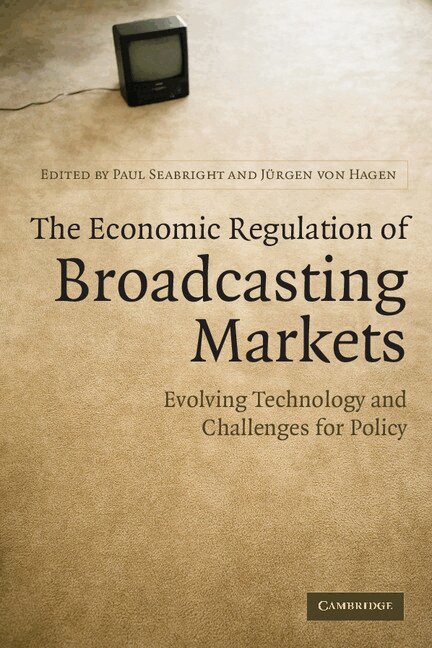
New technology is revolutionizing broadcasting markets. As the cost of bandwidth processing and delivery fall, information-intensive services that once bore little economic relationship to each other are now increasingly related as substitutes or complements. Television, newspapers, telecoms and the internet compete ever more fiercely for audience attention. At the same time, digital encoding makes it possible to charge prices for content that had previously been broadcast for free. This is creating new markets where none existed before. How should public policy respond? Will competition lead to better services, higher quality and more consumer choice - or to a proliferation of low-quality channels? Will it lead to dominance of the market by a few powerful media conglomerates? Using the insights of modern microeconomics, this book provides a state-of-the-art analysis of these and other issues by investigating the power of regulation to shape and control broadcasting markets.
Inbunden, Engelska, 2000
983 kr
Skickas inom 7-10 vardagar
One of the most remarkable aspects of the transition process in the former Soviet Union has been the extent to which the economy has effectively become demonetized in recent years. At the time of Russia's financial crisis of 1998 it was estimated that up to 70% of industrial output was being exchanged for barter. This book provides an accessible and authoritative analysis of barter in the former Soviet Union, addressing such questions as: • What has brought about this demonetization and why have we not seen the same phenomenon on a widespread scale in central and eastern Europe? • Does the nature of demonetization cast light on what underpins monetary transactions in industrial societies? • What are the consequences for output and growth? • Should the state intervene and how? • Does the network character of many non-monetary transactions have implications for the role and value of social networks in complex modern societies?
Häftad, Engelska, 2000
542 kr
Skickas inom 7-10 vardagar
One of the most remarkable aspects of the transition process in the former Soviet Union has been the extent to which the economy has effectively become demonetized in recent years. At the time of Russia's financial crisis of 1998 it was estimated that up to 70% of industrial output was being exchanged for barter. This book provides an accessible and authoritative analysis of barter in the former Soviet Union, addressing such questions as: • What has brought about this demonetization and why have we not seen the same phenomenon on a widespread scale in central and eastern Europe? • Does the nature of demonetization cast light on what underpins monetary transactions in industrial societies? • What are the consequences for output and growth? • Should the state intervene and how? • Does the network character of many non-monetary transactions have implications for the role and value of social networks in complex modern societies?
Inbunden, Engelska, 2002
1 464 kr
Skickas inom 7-10 vardagar
This book is about the institutions, incentives and constraints that guide the behaviour of people and organizations involved in the implementation of foreign aid programmes. While traditional performance studies tend to focus almost exclusively on the policies and institutions in recipient countries, this book looks at incentives in the entire chain of organizations involved in the delivery of foreign aid, from donor governments and agencies to consultants, experts and other intermediaries. Four aspects of foreign aid delivery are examined in detail: incentives inside donor agencies, the interaction of subcontractors with recipient organizations, incentives inside recipient country institutions, and biases in aid performance monitoring systems.
Inbunden, Engelska, 2024
291 kr
Skickas inom 5-8 vardagar
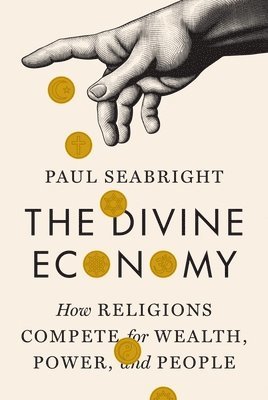
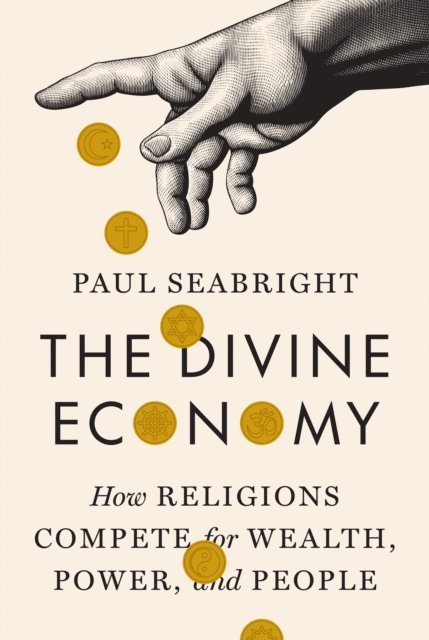
Longlisted for the Financial Times and Schroders Business Book of the Year AwardA novel economic interpretation of how religions have become so powerful in the modern worldReligion in the twenty-first century is alive and well across the world, despite its apparent decline in North America and parts of Europe. Vigorous competition between and within religious movements has led to their accumulating great power and wealth. Religions in many traditions have honed their competitive strategies over thousands of years. Today, they are big business; like businesses, they must recruit, raise funds, disburse budgets, manage facilities, organize transportation, motivate employees, and get their message out. In The Divine Economy, economist Paul Seabright argues that religious movements are a special kind of business: they are platforms, bringing together communities of members who seek many different things from one another—spiritual fulfilment, friendship and marriage networks, even business opportunities. Their function as platforms, he contends, is what has allowed religions to consolidate and wield power.This power can be used for good, especially when religious movements provide their members with insurance against the shocks of modern life, and a sense of worth in their communities. It can also be used for harm: political leaders often instrumentalize religious movements for authoritarian ends, and religious leaders can exploit the trust of members to inflict sexual, emotional, financial or physical abuse, or to provoke violence against outsiders. Writing in a nonpartisan spirit, Seabright uses insights from economics to show how religion and secular society can work together in a world where some people feel no need for religion, but many continue to respond with enthusiasm to its call.
Inbunden, Engelska, 2012
209 kr
Skickas inom 5-8 vardagar
As countless love songs, movies, and self-help books attest, men and women have long sought different things. The result? Seemingly inevitable conflict. Yet we belong to the most cooperative species on the planet. Isn't there a way we can use this capacity to achieve greater harmony and equality between the sexes? In "The War of the Sexes", Paul Seabright argues that there is - but first we must understand how the tension between conflict and cooperation developed in our remote evolutionary past, how it shaped the modern world, and how it still holds us back, both at home and at work. Drawing on biology, sociology, anthropology, and economics, Seabright shows that conflict between the sexes is, paradoxically, the product of cooperation. The evolutionary niche - the long dependent childhood - carved out by our ancestors requires the highest level of cooperative talent. But it also gives couples more to fight about. Men and women became experts at influencing one another to achieve their cooperative ends, but also became trapped in strategies of manipulation and deception in pursuit of sex and partnership.In early societies, economic conditions moved the balance of power in favor of men, as they cornered scarce resources for use in the sexual bargain. Today, conditions have changed beyond recognition, yet inequalities between men and women persist, as the brains, talents, and preferences we inherited from our ancestors struggle to deal with the unpredictable forces unleashed by the modern information economy. Men and women today have an unprecedented opportunity to achieve equal power and respect. But we need to understand the mixed inheritance of conflict and cooperation left to us by our primate ancestors if we are finally to escape their legacy.
Häftad, Engelska, 2010
291 kr
Skickas inom 5-8 vardagar
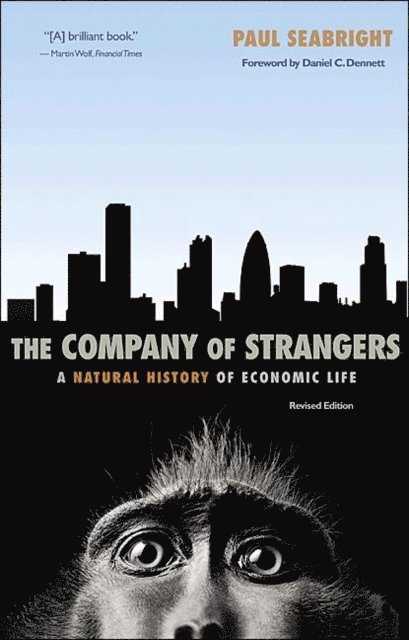
The Company of Strangers shows us the remarkable strangeness, and fragility, of our everyday lives. This completely revised and updated edition includes a new chapter analyzing how the rise and fall of social trust explain the unsustainable boom in the global economy over the past decade and the financial crisis that succeeded it. Drawing on insights from biology, anthropology, history, psychology, and literature, Paul Seabright explores how our evolved ability of abstract reasoning has allowed institutions like money, markets, cities, and the banking system to provide the foundations of social trust that we need in our everyday lives. Even the simple acts of buying food and clothing depend on an astonishing web of interaction that spans the globe. How did humans develop the ability to trust total strangers with providing our most basic needs?
Häftad, Engelska, 2013
209 kr
Skickas inom 5-8 vardagar
As countless love songs, movies, and self-help books attest, men and women have long sought different things. The result? Seemingly inevitable conflict. Yet we belong to the most cooperative species on the planet. Isn't there a way we can use this capacity to achieve greater harmony and equality between the sexes? In The War of the Sexes, Paul Seabright argues that there is - but first we must understand how the tension between conflict and cooperation developed in our remote evolutionary past, how it shaped the modern world, and how it still holds us back, both at home and at work. Drawing on biology, sociology, anthropology, and economics, Seabright shows that conflict between the sexes is, paradoxically, the product of cooperation. The evolutionary niche - the long dependent childhood - carved out by our ancestors requires the highest level of cooperative talent. But it also gives couples more to fight about. Men and women became experts at influencing one another to achieve their cooperative ends, but also became trapped in strategies of manipulation and deception in pursuit of sex and partnership.In early societies, economic conditions moved the balance of power in favor of men, as they cornered scarce resources for use in the sexual bargain. Today, conditions have changed beyond recognition, yet inequalities between men and women persist, as the brains, talents, and preferences we inherited from our ancestors struggle to deal with the unpredictable forces unleashed by the modern information economy. Men and women today have an unprecedented opportunity to achieve equal power and respect. But we need to understand the mixed inheritance of conflict and cooperation left to us by our primate ancestors if we are finally to escape their legacy.
Häftad, Engelska, 2025
169 kr
Skickas inom 5-8 vardagar
Longlisted for the Financial Times and Schroders Business Book of the Year AwardA novel economic interpretation of how religions have become so powerful in the modern worldReligion in the twenty-first century is alive and well across the world, despite its apparent decline in North America and parts of Europe. Vigorous competition between and within religious movements has led to their accumulating great power and wealth. Religions in many traditions have honed their competitive strategies over thousands of years. Today, they are big business; like businesses, they must recruit, raise funds, disburse budgets, manage facilities, organize transportation, motivate employees, and get their message out. In The Divine Economy, economist Paul Seabright argues that religious movements are a special kind of business: they are platforms, bringing together communities of members who seek many different things from one another—spiritual fulfilment, friendship and marriage networks, even business opportunities. Their function as platforms, he contends, is what has allowed religions to consolidate and wield power.This power can be used for good, especially when religious movements provide their members with insurance against the shocks of modern life, and a sense of worth in their communities. It can also be used for harm: political leaders often instrumentalize religious movements for authoritarian ends, and religious leaders can exploit the trust of members to inflict sexual, emotional, financial or physical abuse, or to provoke violence against outsiders. Writing in a nonpartisan spirit, Seabright uses insights from economics to show how religion and secular society can work together in a world where some people feel no need for religion, but many continue to respond with enthusiasm to its call.
Häftad, Engelska, 2007
425 kr
Skickas inom 5-8 vardagar
Top economists provide a concise and accessible evaluation of major developments in trade and trade policy. Examination of key issues pertinent to the multinational trading system, as well as regional trade arrangements and policy developments at the national level. Provides up--to--date assessments of the World Trade Organizationa s current Trade Policy Reviews. *Economic Policy has earned a reputation around the world as the one publication that always identifies current and emerging policy topics early. * Papers are specially commissioned from first--class economists and experts in the policy field. * The editors are all based at top European economic institutions and each paper is discussed by a panel of distinguished economists. * This unique approach guarantees incisive debate and alternative interpretations of the evidence.
Häftad, Engelska, 2007
394 kr
Skickas inom 5-8 vardagar
Economic Policy is written for all those with an informed interest in economic policy problems. All articles are submitted to rigorous scrutiny by a panel of distinguished economists from around the world, resulting in a volume of authoritative and accessible articles, each followed by the comments of panel members. *Economic Policy has earned a reputation around the world as the one publication that always identifies current and emerging policy topics early * Papers are specially commissioned from first-class economists and experts in the policy field * The editors are all based at top European economic institutions * This unique approach guarantees incisive debate and alternative interpretations of the evidence