Paul Silva Jr - Böcker
Visar alla böcker från författaren Paul Silva Jr. Handla med fri frakt och snabb leverans.
5 produkter
5 produkter
1 091 kr
Skickas inom 5-8 vardagar
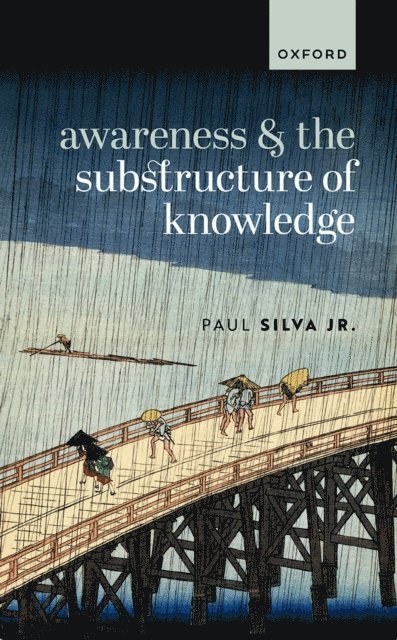
To say that someone is aware of a fact is a commonplace expression, not at all a philosopher's term of art. It is often used to criticize, excuse, admonish, and inform others. Such uses of the expression presuppose the existence of a state of awareness that one can be in or fail to be in with regard to some fact. Here lies the phenomenon of factual awareness. It is conventional in epistemology to treat 'S is aware of the fact that p' as either expressing the same thought as 'S knows that p' or at least entailing it. Learning of the failure of conventional views is often both surprising and theoretically fruitful. This book presents a comprehensive case against the view that factual awareness just is knowledge or even essentially related to knowledge: factual awareness is not identical to, and it does not entail, knowing, being in a position to know, or being capable of knowing. It provides a systematic exploration of the relation between knowledge and factual awareness, arguing that knowledge is but one species of factual awareness and that we can understand the possession of objective reasons, the normativity of knowledge, and the nature of knowledge in terms of factual awareness. In this way, the state of factual awareness is, structurally and substantively, a more basic type of state than knowledge. If correct, this undermines a number of ways in which knowledge has been regarded as coming 'first' in recent epistemology.
Propositional and Doxastic Justification
New Essays on Their Nature and Significance
Inbunden, Engelska, 2022
2 088 kr
Skickas inom 10-15 vardagar
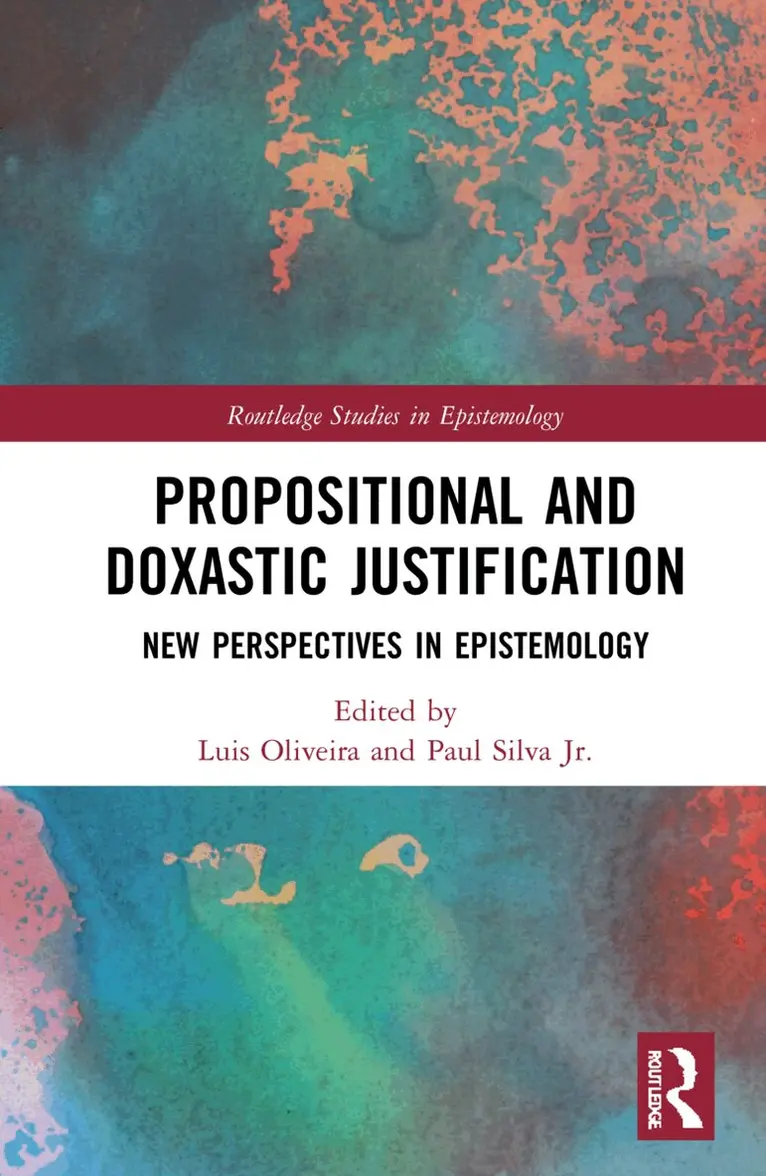
This volume features original essays that advance debates on propositional and doxastic justification and explore how these debates shape and are shaped by a range of established and emerging topics in contemporary epistemology.This is the first book-length project devoted to the distinction between propositional and doxastic justification. Notably, the contributors cover the relationship between propositional and doxastic justification and group belief, credence, commitment, suspension, faith, and hope. They also consider state-of-the-art work on knowledge-first approaches to justification, hinge-epistemology, moral and practical reasons for belief, epistemic normativity, and applications of formal epistemology to traditional epistemological disputes. Finally, the contributors promise to reinvigorate old epistemological debates on coherentism, externalism, internalism, and phenomenal conservatism.Propositional and Doxastic Justification will be of interest to researchers and advanced students working in epistemology, metaethics, and normativity.
753 kr
Skickas inom 7-10 vardagar
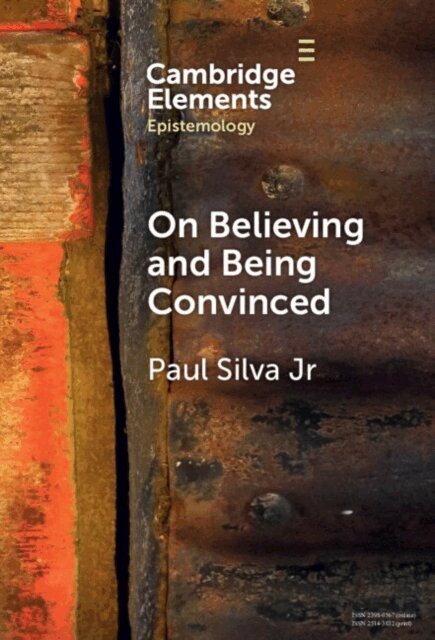
Our doxastic states are our belief-like states, and these include outright doxastic states and degreed doxastic states. The former include believing that p, having the opinion that p, thinking that p, being sure that p, being certain that p, and doubting that p. The latter include degrees of confidence, credences, and perhaps some phenomenal states. But we also have conviction (being convinced simpliciter that p) and degrees of conviction (being more or less convinced that p). This Element shows: how and why all of the outright doxastic states mentioned above can be reduced to conviction thresholds; what degrees of conviction fundamentally are (degreed reliance-dispositions); why degrees of conviction are not credences; when suspending a belief is compatible with continuing to believe; and the surprising extent to which Kant endorsed the theory of conviction that emerges in this Element.
234 kr
Skickas inom 7-10 vardagar
Our doxastic states are our belief-like states, and these include outright doxastic states and degreed doxastic states. The former include believing that p, having the opinion that p, thinking that p, being sure that p, being certain that p, and doubting that p. The latter include degrees of confidence, credences, and perhaps some phenomenal states. But we also have conviction (being convinced simpliciter that p) and degrees of conviction (being more or less convinced that p). This Element shows: how and why all of the outright doxastic states mentioned above can be reduced to conviction thresholds; what degrees of conviction fundamentally are (degreed reliance-dispositions); why degrees of conviction are not credences; when suspending a belief is compatible with continuing to believe; and the surprising extent to which Kant endorsed the theory of conviction that emerges in this Element.
Propositional and Doxastic Justification
New Essays on Their Nature and Significance
Häftad, Engelska, 2024
563 kr
Skickas inom 10-15 vardagar
This volume features original essays that advance debates on propositional and doxastic justification and explore how these debates shape and are shaped by a range of established and emerging topics in contemporary epistemology.This is the first book-length project devoted to the distinction between propositional and doxastic justification. Notably, the contributors cover the relationship between propositional and doxastic justification and group belief, credence, commitment, suspension, faith, and hope. They also consider state-of-the-art work on knowledge-first approaches to justification, hinge-epistemology, moral and practical reasons for belief, epistemic normativity, and applications of formal epistemology to traditional epistemological disputes. Finally, the contributors promise to reinvigorate old epistemological debates on coherentism, externalism, internalism, and phenomenal conservatism.Propositional and Doxastic Justification will be of interest to researchers and advanced students working in epistemology, metaethics, and normativity.