Paul Strohm - Böcker
Visar alla böcker från författaren Paul Strohm. Handla med fri frakt och snabb leverans.
14 produkter
14 produkter
108 kr
Skickas inom 5-8 vardagar
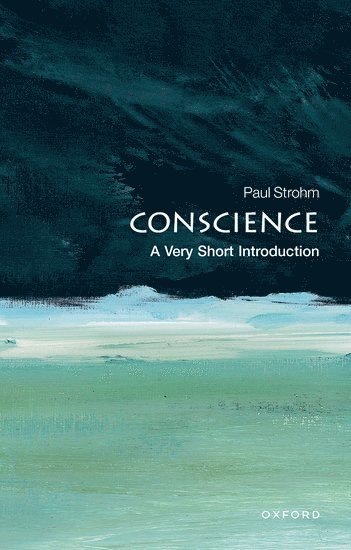
Where does our conscience come from? How reliable is it? In the West conscience has been relied upon for two thousand years as a judgement that distinguishes right from wrong. It has effortlessly moved through every period division and timeline between the ancient, medieval, and modern. The Romans identified it, the early Christians appropriated it, and Reformation Protestants and loyal Catholics relied upon its advice and admonition. Today it is embraced with equal conviction by non-religious and religious alike. Considering its deep historical roots and exploring what it has meant to successive generations, Paul Strohm highlights why this particularly European concept deserves its reputation as 'one of the prouder Western contributions to human rights and human dignity throughout the world.' Using examples from popular culture including the Disney classic Pinocchio, as well as examples from contemporary politics, he explores the work of thinkers such as Nietzsche, Freud, and Aquinas, to show how and why conscience remains a motivating and important principle in the contemporary world. ABOUT THE SERIES: The Very Short Introductions series from Oxford University Press contains hundreds of titles in almost every subject area. These pocket-sized books are the perfect way to get ahead in a new subject quickly. Our expert authors combine facts, analysis, perspective, new ideas, and enthusiasm to make interesting and challenging topics highly readable.
1 643 kr
Skickas inom 5-8 vardagar
These original essays mean to provoke rather than reassure, to challenge rather than codify. Instead of summarizing existing knowledge after the fashion of the now-ubiquitous literary 'companions,' these essays aim at opening fresh discussion; instead of emphasizing settled consensus they direct their readers to areas of enlivened and unresolved debate. Although 'major authors' such as Chaucer and Langland are richly represented, many little-known and neglected texts are considered as well. Analysis is devoted not only to self-sufficient works, but to the general conditions of textual production and reception. Contributors to this collection include some recognized and admired names, but also a good many newer faces: younger scholars whose groundbreaking research is just coming into full view, and whose perspectives will influence the terms of literary discussion in the decades to come. Encouraged to speculate, they have addressed topics that unsettle previous categories of investigation. Each is oriented toward the emergent, the unfinalized, the yet-to-be-done. Each essay stirs new questions and concludes with suggestions for further reading and investigation that will allow readers to extend their own research into the questions it has raised.
1 107 kr
Skickas inom 5-8 vardagar
These original essays mean to provoke rather than reassure, to challenge rather than codify. Instead of summarizing existing knowledge after the fashion of the now-ubiquitous literary 'companions,' these essays aim at opening fresh discussion; instead of emphasizing settled consensus they direct their readers to areas of enlivened and unresolved debate. Although 'major authors' such as Chaucer and Langland are richly represented, many little-known and neglected texts are considered as well. Analysis is devoted not only to self-sufficient works, but to the general conditions of textual production and reception. Contributors to this collection include some recognized and admired names, but also a good many newer faces: younger scholars whose groundbreaking research is just coming into full view, and whose perspectives will influence the terms of literary discussion in the decades to come. Encouraged to speculate, they have addressed topics that unsettle previous categories of investigation. Each is oriented toward the emergent, the unfinalized, the yet-to-be-done. Each essay stirs new questions and concludes with suggestions for further reading and investigation that will allow readers to extend their own research into the questions it has raised.
1 235 kr
Skickas inom 10-15 vardagar
In this book Paul Strohm shifts his recognized talent for textual and cultural analysis to the later fifteenth century, arguing that England experienced its own "pre-Machiavellian" moment between 1450 and 1485. These turbulent decades encouraged new pragmatic discussions of political policies of a sort not previously seen and not to be seen again until the middle of the sixteenth century. Strohm contends that England had no need to await the writings of Machiavelli to find its voice in matters of practical statecraft and political calculation. In support of this thesis, he analyzes a range of mainly vernacular fifteenth-century English political texts along with several contemporary writings from Burgundy, France, and Italy. The writers of these texts are unsentimental, shrewdly informed, and keenly concerned with political practice in the world.Intricately connected with this new discussion of worldly politics is a revised, and more hopeful, view of the individual's relation to Fortune and her operations. Emergent in the English fifteenth century is the possibility that the prudent prince can effectively "Fortune-proof" himself by the exercise of foresight and the qualities of vertue—a trait remarkably anticipatory of its Italian and Machiavellian counterpart, virtú. This view is introduced to England by the poet John Lydgate and flourishes in the second half of the fifteenth century. In addition to Lydgate, Strohm looks at the imaginative accomplishments of other undercredited writers such as Fortescue, Pecock, Whethamstede, Warkworth, and the unnamed authors of Somnium Vigilantis, Historie of the Arrivall of Edward IV, and the Great Chronicle of London. He also offers an appreciation of the collective linguistic and symbolic endeavors of those in the fifteenth-century public sphere.This detailed and rich study, which is based on the 2003 Conway Lectures Strohm delivered at the University of Notre Dame, contributes to the fields of medieval and early modern studies, medieval literary criticism, and political philosophy.
422 kr
Skickas inom 10-15 vardagar
In this book Paul Strohm shifts his recognized talent for textual and cultural analysis to the later fifteenth century, arguing that England experienced its own "pre-Machiavellian" moment between 1450 and 1485. These turbulent decades encouraged new pragmatic discussions of political policies of a sort not previously seen and not to be seen again until the middle of the sixteenth century. Strohm contends that England had no need to await the writings of Machiavelli to find its voice in matters of practical statecraft and political calculation. In support of this thesis, he analyzes a range of mainly vernacular fifteenth-century English political texts along with several contemporary writings from Burgundy, France, and Italy. The writers of these texts are unsentimental, shrewdly informed, and keenly concerned with political practice in the world.Intricately connected with this new discussion of worldly politics is a revised, and more hopeful, view of the individual's relation to Fortune and her operations. Emergent in the English fifteenth century is the possibility that the prudent prince can effectively "Fortune-proof" himself by the exercise of foresight and the qualities of vertue—a trait remarkably anticipatory of its Italian and Machiavellian counterpart, virtú. This view is introduced to England by the poet John Lydgate and flourishes in the second half of the fifteenth century. In addition to Lydgate, Strohm looks at the imaginative accomplishments of other undercredited writers such as Fortescue, Pecock, Whethamstede, Warkworth, and the unnamed authors of Somnium Vigilantis, Historie of the Arrivall of Edward IV, and the Great Chronicle of London. He also offers an appreciation of the collective linguistic and symbolic endeavors of those in the fifteenth-century public sphere.This detailed and rich study, which is based on the 2003 Conway Lectures Strohm delivered at the University of Notre Dame, contributes to the fields of medieval and early modern studies, medieval literary criticism, and political philosophy.
378 kr
Skickas inom 10-15 vardagar
After the dethronement and subsequent murder of Richard II, the usurping Lancastrian dynasty faced an exceptional challenge. Interrupting a long period of Plantagenet rule, Henry IV and Henry V needed not only to establish physical possession of the English throne but to occupy it symbolically as well. In this boldly revisionary book, Paul Strohm provides a new account of the Lancastrian revolution and its aftermath.Integrating techniques of literary and historical analysis, he reveals the Lancastrian monarchs as masters of outward display, persuasively "performing" their kingship through a variety of novel ceremonies in a quest for legitimacy. He also describes far-reaching Lancastrian experiments in domination, including the proscription of prophecy; the enlistment of poetry as court propaganda; the extensive use of spies and informers; and, most ambitiously, the redefinition of treason to cover not only overt deeds but words and thoughts as well.Strohm's account of the Lancastrian quest for legitimacy and the uses of symbolic power illuminates—indeed, recasts—our understanding of a period of unprecedented political upheaval.
482 kr
Skickas inom 5-8 vardagar
After the dethronement and subsequent murder of Richard II, the usurping Lancastrian dynasty faced an exceptional challenge. Interrupting a long period of Plantagenet rule, Henry IV and Henry V needed not only to establish physical possession of the English throne, but to occupy it symbolically as well. In this boldly revisionary book, Paul Strohm provides a new account of the Lancastrian revolution and its aftermath. Integrating techniques of literary and historical analysis, he explores the new dynasty`s quest for legitimacy and the importance of symbolic activity to the making of kingship.Strohm reveals the Lancastrian monarchs as masters of outward display, persuasively "performing" their kingship in a variety of novel ceremonies. Henry IV is crowned with a newly discovered coronation oil. The murdered Richard II is elaborately reburied. Opinion is courted and deceived with invented chronicles, false prophecies, and bogus genealogies. Opponents of the new regime are subject to new varieties of trial and punishment. Far-reaching Lancastrian experiments in domination include the proscription of prophecy, the enlistment of poetry, the use of spies and hired informers, and, most ambitiously, the redefinition of treason to cover not only overt deeds but also things said and even thought. Strohm`s account of the Lancastrian quest for legitimacy and the uses of symbolic power illuminates—indeed recasts—our understanding of a period of unprecedented political upheaval.
391 kr
Skickas inom 10-15 vardagar
Each generation finds in Chaucer’s works the concerns and themes of its own era. But what of Chaucer’s contemporaries? For whom was he writing? With what expectations would his original audience have approached his works? In what terms did he and his audience understand their society, and how does his poetry embody a view of society?These are some of the questions Paul Strohm addresses in this innovative look at the historical Chaucer. Fourteenth-century English society was, he reminds us, in a state of accelerating transition: feudalism was yielding to capitalism, and traditional ways of understanding one’s place in society were contending with new social paradigms. Those like Chaucer who lived on the fringe of gentility were particularly sensitive to these changes. Their social position opened the way to attractive possibilities, even as it exposed them to special perils.Strohm draws on seldom-considered documents to describe Chaucer’s social circle and its experiences, and he relates this circle to implied and fictional audiences in the texts. Moving between major works like the Canterbury Tales and less frequently discussed works like Complaint of Mars, he suggests that Chaucer’s poetry not only reproduces social tensions of the time but also proposes conciliatory alternatives. His analysis yields a fuller understanding of Chaucer’s world and new insight into the social implications of literary forms and styles.
747 kr
Skickas inom 3-6 vardagar
"The paradox of the lie that might as well be true," writes Paul Strohm, "must interest anyone who seeks to understand texts in history or the historical influence of texts." In these seven essays, all recent and most published here for the first time, the author examines historical and literary texts from fourteenth-century England. He not only demonstrates the fictionality of narrative and documentary sources, but also argues that these fictions are themselves fully historical. Together the essays institute a dialogue between texts and events that restores historical documents and literary works to their larger environments. Strohm begins by inspecting legal records that accuse Hochon of Liverpool in 1384 of threatening to shoot an arrow at a political adversary urinating against a wall, and shows how the text embodies and interconnects language, social space, and historical interpretation itself.Throughout his analyses, which cover such topics as Chaucer's verses on the accession of Henry IV, Froissart's account of Queen Philippa interceding for the burghers of Calais, and Thomas Usk's accusations against John Northampton, Strohm alerts us to the distortions of textuality itself while challenging our notions of "invented" and "true." Originally published in 1992. The Princeton Legacy Library uses the latest print-on-demand technology to again make available previously out-of-print books from the distinguished backlist of Princeton University Press. These editions preserve the original texts of these important books while presenting them in durable paperback and hardcover editions. The goal of the Princeton Legacy Library is to vastly increase access to the rich scholarly heritage found in the thousands of books published by Princeton University Press since its founding in 1905.
1 674 kr
Skickas inom 3-6 vardagar
"The paradox of the lie that might as well be true," writes Paul Strohm, "must interest anyone who seeks to understand texts in history or the historical influence of texts." In these seven essays, all recent and most published here for the first time, the author examines historical and literary texts from fourteenth-century England. He not only demonstrates the fictionality of narrative and documentary sources, but also argues that these fictions are themselves fully historical. Together the essays institute a dialogue between texts and events that restores historical documents and literary works to their larger environments. Strohm begins by inspecting legal records that accuse Hochon of Liverpool in 1384 of threatening to shoot an arrow at a political adversary urinating against a wall, and shows how the text embodies and interconnects language, social space, and historical interpretation itself.Throughout his analyses, which cover such topics as Chaucer's verses on the accession of Henry IV, Froissart's account of Queen Philippa interceding for the burghers of Calais, and Thomas Usk's accusations against John Northampton, Strohm alerts us to the distortions of textuality itself while challenging our notions of "invented" and "true." Originally published in 1992. The Princeton Legacy Library uses the latest print-on-demand technology to again make available previously out-of-print books from the distinguished backlist of Princeton University Press. These editions preserve the original texts of these important books while presenting them in durable paperback and hardcover editions. The goal of the Princeton Legacy Library is to vastly increase access to the rich scholarly heritage found in the thousands of books published by Princeton University Press since its founding in 1905.
310 kr
Skickas inom 7-10 vardagar
A major reconsideration of relations between new theories and old texts.Medieval Studies/Literary Theory A major reconsideration of relations between new theories and old texts. The work of Paul Strohm allies the most distinguished traditions of medieval study with the most challenging and innovative of theoretical approaches. These features, working together to revise and expand our understanding of both medieval texts and contemporary critical practice, are apparent in full and compelling force in this collection of essays, most now in print for the first time. In a range of theoretical engagements with late medieval texts, dealing with social practice, time, and narrative, this volume proposes a "practical" relation between the text and the theory that illuminates it.Insisting on the imaginative multiplicity of the text, Strohm finds in theory an augmentation of interpretive possibilities-an augmentation that sometimes requires respectful disagreement with what a work says-or seems to want known-about itself. He thus defines theory as "any standpoint from which we might challenge a text’s self-understanding." Coupled with this strategic disrespect is a new and amplified form of respect-for the text as a meaning-making system, for its unruly power and its unpredictable effects in the world.In this spirit, Strohm offers new and illustrative readings of Hoccleve’s "Male Regle" and Regiment of Princes, Ricardian coronation documents, Chaucer’s "Cook’s Tale," Capgrave’s chronicle, the Gesta Henrici Quinti, records of the king’s bench, Malory’s "Knight of the Cart," and other later medieval texts. Throughout, Strohm traverses categories of "literary" and "non-literary" in the service of a more comprehensive understanding of texts and the resourcefulness with which they accomplish their social work.Medieval Cultures Series, volume 26Translation Inquiries: University of Minnesota Press
Studies in the Age of Chaucer
Proceedings, No. 1, 1984: Reconstructing Chaucer
Inbunden, Engelska, 1985
744 kr
Skickas inom 10-15 vardagar
Studies in the Age of Chaucer is the annual yearbook of the New Chaucer Society, publishing articles on the writing of Chaucer and his contemporaries, their antecedents and successors, and their intellectual and social contexts. More generally, articles explore the culture and writing of later medieval Britain (1200-1500). Each SAC volume also includes an annotated bibliography and reviews of Chaucer-related publications.
185 kr
Skickas inom 7-10 vardagar
As the year 1386 began, Geoffrey Chaucer was a middle-aged bureaucrat and sometime poet, living in London and enjoying the perks that came with his close connections to its booming wool trade. When it ended, he was jobless, homeless, out of favour with his friends and living in exile. Such a reversal might have spelled the end of his career; but instead, at the loneliest time of his life, Chaucer made the revolutionary decision to 'maken vertu of necessitee' and keep writing. The result - The Canterbury Tales - was a radically new form of poetry that would make his reputation, bring him to a national audience, and preserve his work for posterity.In The Poet's Tale, Paul Strohm brings Chaucer's world to vivid life, from the streets and taverns of crowded medieval London to rural seclusion in Kent, and reveals this crucial year as a turning point in the fortunes of England's most important poet.
230 kr
Skickas
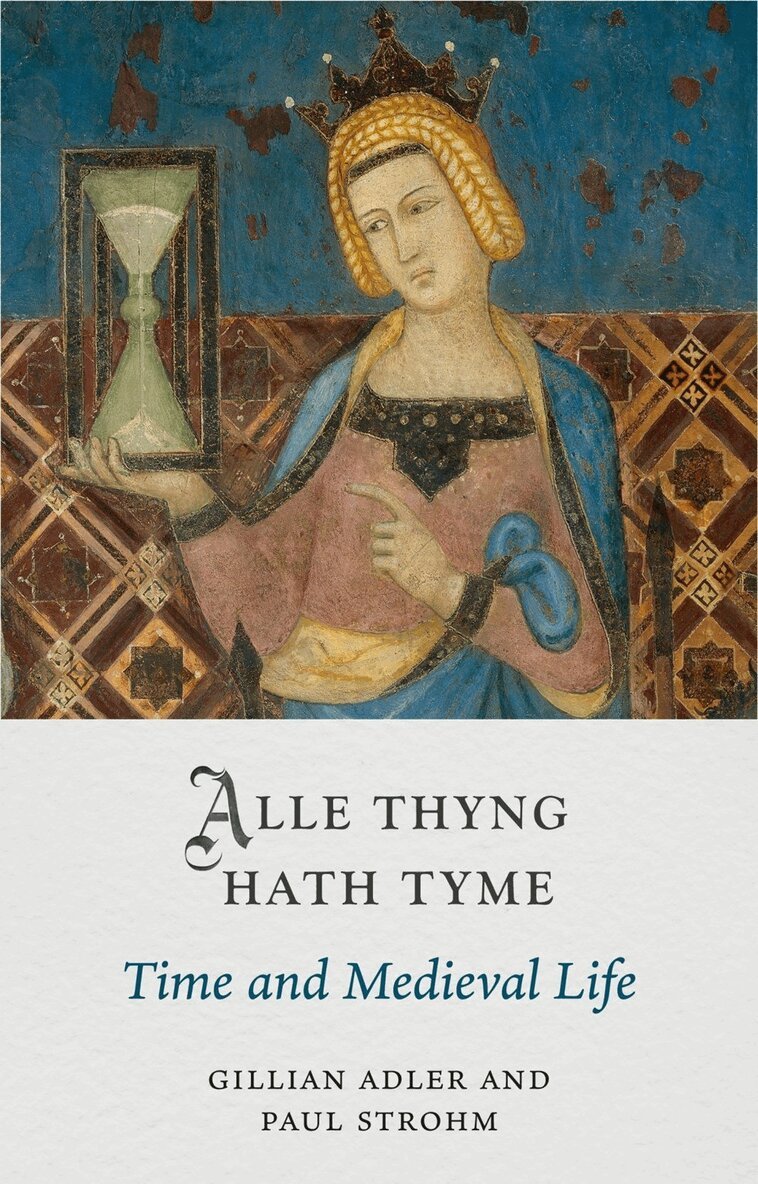
Alle Thyng Hath Tyme recreates medieval people’s experience of time: as continuous and discontinuous, linear and cyclical, embracing Creation and Judgement, shrinking to ‘atoms’ or ‘droplets’ and extending to the silent spaces of eternity. They might measure time by natural phenomena such as sunrise and sunset, the motion of the stars or the progress of the seasons, even as the late medieval invention of the mechanical clock was making time-reckoning more precise. Negotiating these mixed and competing systems, medieval people gained a nuanced and expansive sense of time that rewards attention today.