Paul Thibault – författare
Visar alla böcker från författaren . Handla med fri frakt och snabb leverans.
7 produkter
7 produkter
Inbunden, Engelska, 2004
3 216 kr
Skickas inom 10-15 vardagar
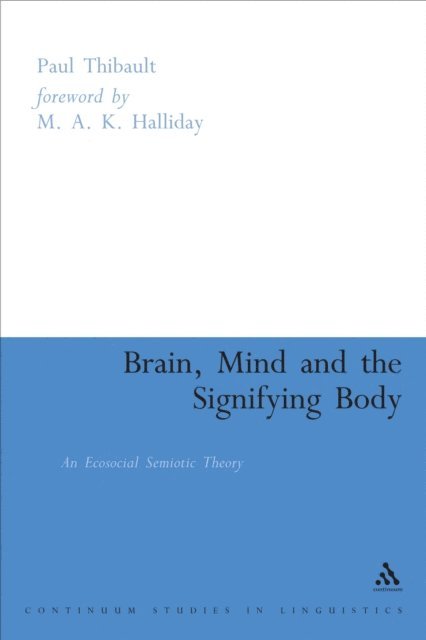
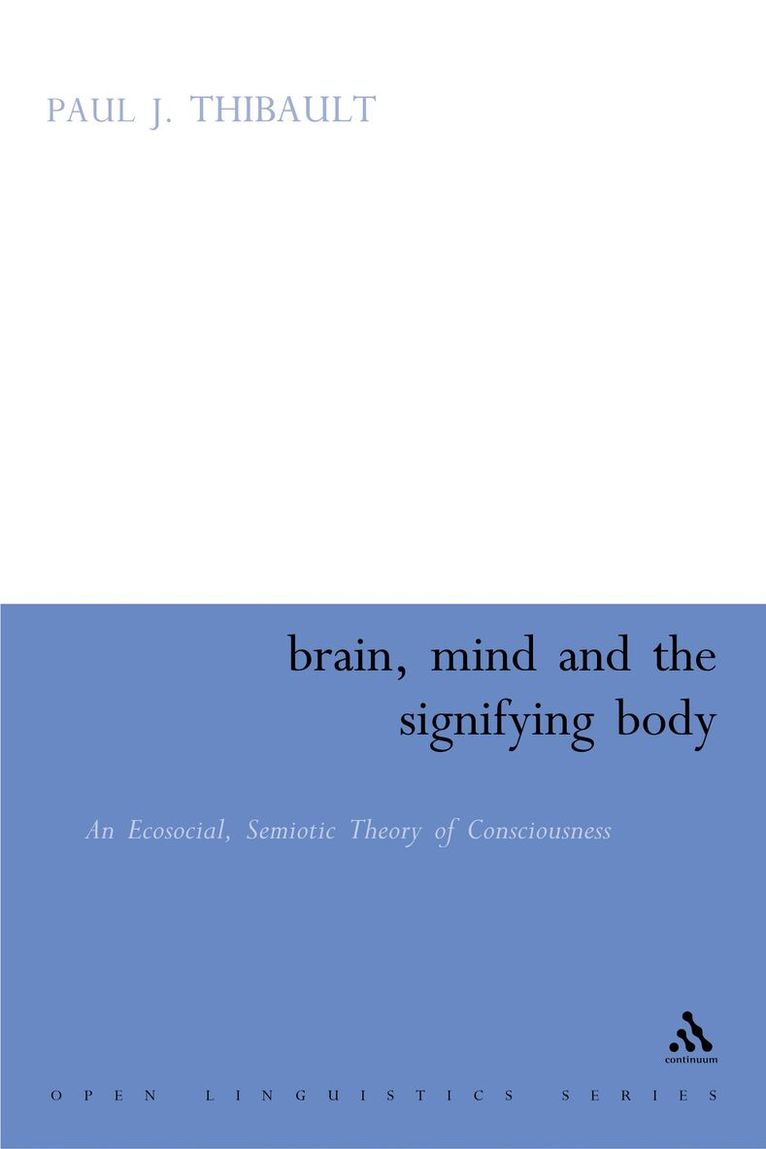
Brain, Mind and the Signifying Body is an exploration of a multimodal theory of cognitive science. Using linguistic theories first developed by Saussure and more latterly by M. A. K. Halliday, Paul Thibault analyses how social and biological systems interact to produce meaning. This fascinating study will be of interest to undergraduates and academics researching cognitive linguistics and advanced semiotics. The book engages with the current dialogue between the human and life sciences to ask questions about the relationship between the physical, biological aspects of a human being, and the sociocultural framework in which a human being exists. Paul J. Thibault argues that we need to understand both the semiotic, discursive nature of meaning making, and the physical context in which this activity takes place. The two are inseparable, and hence the only way we can understand our subjective experience of our environment and our perceptions of our inner states of mind is by giving equal weight to both frameworks. This 'ecosocial semiotic' theory engages with linguistics, semiotics, activity theory, biology and psychology.In so doing, the book produces a new way of looking at how a human being makes sense of his or her environment, but also how this environment shapes such meanings.
Inbunden, Engelska, 2004
2 859 kr
Skickas inom 10-15 vardagar
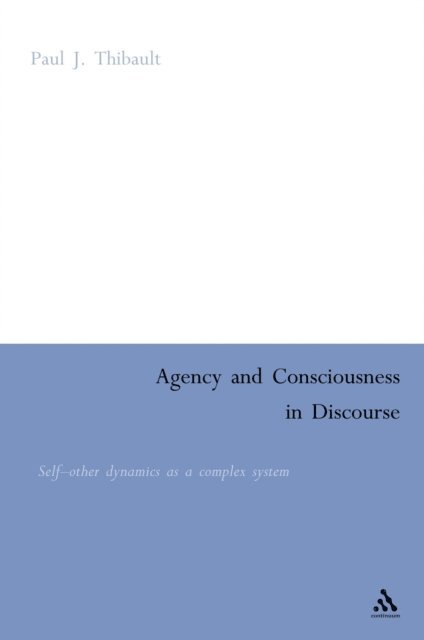
In the past two decades there has been considerable interest in the ways in which subjects are positioned in discursive practice. This interest has entailed a focus on the role of language and discourse in the processes in and through which subjects are constituted in discourse. However, questions of agency and how it relates to consciousness have received less attention. This book explores the ways in which agency and consciousness are created through transactions between self and other. The book argues that it is necessary to regard body-brain interactions in the context of the social and discursive practices which act upon human bodies. These issues of agency and individuation are explored in relation to infant semiosis, as well as in relation to children's symbolic play. Thibault looks at the importance of the self-referential moral conscience in relation to the interpersonal dimension of all acts of meaning-making. This conscience is also connected to the development of a self-referential viewpoint which the book argues is connected to the ecosocial semiotic systems of thinking about consciousness as a complex system operating on many different levels.The author discusses and evaluates the work of linguists, psychologists, biologists, semioticians, and sociologists such as Basil Bernstein, Mikhail Bakhtin, J. J. Gibson, M. A. K. Halliday, Walter Kauffman, Lakoff & Johnson, Jay Lemke, Jean Piaget and Stanley Salthe, to develop a new theory of agency and consciousness.
Häftad, Engelska, 2006
1 291 kr
Skickas inom 10-15 vardagar
In the past two decades there has been considerable interest in the ways in which subjects are positioned in discursive practice. This interest has entailed a focus on the role of language and discourse in the processes in and through which subjects are constituted in discourse. However, questions of agency and how it relates to consciousness have received less attention. This book explores the ways in which agency and consciousness are created through transactions between self and other. The book argues that it is necessary to regard body-brain interactions in the context of the social and discursive practices which act upon human bodies. These issues of agency and individuation are explored in relation to infant semiosis, as well as in relation to children's symbolic play. Thibault looks at the importance of the self-referential moral conscience in relation to the interpersonal dimension of all acts of meaning-making. This conscience is also connected to the development of a self-referential viewpoint which the book argues is connected to the ecosocial semiotic systems of thinking about consciousness as a complex system operating on many different levels.The author discusses and evaluates the work of linguists, psychologists, biologists, semioticians, and sociologists such as Basil Bernstein, Mikhail Bakhtin, J. J. Gibson, M. A. K. Halliday, Walter Kauffman, Lakoff & Johnson, Jay Lemke, Jean Piaget and Stanley Salthe, to develop a new theory of agency and consciousness.
Häftad, Engelska, 2006
1 291 kr
Skickas inom 10-15 vardagar
"Brain, Mind and the Signifying Body" is an exploration of a multimodal theory of cognitive science. Using linguistic theories first developed by Saussure and more latterly by M. A. K. Halliday, Paul Thibault analyses how social and biological systems interact to produce meaning. This fascinating study will be of interest to undergraduates and academics researching cognitive linguistics and advanced semiotics. The book engages with the current dialogue between the human and life sciences to ask questions about the relationship between the physical, biological aspects of a human being, and the sociocultural framework in which a human being exists. Paul J. Thibault argues that we need to understand both the semiotic, discursive nature of meaning making, and the physical context in which this activity takes place. The two are inseparable, and hence the only way we can understand our subjective experience of our environment and our perceptions of our inner states of mind is by giving equal weight to both frameworks. This 'ecosocial semiotic' theory engages with linguistics, semiotics, activity theory, biology and psychology.In so doing, the book produces a new way of looking at how a human being makes sense of his or her environment, but also how this environment shapes such meanings.
E-bok
Engelska, 20061 358 kr
Läs direkt efter köp
"Brain, Mind and the Signifying Body" is an exploration of a multimodal theory of cognitive science. Using linguistic theories first developed by Saussure and more latterly by M. A. K. Halliday, Paul Thibault analyses how social and biological systems interact to produce meaning. This fascinating study will be of interest to undergraduates and academics researching cognitive linguistics and advanced semiotics. The book engages with the current dialogue between the human and life sciences to ask questions about the relationship between the physical, biological aspects of a human being, and the sociocultural framework in which a human being exists. Paul J. Thibault argues that we need to understand both the semiotic, discursive nature of meaning making, and the physical context in which this activity takes place. The two are inseparable, and hence the only way we can understand our subjective experience of our environment and our perceptions of our inner states of mind is by giving equal weight to both frameworks. This ''ecosocial semiotic'' theory engages with linguistics, semiotics, activity theory, biology and psychology.In so doing, the book produces a new way of looking at how a human being makes sense of his or her environment, but also how this environment shapes such meanings.
E-bok
PDF, Engelska, 20041 362 kr
Läs direkt efter köp
Thought always exaggerates'' Hannah Arendt writes. The question of exaggeration becomes a philosophical question when thought endeavours to clarify the ways in which it relates to limits. If its disclosing force depends on exaggeration, so does the;confusion to which it can;fall prey. This book analyses concepts such as truth and trust, practices such as politics and art, experiences such as the formation of a life line and its erasure, from the viewpoint of exaggeration.
E-bok
PDF, Engelska, 20043 108 kr
Läs direkt efter köp
In the past two decades there has been considerable interest in the ways in which subjects are positioned in discursive practice. This interest has entailed a focus on the role of language and discourse in the processes in and through which subjects are constituted in discourse. However, questions of agency and how it relates to consciousness have received less attention. This book explores the ways in which agency and consciousness are created through transactions between self and other. The book argues that it is necessary to regard body-brain interactions in the context of the social and discursive practices which act upon human bodies. These issues of agency and individuation are explored in relation to infant semiosis, as well as in relation to children''s symbolic play. Thibault looks at the importance of the self-referential moral conscience in relation to the interpersonal dimension of all acts of meaning-making. This conscience is also connected to the development of a self-referential viewpoint which the book argues is connected to the ecosocial semiotic systems of thinking about consciousness as a complex system operating on many different levels. The author discusses and evaluates the work of linguists, psychologists, biologists, semioticians, and sociologists such as Basil Bernstein, Mikhail Bakhtin, J. J. Gibson, M. A. K. Halliday, Walter Kauffman, Lakoff & Johnson, Jay Lemke, Jean Piaget and Stanley Salthe, to develop a new theory of agency and consciousness.