Paul W. Barkley – författare
Visar alla böcker från författaren Paul W. Barkley. Handla med fri frakt och snabb leverans.
6 produkter
6 produkter
2 042 kr
Skickas inom 10-15 vardagar
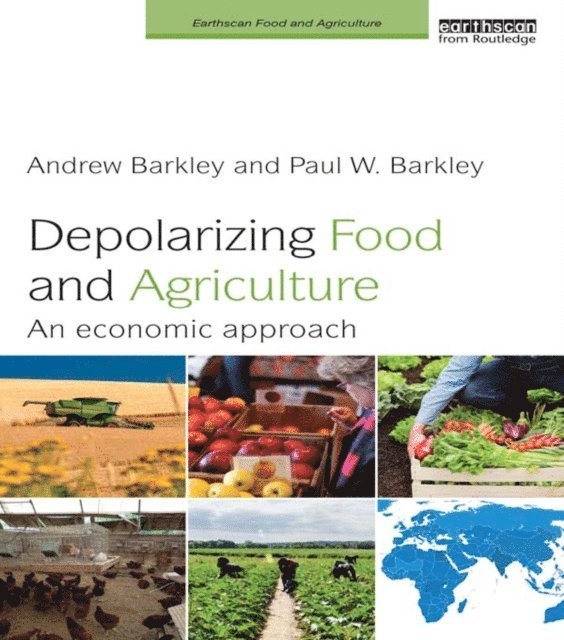
Many issues in food and agriculture are portrayed as increasingly polarized. These include industrial vs. sustainable agriculture, conventional vs. organic production methods, and global vs. local food sourcing, to name only three. This book addresses the origins, validity, consequences, and potential resolution of these and other divergences. Political and legal actions have resulted in significant monetary and psycho-social costs for groups on both sides of these divides. Rhetoric on many issues has caused misinformation and confusion among consumers, who are unsure about the impact of their food choices on nutrition, health, the environment, animal welfare, and hunger. In some cases distrust has intensified to embitterment on both sides of many issues, and even to violence. The book uses economic principles to help readers better understand the divisiveness that prevails in the agricultural production, food processing and food retailing industries. The authors propose solutions to promote resolution and depolarization between advocates with seemingly irreconcilable differences. A multifaceted, diverse, but targeted approach to food production and consumption is suggested to promote social well-being, and reduce or eliminate misinformation, anxiety, transaction costs and hunger.
835 kr
Skickas inom 10-15 vardagar
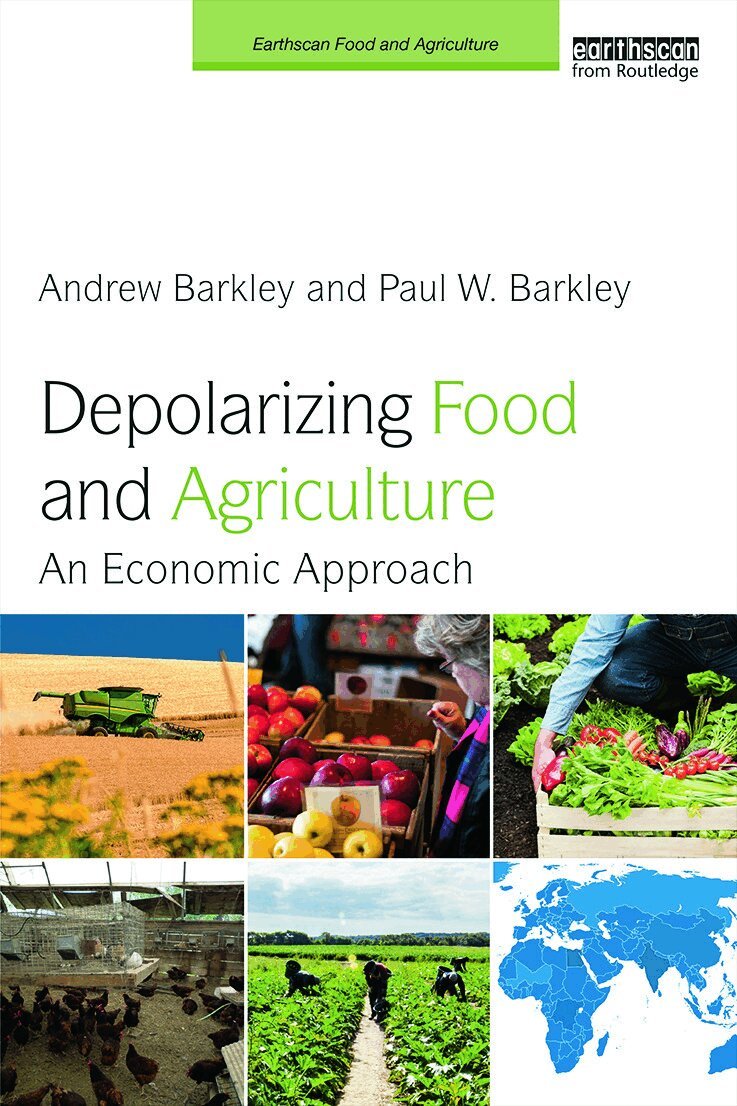
Many issues in food and agriculture are portrayed as increasingly polarized. These include industrial vs. sustainable agriculture, conventional vs. organic production methods, and global vs. local food sourcing, to name only three. This book addresses the origins, validity, consequences, and potential resolution of these and other divergences. Political and legal actions have resulted in significant monetary and psycho-social costs for groups on both sides of these divides. Rhetoric on many issues has caused misinformation and confusion among consumers, who are unsure about the impact of their food choices on nutrition, health, the environment, animal welfare, and hunger. In some cases distrust has intensified to embitterment on both sides of many issues, and even to violence. The book uses economic principles to help readers better understand the divisiveness that prevails in the agricultural production, food processing and food retailing industries. The authors propose solutions to promote resolution and depolarization between advocates with seemingly irreconcilable differences. A multifaceted, diverse, but targeted approach to food production and consumption is suggested to promote social well-being, and reduce or eliminate misinformation, anxiety, transaction costs and hunger.
1 113 kr
Skickas inom 10-15 vardagar
Principles of Agricultural Economics, now in its fourth edition, continues to showcase the power of economic principles to explain and predict issues and current events in the food, agricultural, and agribusiness sectors. This key text introduces economic principles in a succinct and reader-friendly format, providing students and instructors with a clear, up-to-date, and straightforward approach to learning how a market-based economy functions and how to use simple economic principles for improved decision-making.The field of agricultural economics has expanded to include a wide range of topics and approaches, including macroeconomics, international trade, agribusiness, environmental economics, natural resources, and international development, and these are all introduced in this text. For this edition, new and enhanced material on agricultural policies, globalization, welfare analysis, and explanations of the role of government in agriculture and agribusiness is included. Readers will also benefit from an expanded range of case studies and text boxes, including real-world examples such as the Ukraine conflict, the Coronavirus pandemic, and immigration.The work is supported by a companion website, including flash cards, study guides, PowerPoint presentations, multiple choice questions, essay questions, and an instructor’s manual. This book is ideal for courses on agricultural economics, microeconomics, rural development, and environmental policy.
3 353 kr
Skickas inom 10-15 vardagar
Principles of Agricultural Economics, now in its fourth edition, continues to showcase the power of economic principles to explain and predict issues and current events in the food, agricultural, and agribusiness sectors. This key text introduces economic principles in a succinct and reader-friendly format, providing students and instructors with a clear, up-to-date, and straightforward approach to learning how a market-based economy functions and how to use simple economic principles for improved decision-making.The field of agricultural economics has expanded to include a wide range of topics and approaches, including macroeconomics, international trade, agribusiness, environmental economics, natural resources, and international development, and these are all introduced in this text. For this edition, new and enhanced material on agricultural policies, globalization, welfare analysis, and explanations of the role of government in agriculture and agribusiness is included. Readers will also benefit from an expanded range of case studies and text boxes, including real-world examples such as the Ukraine conflict, the Coronavirus pandemic, and immigration.The work is supported by a companion website, including flash cards, study guides, PowerPoint presentations, multiple choice questions, essay questions, and an instructor’s manual. This book is ideal for courses on agricultural economics, microeconomics, rural development, and environmental policy.
1 230 kr
Skickas inom 5-8 vardagar
Principles of Agricultural Economics, now in its fifth edition, continues to showcase the power of economic principles to explain and predict issues and current events in the food, agricultural, and agribusiness sectors. This key text introduces economic principles in a succinct and reader-friendly format, providing students and instructors with a clear, up-to-date, and straightforward approach to learning how a market-based economy functions and how to use simple economic principles for improved decision-making.The field of agricultural economics has expanded to include a wide range of topics and approaches, including macroeconomics, international trade, agribusiness, environmental economics, natural resources, and international development, and these are all introduced in this text. For this edition, new and enhanced material is included on agricultural policies, globalization, tariffs, trade, immigration, inflation, and volatility in food and agricultural markets. Additionally, the fifth edition includes a broader exploration of how democracy, politics, and the economics of food and agriculture intersect, as well as highlighting further international perspectives. Readers will also benefit from an expanded range of case studies and text boxes, including real-world examples, such as the Ukraine conflict, tariff policies, and immigration.The work is supported by a companion website, including flash cards, study guides, PowerPoint presentations, multiple choice questions, essay questions, and an instructor’s manual. This book is ideal for courses on agricultural economics, microeconomics, rural development, and environmental policy.
3 353 kr
Skickas inom 10-15 vardagar
Principles of Agricultural Economics, now in its fifth edition, continues to showcase the power of economic principles to explain and predict issues and current events in the food, agricultural, and agribusiness sectors. This key text introduces economic principles in a succinct and reader-friendly format, providing students and instructors with a clear, up-to-date, and straightforward approach to learning how a market-based economy functions and how to use simple economic principles for improved decision-making.The field of agricultural economics has expanded to include a wide range of topics and approaches, including macroeconomics, international trade, agribusiness, environmental economics, natural resources, and international development, and these are all introduced in this text. For this edition, new and enhanced material is included on agricultural policies, globalization, tariffs, trade, immigration, inflation, and volatility in food and agricultural markets. Additionally, the fifth edition includes a broader exploration of how democracy, politics, and the economics of food and agriculture intersect, as well as highlighting further international perspectives. Readers will also benefit from an expanded range of case studies and text boxes, including real-world examples, such as the Ukraine conflict, tariff policies, and immigration.The work is supported by a companion website, including flash cards, study guides, PowerPoint presentations, multiple choice questions, essay questions, and an instructor’s manual. This book is ideal for courses on agricultural economics, microeconomics, rural development, and environmental policy.