Paula Allman – författare
Visar alla böcker från författaren Paula Allman. Handla med fri frakt och snabb leverans.
6 produkter
6 produkter
E-bok
PDF, Engelska, 20011 064 kr
Läs direkt efter köp
In today's vernacular, Marx outed capitalism well over a century ago, but his explanation has been both ignored and misinterpreted by not only his detractors but also by many socialists and even a considerable number of Marxists as well. Today we are experiencing the full impact and suffering the repercussions of capitalism's inherent need to become, more than ever before, a fully internationalized and integrated system of socio-economic control and domination--the global system that many commentators have suddenly remembered Marx and Engels (1848) presciently forecasted in the Communist Manifesto.When the Berlin Wall fell in 1989, the victory of capitalism and liberal democracy was triumphantly proclaimed. The Cold War was over, and we were promised a lasting peace. But as we enter the third millennium, we are facing escalating social divisions, injustice, and oppression, with an environment in varying stages of ecological decay. Daily we are bombarded by the schizoid media images of capitalism's extremes on television news: the ravaged faces and wasted bodies of some of the thousands suffering famine, or the millions living in the world's slums, and then the gleaming, yet vacuous smile and sumptuously adorned figure of some extravagant, wealthy individual who is one of the select members of the global upper-class. Are we becoming conditioned to accept such contrasts and regard them as normal and inevitable at a time when we have the potential to eliminate scarcity and eradicate human deprivation? The author argues that critical education is needed to form a movement capable of challenging and then transforming capitalism. She also offers an accessible account of Marx's dialectical critique and exposé of capitalism, clearly demonstrating the real enemy that should be the focus of anti-capitalist and anti-globalization struggles. This is an account that explains why our main focus should not be on greedy, individual capitalists or particular multinational corporations, or even their handmaiden institutions, such as, the World Bank, IMF, WTO, etc. but instead the global network of capitalist social relations and consequent habituated human practices in which we are all involved. These together with the historically specific form of capitalist wealth are the real enemy--the essence of capitalism--that must be abolished in order for humanity to have any hope of social and economic justice in the future.
Inbunden, Engelska, 1999
812 kr
Skickas inom 10-15 vardagar
Revolutionary Social Transformation focuses on the visions and analysis culled from the writings of Karl Marx, Paulo Freire, and Antonio Gramsci. Marx's theory of critical praxis and his dialectical conceptualization of capitalism are discussed together with Freire's and Gramsci's ideas. The author suggests that these are necessary ingredients for authentic social transformation as well as a basis for rekindling hope for a veritable democratic future.The author employs both a language of critique and a language of possibility to argue that the process of social transformation must be inherently educational. Social transformation begins in prefigurative, preparatory projects and continues even after the creation of a new social formation. She also argues that Marx's materialist theory of consciousness—his theory of critical praxis—informs the thinking of both Freire and Gramsci. The ideas of Freire and Gramsci together with Marx's dialectical conceptualization of capitalism provide essential ingredients for the type of critical theory of educational praxis necessary for authentic social transformation. These ingredients also indicate how local transformative efforts can be linked to the global project for social transformation and ultimately the ending of all oppression.
Inbunden, Engelska, 2001
1 013 kr
Skickas inom 10-15 vardagar
In today's vernacular, Marx outed capitalism well over a century ago, but his explanation has been both ignored and misinterpreted by not only his detractors but also by many socialists and even a considerable number of Marxists as well. Today we are experiencing the full impact and suffering the repercussions of capitalism's inherent need to become, more than ever before, a fully internationalized and integrated system of socio-economic control and domination--the global system that many commentators have suddenly remembered Marx and Engels (1848) presciently forecasted in the Communist Manifesto.When the Berlin Wall fell in 1989, the victory of capitalism and liberal democracy was triumphantly proclaimed. The Cold War was over, and we were promised a lasting peace. But as we enter the third millennium, we are facing escalating social divisions, injustice, and oppression, with an environment in varying stages of ecological decay. Daily we are bombarded by the schizoid media images of capitalism's extremes on television news: the ravaged faces and wasted bodies of some of the thousands suffering famine, or the millions living in the world's slums, and then the gleaming, yet vacuous smile and sumptuously adorned figure of some extravagant, wealthy individual who is one of the select members of the global upper-class. Are we becoming conditioned to accept such contrasts and regard them as normal and inevitable at a time when we have the potential to eliminate scarcity and eradicate human deprivation? The author argues that critical education is needed to form a movement capable of challenging and then transforming capitalism. She also offers an accessible account of Marx's dialectical critique and exposé of capitalism, clearly demonstrating the real enemy that should be the focus of anti-capitalist and anti-globalization struggles. This is an account that explains why our main focus should not be on greedy, individual capitalists or particular multinational corporations, or even their handmaiden institutions, such as, the World Bank, IMF, WTO, etc. but instead the global network of capitalist social relations and consequent habituated human practices in which we are all involved. These together with the historically specific form of capitalist wealth are the real enemy--the essence of capitalism--that must be abolished in order for humanity to have any hope of social and economic justice in the future.
Häftad, Engelska, 2001
490 kr
Skickas inom 10-15 vardagar
Revolutionary Social Transformation focuses on the visions and analysis culled from the writings of Karl Marx, Paulo Freire, and Antonio Gramsci. Marx's theory of critical praxis and his dialectical conceptualization of capitalism are discussed together with Freire's and Gramsci's ideas. The author suggests that these are necessary ingredients for authentic social transformation as well as a basis for rekindling hope for a veritable democratic future.The author employs both a language of critique and a language of possibility to argue that the process of social transformation must be inherently educational. Social transformation begins in prefigurative, preparatory projects and continues even after the creation of a new social formation. She also argues that Marx's materialist theory of consciousness--his theory of critical praxis--informs the thinking of both Freire and Gramsci. The ideas of Freire and Gramsci together with Marx's dialectical conceptualization of capitalism provide essential ingredients for the type of critical theory of educational praxis necessary for authentic social transformation. These ingredients also indicate how local transformative efforts can be linked to the global project for social transformation and ultimately the ending of all oppression.
E-bok
PDF, Engelska, 20191 467 kr
Läs direkt efter köp
In today's vernacular, Marx 'outed' capitalism well over a century ago; however, his explanation has been both ignored and misinterpreted by not only his detractors but also by many socialists and even a considerable number of Marxists as well. Today we are experiencing the full impact and suffering the repercussions of capitalism's inherent need to grow and become, more than ever before, a fully internationalized and integrated system of socioeconomic control and domination-the global system that many commentators have suddenly remembered Marx and Engels (1848) presciently forecasted in the Communist Manifesto. When the Berlin Wall fell in 1989, the victory of capitalism and liberal democracy was triumphantly proclaimed. The Cold War was over, and we were promised a lasting peace. As we entered the third millennium, the promise of peace was brutally dashed, and humanity now appears to have entered a state of permanent war. We have just witnessed the near total collapse of the global financial system and are continuing to experience, as we will for years to come, the collateral damage this crisis has caused. Problems we were facing before the current crisis will be exacerbated-escalating social and economic divisions, jobless growth, injustice, and oppression together with an environment in varying stages of degradation. Daily, on television news, we are bombarded by the schizoid media images of capitalism's extremes: the ravaged faces and wasted bodies of some of the thousands suffering famine, or the millions living in the world's slums, followed within a blink of the eye by the gleaming, yet vacuous, smile and sumptuously adorned figure of some extravagant, wealthy individual who is one of the select members of the global upper class. Are we becoming conditioned to accept such contrasts and regard them as normal and inevitable at a time when we have the potential to eliminate scarcity and eradicate human deprivation? The author argues that revolutionary critical education is needed to inform and form a social movement capable of challenging and then transforming capitalism. She also offers an accessible account of Marx's dialectical critique and expose of capitalism, clearly demonstrating the real enemy that should be the focus of anti-capitalist and anti-globalization struggles. This is an account that explains why our focus should not be on greedy, individual capitalists, Wall Street financial institutions, particular multinational corporations, national governments, or even their handmaiden institutions, such as, the World Bank, IMF, WTO, etc. but instead the global network of capitalist socioecomomic relations and consequent habituated human practices in which we are all involved. These together with the historically specific form of capitalist wealth are the real enemy-the essence of capitalism-that must be abolished in order for humanity to have any hope of social and economic justice in the future.
Del 1 - Key Critical Thinkers in Education
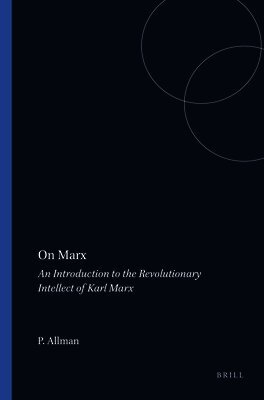
On Marx
An Introduction to the Revolutionary Intellect of Karl Marx
Häftad, Engelska, 2007
372 kr
Skickas inom 5-8 vardagar