Paula Arcari – författare
Visar alla böcker från författaren Paula Arcari. Handla med fri frakt och snabb leverans.
7 produkter
7 produkter
Inbunden, Engelska, 2024
2 038 kr
Skickas inom 10-15 vardagar
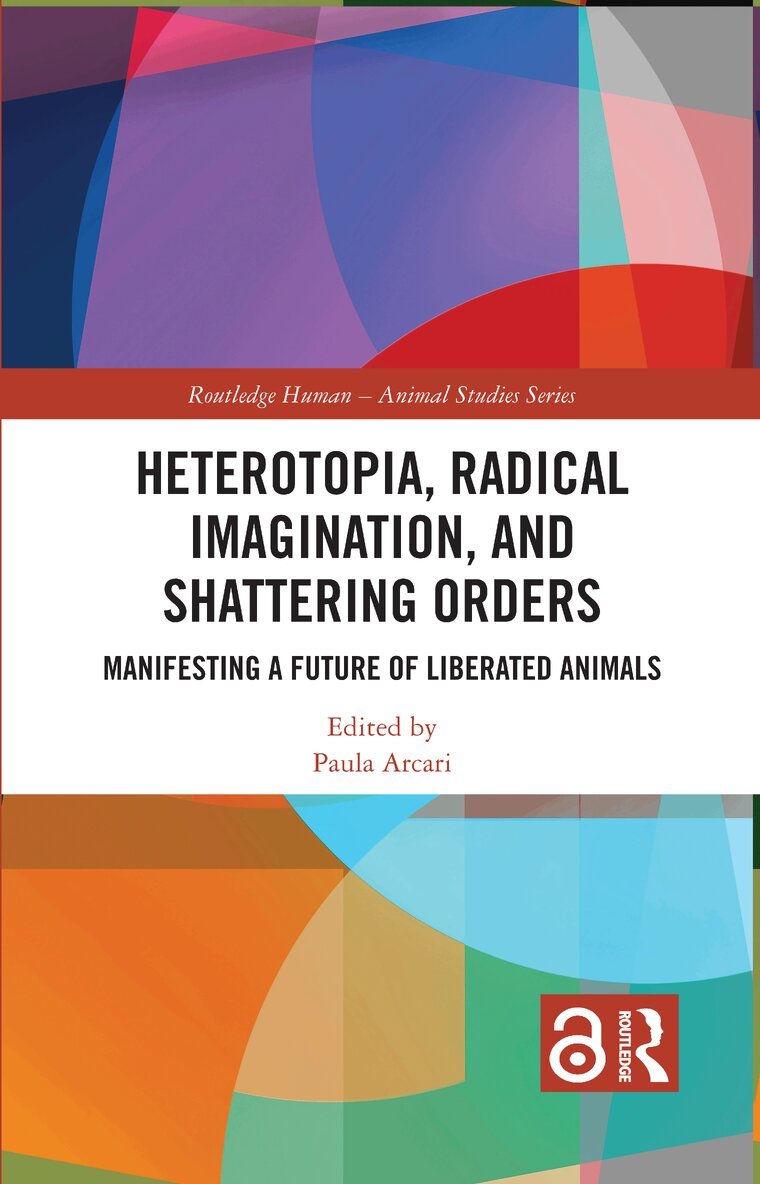
This volume takes ending the oppression of other animals seriously and confronts the question ‘What would happen to all the animals?’ by showcasing real, promissory, and imagined counter-sites or heterotopia, where animals ‘happen’ in different ways, free of anthropocentric orders of value and purpose.Rejecting persistent understandings of the oppression of nonhuman animals, across the entire breadth of the Animal-Industrial Complex (A-IC), as either non-existent, unproblematic, and/or fundamentally unalterable – open to merely being reduced in scale or made less harmful – the collection offers readers a variety of pathways towards radically ‘disordered’ ways of thinking about and relating to other animals. Over 14 chapters, authors describe more liberatory relational reconfigurations playing out in the present and undertake conceptual, imaginative, and embodied explorations of liberatory futures. The chapters are united by a common commitment to heterotopic disturbance – to contesting and subverting the anthropo-capitalo-centric space in which we live. Each chapter approaches this subversion in its own way, using prefiguration, restorying, speculation, radical imagination, and combinations thereof, to disturb or shatter orders, explore the kinds of liberation and resistance their disturbance demonstrates, demands, or embodies, and ultimately illustrate exactly what would or could happen to all the animals.Heterotopia, Radical Imagination, and Shattering Orders will appeal to scholars, students, and individuals interested not only in challenging normalised binaries, hierarchies, and orders of value, both human and nonhuman, but in creating and realising liberatory alternatives. Scholar-activists, activists, professionals working in animal advocacy, and anyone undertaking activities aimed at radically changing how other animals are understood and used will also find inspiration, new insights, and information that enhance their current methods and approaches. Some readers may also find simply confirmation and comfort in the knowledge that so many others are working in solidarity with the ‘disordered’ belief that shattering the A-IC is possible.Chapter 1 of this book is freely available as a downloadable Open Access PDF at http://www.taylorfrancis.com under a Creative Commons [Attribution-Non Commercial-No Derivatives (CC BY-NC-ND)] 4.0 license.
Häftad, Engelska, 2026
665 kr
Kommande
This volume takes ending the oppression of other animals seriously and confronts the question ‘What would happen to all the animals?’ by showcasing real, promissory, and imagined counter-sites or heterotopia, where animals ‘happen’ in different ways, free of anthropocentric orders of value and purpose.Rejecting persistent understandings of the oppression of nonhuman animals, across the entire breadth of the Animal-Industrial Complex (A-IC), as either non-existent, unproblematic, and/or fundamentally unalterable – open to merely being reduced in scale or made less harmful – the collection offers readers a variety of pathways towards radically ‘disordered’ ways of thinking about and relating to other animals. Over 14 chapters, authors describe more liberatory relational reconfigurations playing out in the present and undertake conceptual, imaginative, and embodied explorations of liberatory futures. The chapters are united by a common commitment to heterotopic disturbance – to contesting and subverting the anthropo-capitalo-centric space in which we live. Each chapter approaches this subversion in its own way, using prefiguration, restorying, speculation, radical imagination, and combinations thereof, to disturb or shatter orders, explore the kinds of liberation and resistance their disturbance demonstrates, demands, or embodies, and ultimately illustrate exactly what would or could happen to all the animals.Heterotopia, Radical Imagination, and Shattering Orders will appeal to scholars, students, and individuals interested not only in challenging normalised binaries, hierarchies, and orders of value, both human and nonhuman, but in creating and realising liberatory alternatives. Scholar-activists, activists, professionals working in animal advocacy, and anyone undertaking activities aimed at radically changing how other animals are understood and used will also find inspiration, new insights, and information that enhance their current methods and approaches. Some readers may also find simply confirmation and comfort in the knowledge that so many others are working in solidarity with the ‘disordered’ belief that shattering the A-IC is possible.Chapter 1 of this book is freely available as a downloadable Open Access PDF at http://www.taylorfrancis.com under a Creative Commons [Attribution-Non Commercial-No Derivatives (CC BY-NC-ND)] 4.0 license.
E-bok
PDF, Engelska, 2024649 kr
Läs direkt efter köp
This volume takes ending the oppression of other animals seriously and confronts the question 'What would happen to all the animals?' by showcasing real, promissory, and imagined counter-sites or heterotopia, where animals 'happen' in different ways, free of anthropocentric orders of value and purpose.Rejecting persistent understandings of the oppression of nonhuman animals, across the entire breadth of the Animal-Industrial Complex (A-IC), as either non-existent, unproblematic, and/or fundamentally unalterable - open to merely being reduced in scale or made less harmful - the collection offers readers a variety of pathways towards radically 'disordered' ways of thinking about and relating to other animals. Over 14 chapters, authors describe more liberatory relational reconfigurations playing out in the present and undertake conceptual, imaginative, and embodied explorations of liberatory futures. The chapters are united by a common commitment to heterotopic disturbance - to contesting and subverting the anthropo-capitalo-centric space in which we live. Each chapter approaches this subversion in its own way, using prefiguration, restorying, speculation, radical imagination, and combinations thereof, to disturb or shatter orders, explore the kinds of liberation and resistance their disturbance demonstrates, demands, or embodies, and ultimately illustrate exactly what would or could happen to all the animals.Heterotopia, Radical Imagination, and Shattering Orders will appeal to scholars, students, and individuals interested not only in challenging normalised binaries, hierarchies, and orders of value, both human and nonhuman, but in creating and realising liberatory alternatives. Scholar-activists, activists, professionals working in animal advocacy, and anyone undertaking activities aimed at radically changing how other animals are understood and used will also find inspiration, new insights, and information that enhance their current methods and approaches. Some readers may also find simply confirmation and comfort in the knowledge that so many others are working in solidarity with the 'disordered' belief that shattering the A-IC is possible.
E-bok
Engelska, 2024649 kr
Läs direkt efter köp
This volume takes ending the oppression of other animals seriously and confronts the question 'What would happen to all the animals?' by showcasing real, promissory, and imagined counter-sites or heterotopia, where animals 'happen' in different ways, free of anthropocentric orders of value and purpose.Rejecting persistent understandings of the oppression of nonhuman animals, across the entire breadth of the Animal-Industrial Complex (A-IC), as either non-existent, unproblematic, and/or fundamentally unalterable - open to merely being reduced in scale or made less harmful - the collection offers readers a variety of pathways towards radically 'disordered' ways of thinking about and relating to other animals. Over 14 chapters, authors describe more liberatory relational reconfigurations playing out in the present and undertake conceptual, imaginative, and embodied explorations of liberatory futures. The chapters are united by a common commitment to heterotopic disturbance - to contesting and subverting the anthropo-capitalo-centric space in which we live. Each chapter approaches this subversion in its own way, using prefiguration, restorying, speculation, radical imagination, and combinations thereof, to disturb or shatter orders, explore the kinds of liberation and resistance their disturbance demonstrates, demands, or embodies, and ultimately illustrate exactly what would or could happen to all the animals.Heterotopia, Radical Imagination, and Shattering Orders will appeal to scholars, students, and individuals interested not only in challenging normalised binaries, hierarchies, and orders of value, both human and nonhuman, but in creating and realising liberatory alternatives. Scholar-activists, activists, professionals working in animal advocacy, and anyone undertaking activities aimed at radically changing how other animals are understood and used will also find inspiration, new insights, and information that enhance their current methods and approaches. Some readers may also find simply confirmation and comfort in the knowledge that so many others are working in solidarity with the 'disordered' belief that shattering the A-IC is possible.
Inbunden, Engelska, 2019
820 kr
Skickas inom 10-15 vardagar
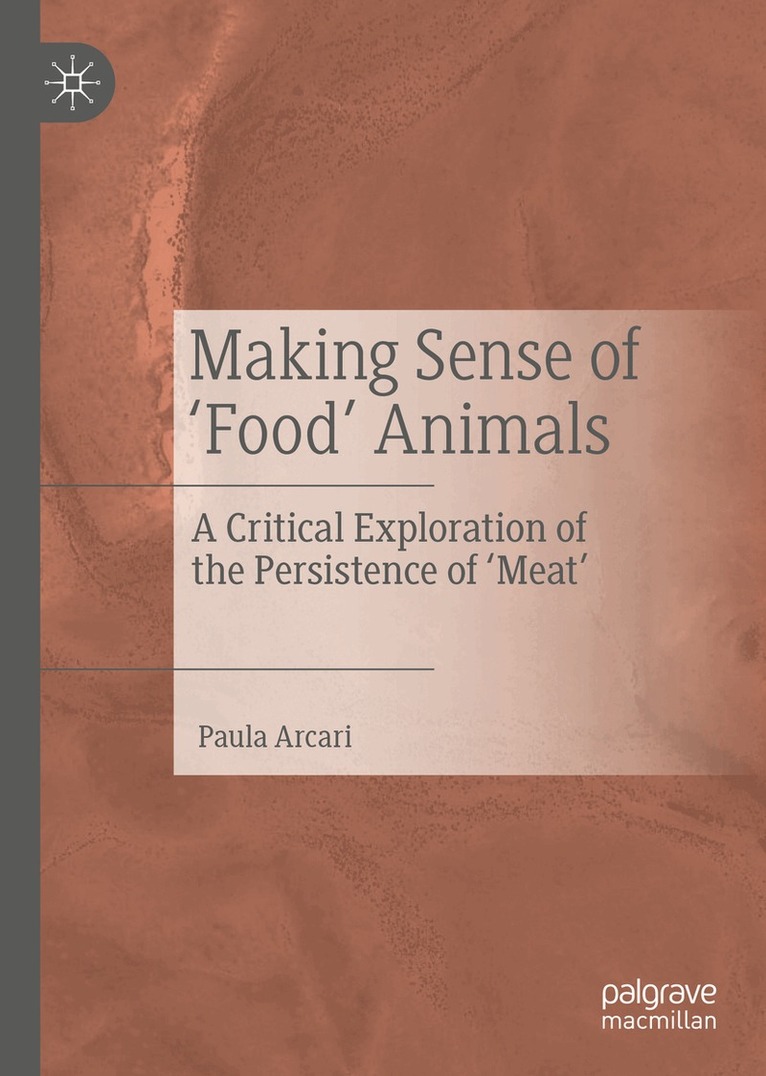
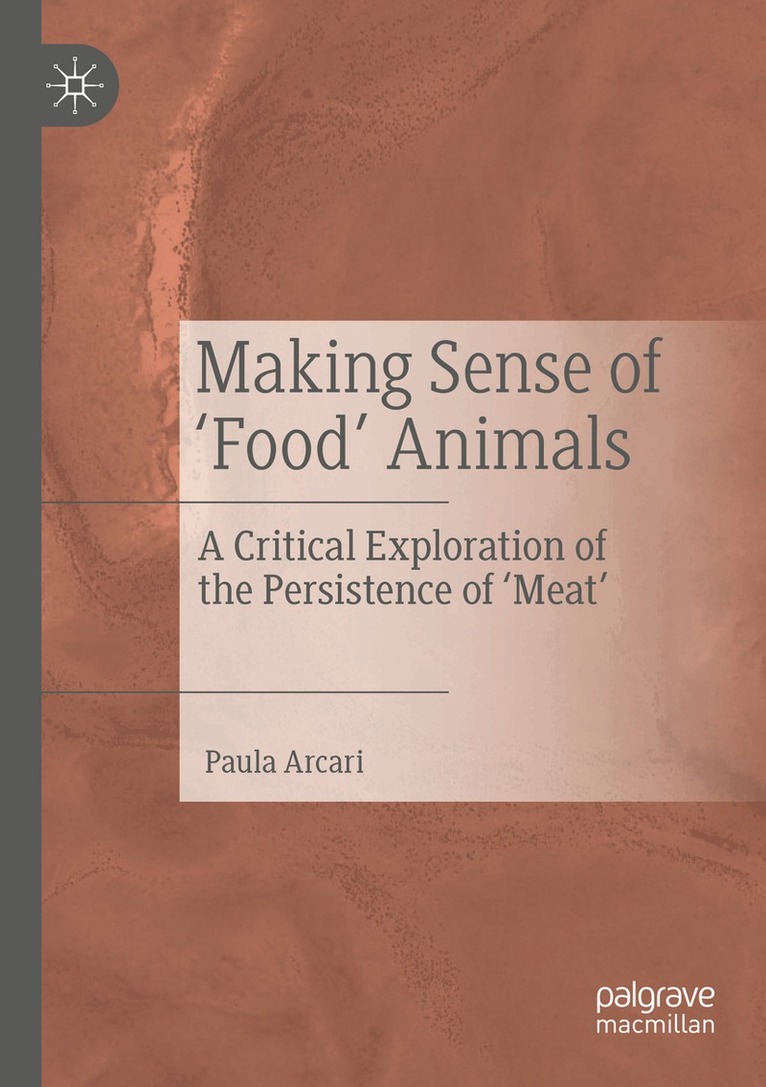
This book addresses the persistence of meat consumption and the use of animals as food in spite of significant challenges to their environmental and ethical legitimacy. Drawing on Foucault’s regime of power/knowledge/pleasure, and theorizations of the gaze, it identifies what contributes to the persistent edibility of ‘food’ animals even, and particularly, as this edibility is increasingly critiqued. Beginning with the question of how animals, and their bodies, are variously mapped by humans according to their use value, it gradually unpacks the roots of our domination of ‘food’ animals – a domination distinguished by the literal embodiment of the ‘other’. The logics of this embodied domination are approached in three inter-related parts that explore, respectively, how knowledge, sensory and emotional associations, and visibility work together to render animal’s bodies as edible flesh. The book concludes by exploring how to more effectively challenge the ‘entitled gaze’ that maintains‘food’ animals as persistently edible.
E-bok
Engelska, 2019697 kr
Läs direkt efter köp
This book addresses the persistence of meat consumption and the use of animals as food in spite of significant challenges to their environmental and ethical legitimacy. Drawing on Foucault’s regime of power/knowledge/pleasure, and theorizations of the gaze, it identifies what contributes to the persistent edibility of ‘food’ animals even, and particularly, as this edibility is increasingly critiqued. Beginning with the question of how animals, and their bodies, are variously mapped by humans according to their use value, it gradually unpacks the roots of our domination of ‘food’ animals – a domination distinguished by the literal embodiment of the ‘other’. The logics of this embodied domination are approached in three inter-related parts that explore, respectively, how knowledge, sensory and emotional associations, and visibility work together to render animal’s bodies as edible flesh. The book concludes by exploring how to more effectively challenge the ‘entitled gaze’ that maintains‘food’ animals as persistently edible.
Häftad, Engelska, 2020
549 kr
Skickas inom 10-15 vardagar
This book addresses the persistence of meat consumption and the use of animals as food in spite of significant challenges to their environmental and ethical legitimacy. Drawing on Foucault’s regime of power/knowledge/pleasure, and theorizations of the gaze, it identifies what contributes to the persistent edibility of ‘food’ animals even, and particularly, as this edibility is increasingly critiqued. Beginning with the question of how animals, and their bodies, are variously mapped by humans according to their use value, it gradually unpacks the roots of our domination of ‘food’ animals – a domination distinguished by the literal embodiment of the ‘other’. The logics of this embodied domination are approached in three inter-related parts that explore, respectively, how knowledge, sensory and emotional associations, and visibility work together to render animal’s bodies as edible flesh. The book concludes by exploring how to more effectively challenge the ‘entitled gaze’ that maintains‘food’ animals as persistently edible.