Pauli Kettunen - Böcker
Visar alla böcker från författaren Pauli Kettunen. Handla med fri frakt och snabb leverans.
3 produkter
3 produkter
1 866 kr
Skickas inom 7-10 vardagar
In this interdisciplinary volume, leading and emerging scholars examine the relationship between homogeneity and welfare state development. They trace Gunnar Myrdal's influence on thinking about race in the US and explore current European states' approaches to the strangers in their midst, and what social citizenship looks like from a global perspective.Myrdal's An American Dilemma: The Negro Problem and Modern Democracy persuaded many scholars that the United States failed to develop a robust welfare state because of its ethnic and racial heterogeneity. Conversely, it argued that homogeneity was a precondition for the creation of strong welfare states in European, especially Nordic, countries. With increasing diversity now challenging these welfare states, the kind of 'dilemma' that Myrdal identified no longer appears to be solely an American one.Students and scholars of contemporary welfare states in the social sciences and policy studies will find this to be an insightful read, as the book challenges current perceptions. It will also be of interest to policy makers and practitioners looking to examine the historical context behind the politics of welfare states in the US and Scandinavia.Contributors: H. Blomberg-Kroll, G. Brochmann, R. Careja, P. Emmenegger, T. Faist, P. Kettunen, D. King, J. Kvist, S. Michel, M. Morey, H.B. Nassif, A. O'Connor, R.S. Parreñas, S. Pellander, K. Petersen, D. Roberts, A.V. Schwennicke, A.H. Sinno, E. Tatari, S. Williamson
1 706 kr
Skickas inom 7-10 vardagar
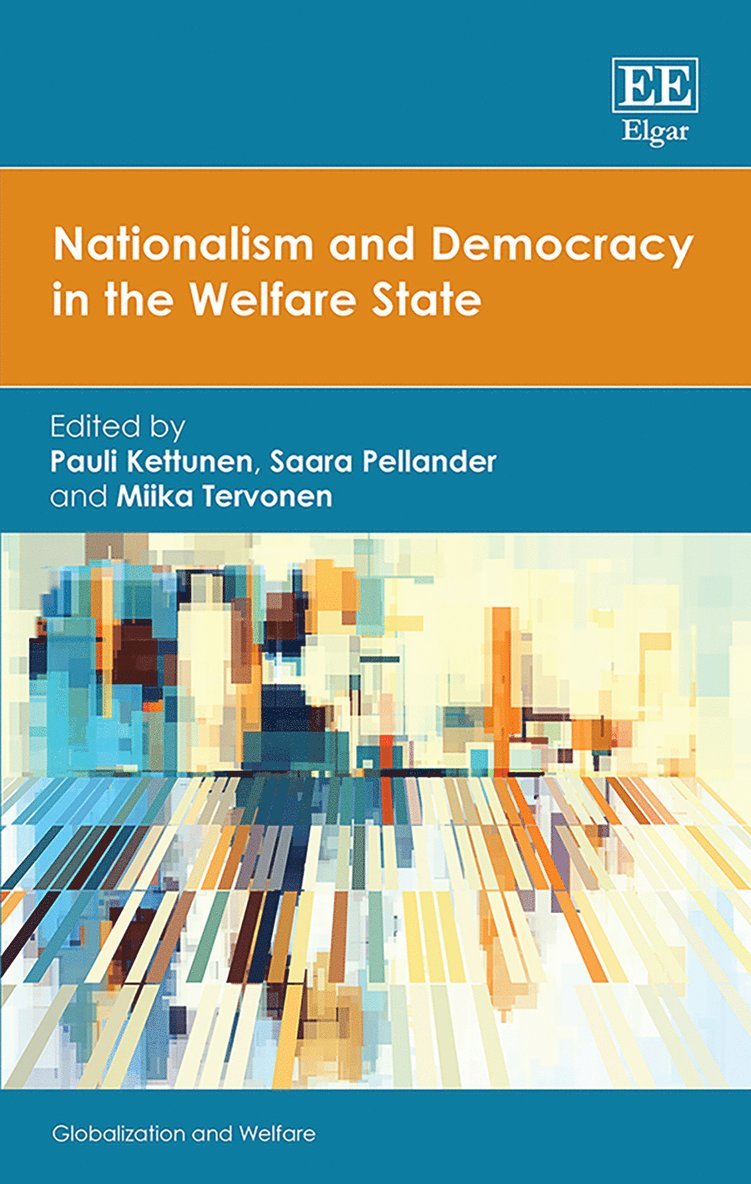
This multidisciplinary book unpacks and outlines the contested roles of nationalism and democracy in the formation and transformation of welfare-state institutions and ideologies. At a time when neo-liberal, post-national and nationalist visions alike have challenged democratic welfare nationalism, the book offers a transnational historical perspective to the political dynamics of current changes. While particularly focusing on Nordic countries, often seen as the quintessential ‘models’ of the welfare state, the book collectively sheds light on the ‘history of the present’ of nation states bearing the character of a welfare state.Initial chapters discuss the contested roles and meanings of democracy in the formation of the so-called ‘Nordic model’ of welfare, exploring its development in connection with rhetorical de-ideologization during and after the Cold War and with concerns about global development. Contributors further examine the ways in which national welfare states and their democratic dimensions are reshaped in the context of post-national regulation regimes of globalized and financialized capitalism. In the final chapters, the book explores the implications of welfare nationalism for cross-border mobility, analysing paradoxes and inherent tensions at the heart of contemporary migration politics. The analyses point to the integral role of nationalism in the formation of the democratic welfare states, as well as in the present-day goals of national competitiveness and security.Providing key theoretical insights for the study of welfare nationalism, this book is essential reading for scholars, researchers and students of the social and political sciences who are interested in the enduring transformation of the welfare state, and particularly those investigating the emergence and growth of the Nordic model. Policymakers and practitioners will also benefit from this multi-layered, empirical account of contemporary policy problems.
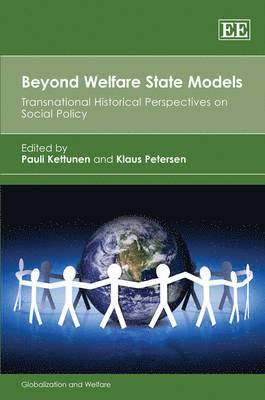
Beyond Welfare State Models
Transnational Historical Perspectives on Social Policy
Inbunden, Engelska, 2011
1 799 kr
Skickas inom 7-10 vardagar
Welfare state models have for decades been the gold standard of welfare state research. Beyond Welfare State Models escapes the straitjacket of conventional welfare state models and challenges the existing literature in two ways. Firstly the contributors argue that the standard typologies have omitted important aspects of welfare state development. Secondly, the work develops and underlines the importance of a more fluid transnational conceptualisation. As this book shows, welfare states are not created in national isolation but are heavily influenced by transnational economic, political and cultural interdependencies. The authors illustrate these important points of criticism with their studies on the transnational history of social policy, religion and the welfare state, Nordic cooperation within the fields of social policy and marriage law, and the transnational contexts of national family policies. This fascinating work contributes to the understanding of the current changes of welfare states by discussing the relationship between globalized capitalism and social political regulations and by arguing that transnational transformations importantly take place within and between nation states.With its challenging and questioning approach, this cross-disciplinary book will appeal to social policy and welfare state researchers, academics and policy makers.