Pavel Gregoric – författare
Visar alla böcker från författaren Pavel Gregoric. Handla med fri frakt och snabb leverans.
13 produkter
Aristotle on the Common Sense
Inbunden, 2007
2490 kr
Lägg i varukorg
Apart from using our eyes to see and our ears to hear, we regularly and effortlessly perform a number of complex perceptual operations that cannot be explained in terms of the five senses taken individually. Such operations include, for example, perceiving that the same object is white and sweet, …
Aristotle on the Common Sense
Häftad, 2011
813 kr
Lägg i varukorg
Apart from using our eyes to see and our ears to hear, we regularly and effortlessly perform a number of complex perceptual operations that cannot be explained in terms of the five senses taken individually. Such operations include, for example, perceiving that the same object is white and sweet, …
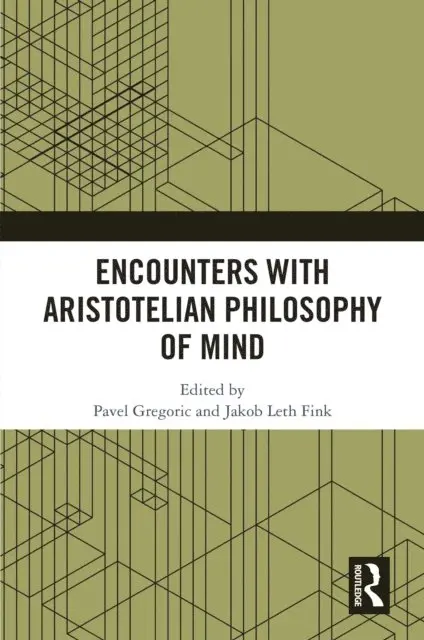
Encounters with Aristotelian Philosophy of Mind
Av Pavel Gregoric, Jakob Leth Fink
Inbunden, 2021
2506 kr
Lägg i varukorg
This collection of essays engages with several topics in Aristotle’s philosophy of mind, some well-known and hotly debated, some new and yet to be explored. The contributors analyze Aristotle’s arguments and present their cases in ways that invite contemporary philosophers of mind to consider the …
Encounters with Aristotelian Philosophy of Mind
Av Pavel Gregoric, Jakob Leth Fink
Häftad, 2023
647 kr
Lägg i varukorg
This collection of essays engages with several topics in Aristotle’s philosophy of mind, some well-known and hotly debated, some new and yet to be explored. The contributors analyze Aristotle’s arguments and present their cases in ways that invite contemporary philosophers of mind to consider the …
Encounters with Aristotelian Philosophy of Mind
Av Jakob Leth Fink, Pavel Gregoric
E-bok, 2021
738 kr
Lägg i varukorg
This collection of essays engages with several topics in Aristotle’s philosophy of mind, some well-known and hotly debated, some new and yet to be explored. The contributors analyze Aristotle’s arguments and present their cases in ways that invite contemporary philosophers of mind to consider the …
Encounters with Aristotelian Philosophy of Mind
Av Jakob Leth Fink, Pavel Gregoric
E-bok, 2021
762 kr
Lägg i varukorg
This collection of essays engages with several topics in Aristotle’s philosophy of mind, some well-known and hotly debated, some new and yet to be explored. The contributors analyze Aristotle’s arguments and present their cases in ways that invite contemporary philosophers of mind to consider the …
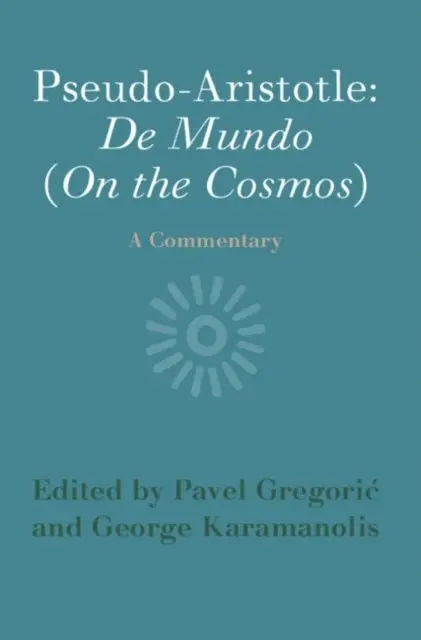
Pseudo-Aristotle: De Mundo (On the Cosmos)
A Commentary
Av George Karamanolis, Pavel Gregoric
E-bok, 2020
537 kr
Lägg i varukorg
De mundo is a protreptic to philosophy in the form of a letter to Alexander the Great and is traditionally ascribed to Aristotle. It offers a unique view of the cosmos, God and their relationship, which was inspired by Aristotle but written by a later author. The author provides an outline of …
Pseudo-Aristotle: De Mundo (On the Cosmos)
A Commentary
Av George Karamanolis, Pavel Gregoric
E-bok, 2020
555 kr
Lägg i varukorg
De mundo is a protreptic to philosophy in the form of a letter to Alexander the Great and is traditionally ascribed to Aristotle. It offers a unique view of the cosmos, God and their relationship, which was inspired by Aristotle but written by a later author. The author provides an outline of …
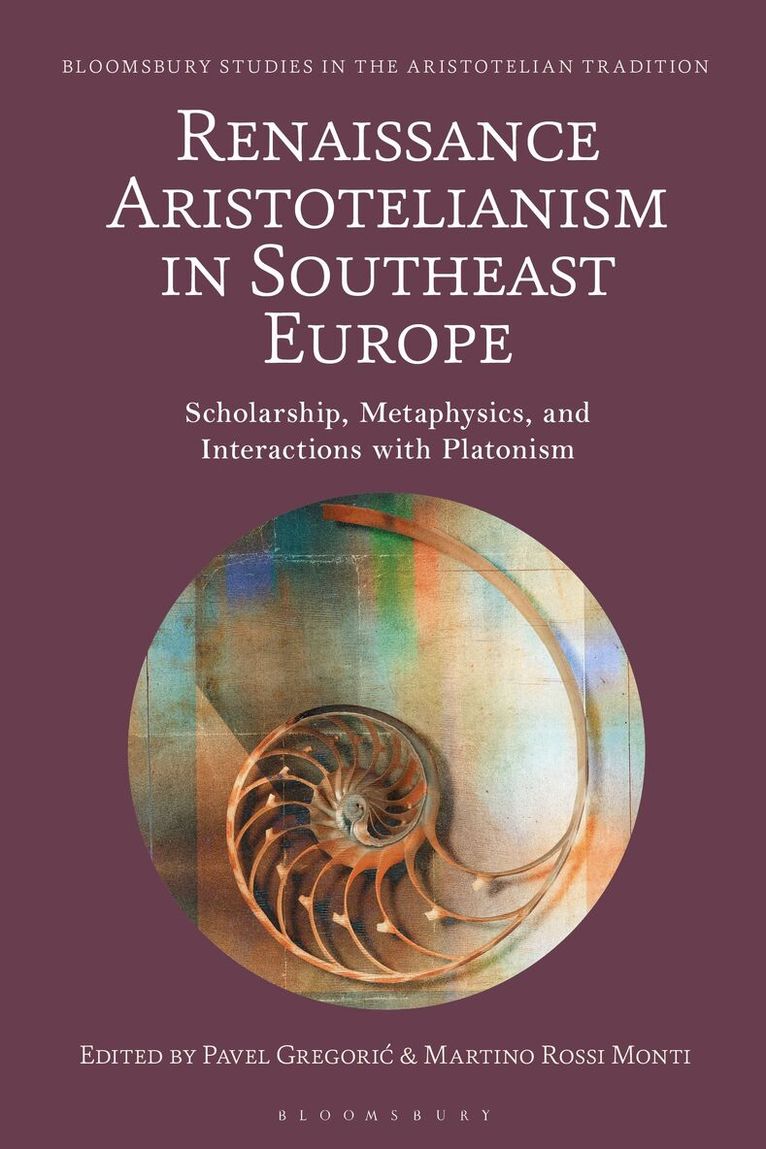
Renaissance Aristotelianism in Southeast Europe
Scholarship, Metaphysics, and Interactions with Platonism
Av Pavel Gregoric, Martino Rossi Monti
Inbunden, 2025
1205 kr
Lägg i varukorg
In this volume, leading scholars explore aspects of Renaissance Aristotelianism in the overlooked region of Southeast Europe. Uncovering forgotten texts, neglected topics, and little-known authors, ten chapters examine the philosophies and scholarly practices of figures including Antonio Zara, …
Renaissance Aristotelianism in Southeast Europe
Scholarship, Metaphysics, and Interactions with Platonism
Av Pavel Gregoric, Martino Rossi Monti
E-bok, 2024
452 kr
Lägg i varukorg
In this volume, leading scholars explore aspects of Renaissance Aristotelianism in the overlooked region of Southeast Europe. Uncovering forgotten texts, neglected topics, and little-known authors, ten chapters examine the philosophies and scholarly practices of figures including Antonio Zara, …
Renaissance Aristotelianism in Southeast Europe
Scholarship, Metaphysics, and Interactions with Platonism
Av Pavel Gregoric, Martino Rossi Monti
E-bok, 2024
452 kr
Lägg i varukorg
In this volume, leading scholars explore aspects of Renaissance Aristotelianism in the overlooked region of Southeast Europe. Uncovering forgotten texts, neglected topics, and little-known authors, ten chapters examine the philosophies and scholarly practices of figures including Antonio Zara, …
Renaissance Aristotelianism in Southeast Europe
Scholarship, Metaphysics, and Interactions with Platonism
Av Pavel Gregoric, Martino Rossi Monti
Häftad, 2026
416 kr
Lägg i varukorg
In this volume, leading scholars explore aspects of Renaissance Aristotelianism in the overlooked region of Southeast Europe. Uncovering forgotten texts, neglected topics, and little-known authors, ten chapters examine the philosophies and scholarly practices of figures including Antonio Zara, …
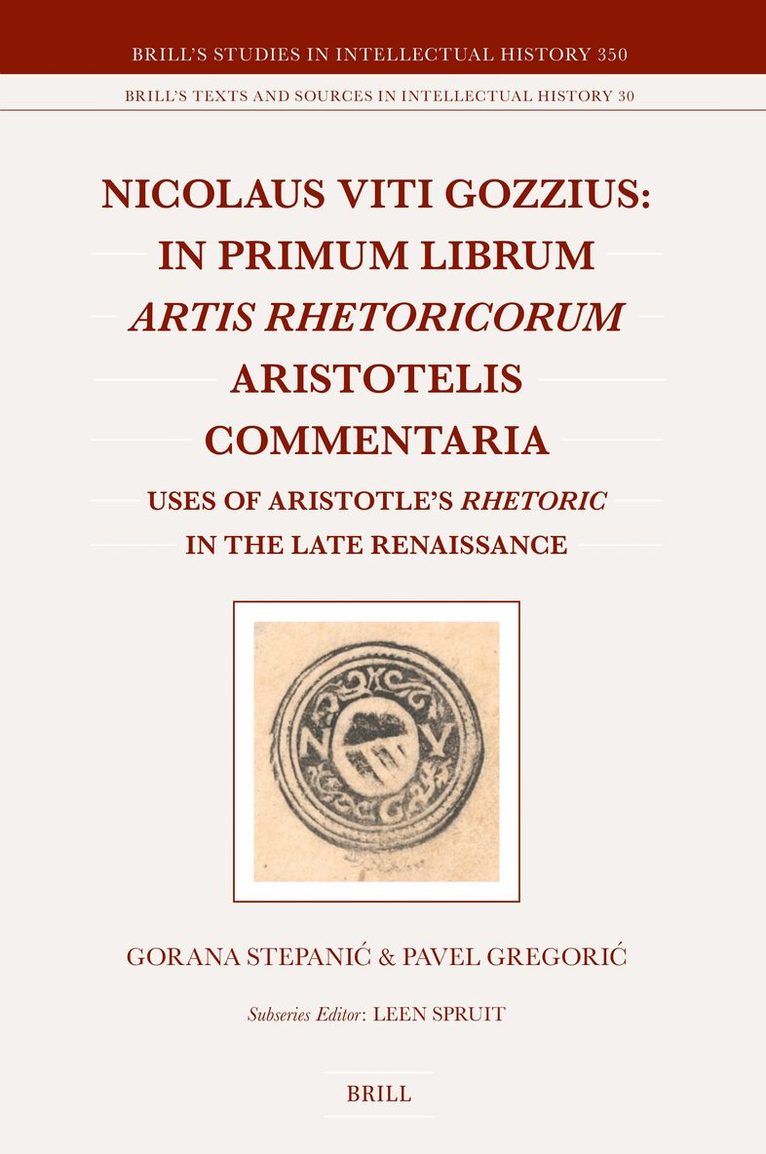
Nicolaus Viti Gozzius: In primum librum Artis rhetoricorum Aristotelis commentaria
Uses of Aristotle’s Rhetoric in the Late Renaissance
Av Gorana Stepanić, Pavel Gregorić
Inbunden, 2023
2140 kr
Lägg i varukorg
This is a critical edition of Nikola Vitov Gučetić’s (1549–1610) Commentary on the First Book of Aristotle’s ‘Rhetoric’, with an introductory study and supplementary materials. The purpose of the edition is to provide a clear Latin text for scholars and students of the humanities, especially …