Paweł Maciejko - Böcker
Visar alla böcker från författaren Paweł Maciejko. Handla med fri frakt och snabb leverans.
3 produkter
3 produkter
359 kr
Skickas
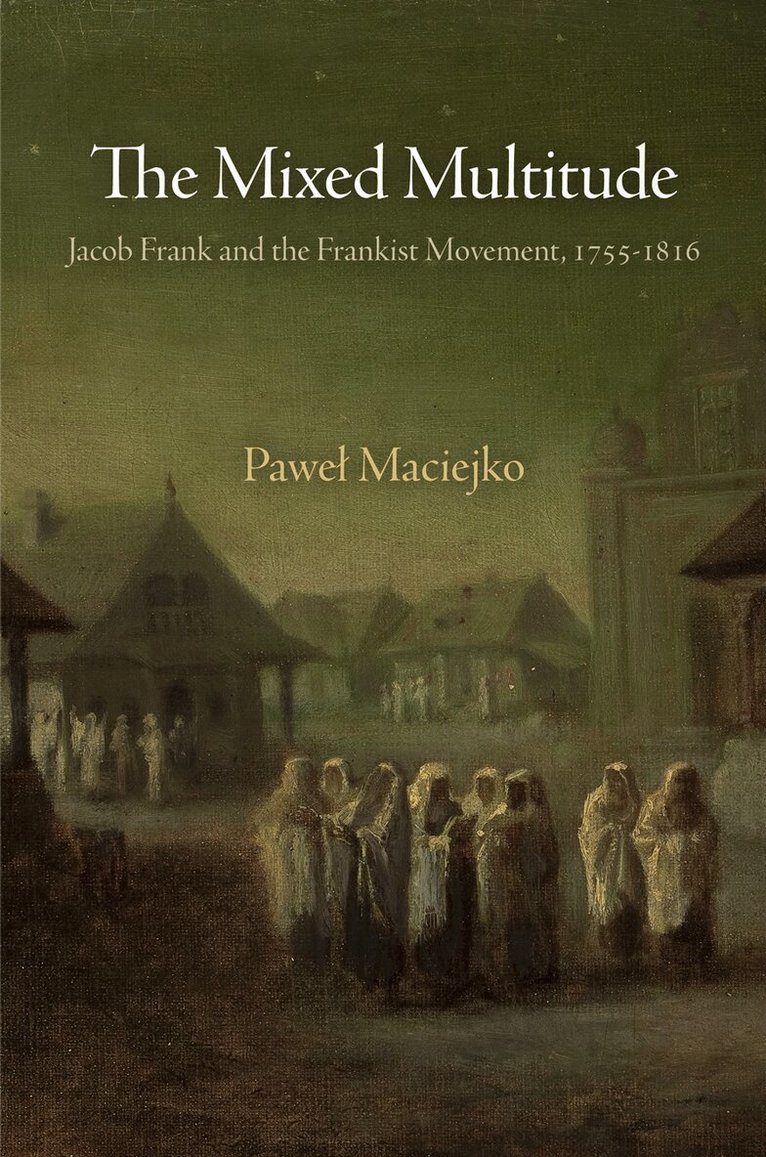
In 1756, Jacob Frank, an Ottoman Jew who had returned to the Poland of his birth, was discovered leading a group of fellow travelers in a suspect religious service. At the request of the local rabbis, Polish authorities arrested the participants. Jewish authorities contacted the bishop in whose diocese the service had taken place and argued that since the rites of Frank's followers involved the practice of magic and immoral conduct, both Jews and Christians should condemn them and burn them at the stake. The scheme backfired, as the Frankists took the opportunity to ally themselves with the Church, presenting themselves as Contra-Talmudists who believed in a triune God. As a Turkish subject, Frank was released and temporarily expelled to the Ottoman territories, but the others were found guilty of breaking numerous halakhic prohibitions and were subject to a Jewish ban of excommunication. While they professed their adherence to everything that was commanded by God in the Old Testament, they asserted as well that the Rabbis of old had introduced innumerable lies and misconstructions in their interpretations of that holy book.Who were Jacob Frank and his followers? To most Christians, they seemed to be members of a Jewish sect; to Jewish reformers, they formed a group making a valiant if misguided attempt to bring an end to the power of the rabbis; and to more traditional Jews, they were heretics to be suppressed by the rabbinate. What is undeniable is that by the late eighteenth century, the Frankists numbered in the tens of thousands and had a significant political and ideological influence on non-Jewish communities throughout eastern and central Europe.Based on extensive archival research in Poland, the Czech Republic, Israel, Germany, the United States, and the Vatican, The Mixed Multitude is the first comprehensive study of Frank and Frankism in more than a century and offers an important new perspective on Jewish-Christian relations in the Age of Enlightenment.
Bastards and Believers
Jewish Converts and Conversion from the Bible to the Present
Inbunden, Engelska, 2020
918 kr
Skickas inom 10-15 vardagar
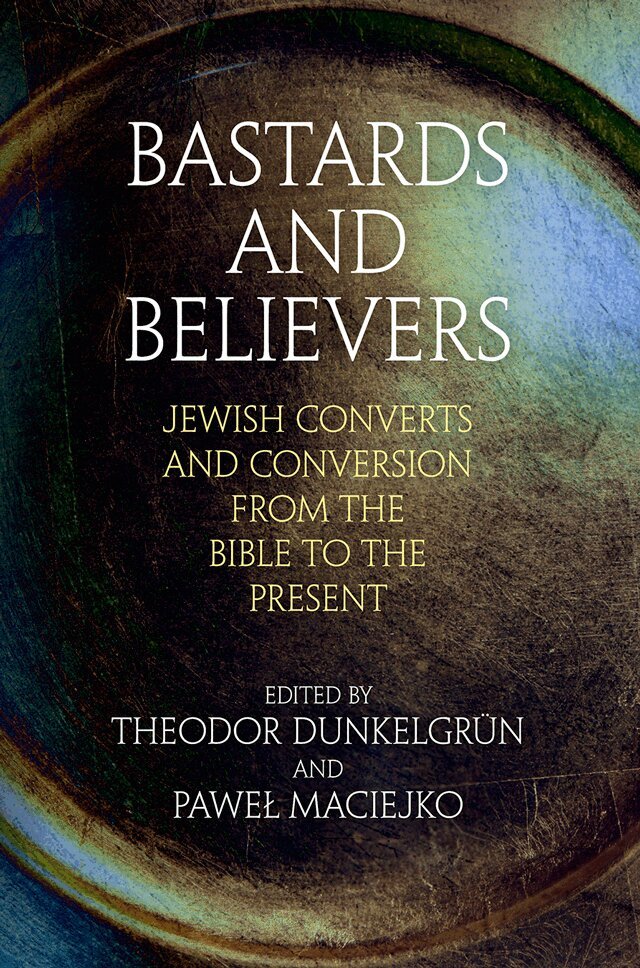
A formidable collection of studies on religious conversion and converts in Jewish historyTheodor DunkelgrÜn and Pawel Maciejko observe that the term "conversion" is profoundly polysemous. It can refer to Jews who turn to religions other than Judaism and non-Jews who tie their fates to that of Jewish people. It can be used to talk about Christians becoming Muslim (or vice versa), Christians "born again," or premodern efforts to Christianize (or Islamize) indigenous populations of Asia, Africa, and the Americas. It can even describe how modern, secular people discover spiritual creeds and join religious communities.Viewing Jewish history from the perspective of conversion across a broad chronological and conceptual frame, Bastards and Believers highlights how the concepts of the convert and of conversion have histories of their own. The volume begins with Sara Japhet's study of conversion in the Hebrew Bible and ends with Netanel Fisher's essay on conversion to Judaism in contemporary Israel. In between, Andrew S. Jacobs writes about the allure of becoming an "other" in late Antiquity; Ephraim Kanarfogel considers Rabbinic attitudes and approaches toward conversion to Judaism in the Middles Ages; and Paola Tartakoff ponders the relationship between conversion and poverty in medieval Iberia. Three case studies, by Javier CastaÑo, Claude Stuczynski, and Anne Oravetz Albert, focus on different aspects of the experience of Spanish-Portuguese conversos. Michela Andreatta and Sarah Gracombe discuss conversion narratives; and Elliott Horowitz and Ellie Shainker analyze Eastern European converts' encounters with missionaries of different persuasions.Despite the differences between periods, contexts, and sources, two fundamental and mutually exclusive notions of human life thread the essays together: the conviction that one can choose one's destiny and the conviction that one cannot escapes one's past. The history of converts presented by Bastards and Believers speaks to the possibility, or impossibility, of changing one's life.Contributors: Michela Andreatta, Javier CastaÑo, Theodor DunkelgrÜn, Netanel Fisher, Sarah Gracombe, Elliott Horowitz, Andrew S. Jacobs, Sara Japhet, Ephraim Kanarfogel, Pawel Maciejko, Anne Oravetz Albert, Ellie Shainker, Claude Stuczynski, Paola Tartakoff.
Sabbatian Heresy
Writings on Mysticism, Messianism, and the Origins of Jewish Modernity
Häftad, Engelska, 2017
213 kr
Skickas inom 7-10 vardagar
The pronouncements of Sabbatai Tsevi (1626–76) gave rise to Sabbatianism, a key messianic movement in Judaism that spread across Jewish communities in Europe, Asia, and North Africa. The movement, which featured a set of theological doctrines in which Jewish Kabbalistic tradition merged with Muslim and later Christian elements, suffered a setback with Tsevi’s conversion to Islam in 1666. Nonetheless, for another hundred and fifty years, Sabbatianism continued to exist as a heretical underground movement. It provoked intense opposition from rabbinic authorities for another century and had a significant impact on central developments of later Judaism, such as the Haskalah, the Reform movement, Hasidism, and the secularization of Jewish society. This volume provides a selection of the most original and influential texts composed by Sabbatai Tsevi and his followers, complemented by fragments of the works of their rabbinic opponents and contemporary observers and some literary works inspired by Sabbatianism. An introduction and annotations by Pawe Maciejko provide historical, political, and social context for the documents.