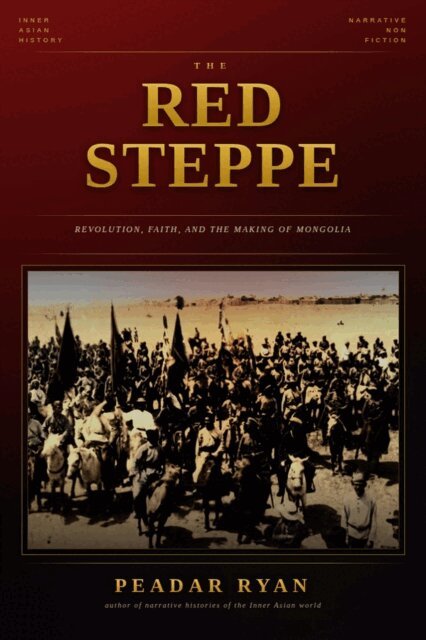
In the winter of 1920, a small group of conspirators gathered in a border town on the edge of the Mongolian steppe, with a revolution hidden in a riding whip's handle and odds that should have been prohibitive. One year later, they had liberated their country from Chinese occupation, expelled a White Army mystic who believed himself a god of war, and created the world's second socialist state in one of the most remote nations on earth. The Red Steppe is the full, unsparing story of what they built, what it cost, and what endured.Peadar Ryan takes readers from the founding myths of Genghis Khan and the living Buddhas of Urga through the conspiracy of Kyakhta, the terror of Baron Ungern-Sternberg's occupation, and the revolution's triumphant and complicated arrival, and on through seven decades of socialist transformation, Stalinist purge, and the quiet persistence of a nomadic people who outlasted every programme designed to change them. Drawing on Mongolian, Russian, and Western sources, this is narrative history at full stretch: a story of extraordinary individuals, an indifferent landscape, and a revolution that delivered genuine independence and genuine suffering in proportions that demand honest reckoning. On the steppe, in the long perspective, what happened in 1921 was remarkable — and this book finally gives it the account it deserves.
In the winter of 1920, a small group of conspirators gathered in a border town on the edge of the Mongolian steppe, with a revolution hidden in a riding whip's handle and odds that should have been prohibitive. One year later, they had liberated their country from Chinese occupation, expelled a White Army mystic who believed himself a god of war, and created the world's second socialist state in one of the most remote nations on earth. The Red Steppe is the full, unsparing story of what they built, what it cost, and what endured.Peadar Ryan takes readers from the founding myths of Genghis Khan and the living Buddhas of Urga through the conspiracy of Kyakhta, the terror of Baron Ungern-Sternberg's occupation, and the revolution's triumphant and complicated arrival, and on through seven decades of socialist transformation, Stalinist purge, and the quiet persistence of a nomadic people who outlasted every programme designed to change them. Drawing on Mongolian, Russian, and Western sources, this is narrative history at full stretch: a story of extraordinary individuals, an indifferent landscape, and a revolution that delivered genuine independence and genuine suffering in proportions that demand honest reckoning. On the steppe, in the long perspective, what happened in 1921 was remarkable — and this book finally gives it the account it deserves.