Pedro C. Magalhães - Böcker
Visar alla böcker från författaren Pedro C. Magalhães. Handla med fri frakt och snabb leverans.
5 produkter
5 produkter
2 563 kr
Skickas inom 5-8 vardagar
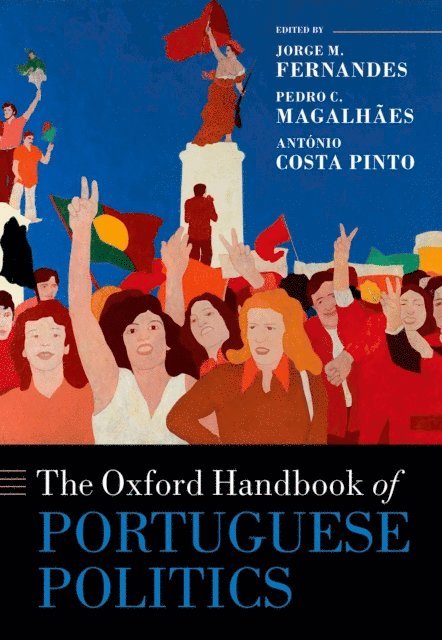
The Oxford Handbook of Portuguese Politics brings together the best scholars in the field offering an unrivalled coverage of the politics (broadly defined) of the country over the past 50 years. The Handbook includes eight sections. First, it looks at the past and present by making an overview of Portuguese political developments since democratization in the 1970s. Second, it looks at political institutions as the building blocks of Portuguese democracy. The third section examines mass politics and voters, that is, a thorough analysis of the demand-side of mass politics. The fourth section turns to the supply side of mass-politics by looking at parties and the party system. The fifth section looks at the Portuguese society by unpacking a plethora of societal aspects with direct implications for politics. The sixth section examines governance and public policies, with a view to understanding how a constellation of public policies has an impact on the quality of governance and in fostering well-being. The seventh section looks at Portugal and the European Union. The eighth and final section unpacks Portuguese foreign policy and defence.
578 kr
Skickas inom 10-15 vardagar
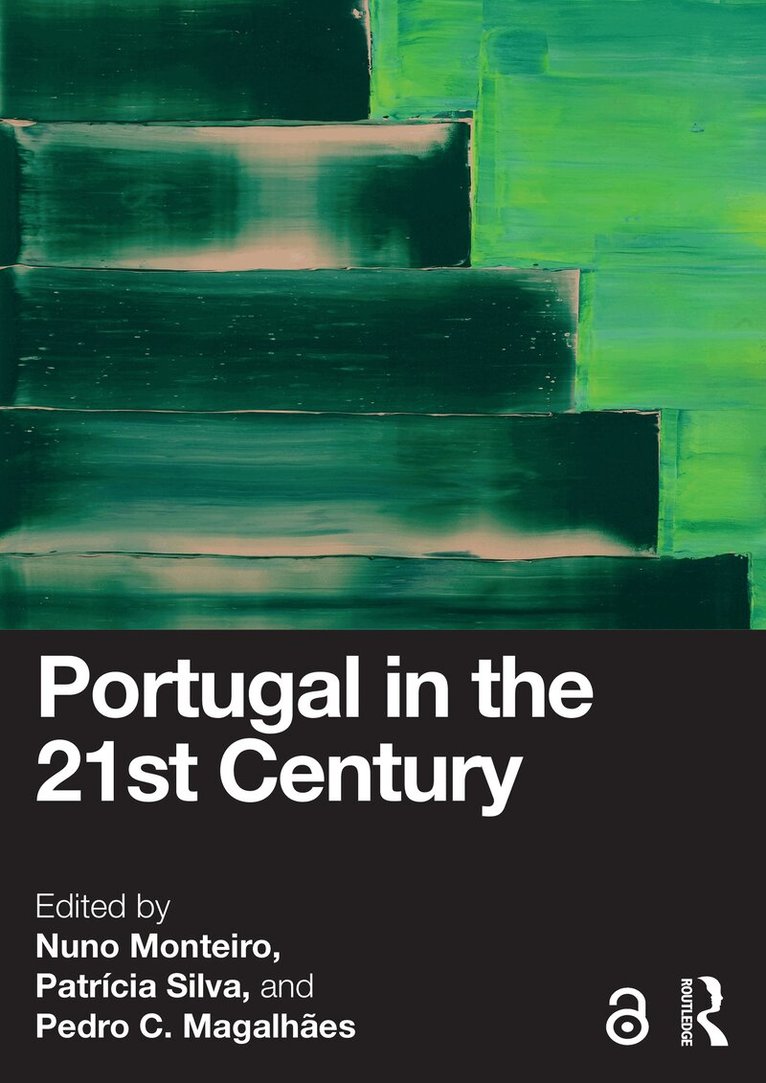
Portugal in the 21st Century provides a thorough yet accessible picture of contemporary Portugal in the first two decades of the twenty-first century.It examines and elucidates Portugal’s recent trajectory, its current position, and the main challenges it faces through an examination of the principal dimensions of cultural, economic, political, and social development in the country. Bringing together some of the foremost Portuguese experts in each of these areas, it draws on a diverse knowledge across the social sciences and humanities – including anthropologists, art historians, economists, historians, legal scholars, literary scholars, political scientists, biologists, and sociologists – to create a multidimensional portrait of contemporary Portuguese society.Key features:Organised into nine substantive chapters – each of which covers a major area of Portugal’s contemporary existence – from its national identity and political system to its economy, scientific, literary, and artistic production.Opens with a general introduction providing historical context, and a chapter on Portuguese national identity.Thematic chapters focus on social, political, economic, and cultural developments of the last two decades.This book provides a comprehensive, erudite yet accessible introduction to contemporary Portugal and is essential reading for students, scholars, and readers interested in Portugal, Portuguese and Southern European politics and culture, Iberian, or Iberian-American studies and more broadly to European and Comparative Politics.The Open Access version of this book, available at www.taylorfrancis.com, has been made available under a Creative Commons Attribution-No Derivatives (CC-BY-ND) 4.0 license.
2 236 kr
Skickas inom 10-15 vardagar
Portugal in the 21st Century provides a thorough yet accessible picture of contemporary Portugal in the first two decades of the twenty-first century.It examines and elucidates Portugal’s recent trajectory, its current position, and the main challenges it faces through an examination of the principal dimensions of cultural, economic, political, and social development in the country. Bringing together some of the foremost Portuguese experts in each of these areas, it draws on a diverse knowledge across the social sciences and humanities – including anthropologists, art historians, economists, historians, legal scholars, literary scholars, political scientists, biologists, and sociologists – to create a multidimensional portrait of contemporary Portuguese society.Key features:Organised into nine substantive chapters – each of which covers a major area of Portugal’s contemporary existence – from its national identity and political system to its economy, scientific, literary, and artistic production.Opens with a general introduction providing historical context, and a chapter on Portuguese national identity.Thematic chapters focus on social, political, economic, and cultural developments of the last two decades.This book provides a comprehensive, erudite yet accessible introduction to contemporary Portugal and is essential reading for students, scholars, and readers interested in Portugal, Portuguese and Southern European politics and culture, Iberian, or Iberian-American studies and more broadly to European and Comparative Politics.The Open Access version of this book, available at www.taylorfrancis.com, has been made available under a Creative Commons Attribution-No Derivatives (CC-BY-ND) 4.0 license.
2 238 kr
Skickas inom 10-15 vardagar
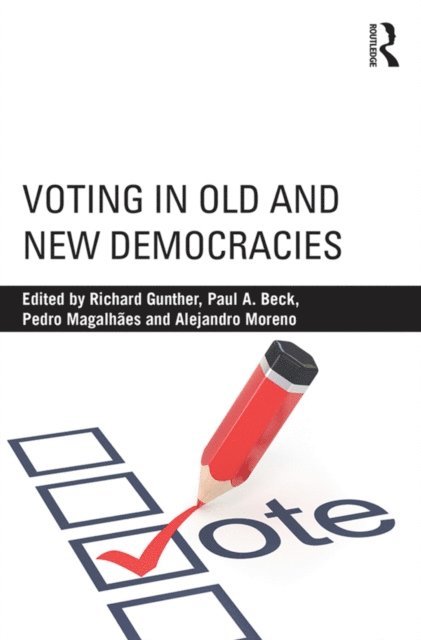
Voting in Old and New Democracies examines voting behavior and its determinants based on 26 surveys from 18 countries on five continents between 1992 and 2008. It systematically analyzes the impact on voting choice of factors rooted in the currently dominant approaches to the study of electoral behavior, but adds to this analysis factors introduced or reintroduced into this field by the Comparative National Elections Project (CNEP)—socio-political values, and political communication through media, personal discussion, and organizational intermediaries. It demonstrates empirically that these long-neglected factors have significant political impact in many countries that previous studies have overlooked, while "economic voting" is insignificant in most elections once long-term partisan attitudes are taken into consideration. Its examination of electoral turnout finds that the strongest predictor is participation by other family members, demonstrating the importance of intermediation. Another chapter surveys cross-national variations in patterns of intermediation, and examines the impact of general social processes (such as socioeconomic and technological modernization), country-specific factors, and individual-level attitudinal factors as determinants of those patterns. Complementing its cross-national comparative analysis is a detailed longitudinal case study of one country over 25 years. Finally, it examines the extent of support for democracy as well as significant cross-national differences in how democracy is understood by citizens.Written in a clear and accessible style, Voting in Old and New Democracies significantly advances our understanding of citizen attitudes and behavior in election settings.
764 kr
Skickas inom 10-15 vardagar
Voting in Old and New Democracies examines voting behavior and its determinants based on 26 surveys from 18 countries on five continents between 1992 and 2008. It systematically analyzes the impact on voting choice of factors rooted in the currently dominant approaches to the study of electoral behavior, but adds to this analysis factors introduced or reintroduced into this field by the Comparative National Elections Project (CNEP)—socio-political values, and political communication through media, personal discussion, and organizational intermediaries. It demonstrates empirically that these long-neglected factors have significant political impact in many countries that previous studies have overlooked, while "economic voting" is insignificant in most elections once long-term partisan attitudes are taken into consideration. Its examination of electoral turnout finds that the strongest predictor is participation by other family members, demonstrating the importance of intermediation. Another chapter surveys cross-national variations in patterns of intermediation, and examines the impact of general social processes (such as socioeconomic and technological modernization), country-specific factors, and individual-level attitudinal factors as determinants of those patterns. Complementing its cross-national comparative analysis is a detailed longitudinal case study of one country over 25 years. Finally, it examines the extent of support for democracy as well as significant cross-national differences in how democracy is understood by citizens.Written in a clear and accessible style, Voting in Old and New Democracies significantly advances our understanding of citizen attitudes and behavior in election settings.