Pedro G. Ferreira – författare
Visar alla böcker från författaren Pedro G. Ferreira. Handla med fri frakt och snabb leverans.
6 produkter
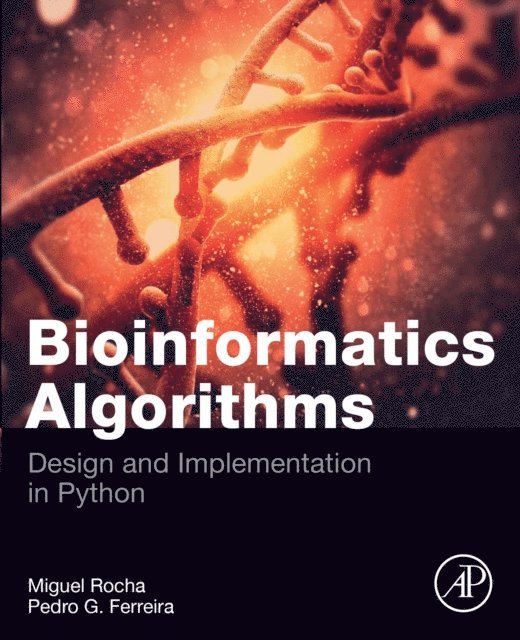
Bioinformatics Algorithms
Design and Implementation in Python
Av Miguel Rocha, Pedro G. Ferreira
Häftad, 2018
1302 kr
Lägg i varukorg
Bioinformatics Algorithms: Design and Implementation in Python provides a comprehensive book on many of the most important bioinformatics problems, putting forward the best algorithms and showing how to implement them. The book focuses on the use of the Python programming language and its …
Bioinformatics Algorithms
Design and Implementation in Python
Av Pedro G. Ferreira, Miguel Rocha
E-bok, 2018
1869 kr
Lägg i varukorg
Bioinformatics Algorithms: Design and Implementation in Python provides a comprehensive book on many of the most important bioinformatics problems, putting forward the best algorithms and showing how to implement them. The book focuses on the use of the Python programming language and its …
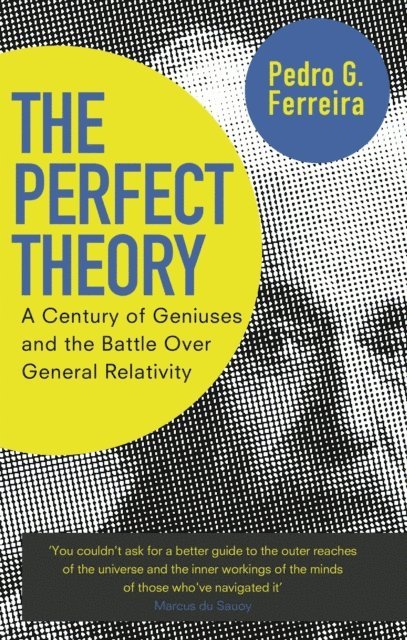
Perfect Theory
A Century of Geniuses and the Battle over General Relativity
Häftad, 2015
275 kr
Lägg i varukorg
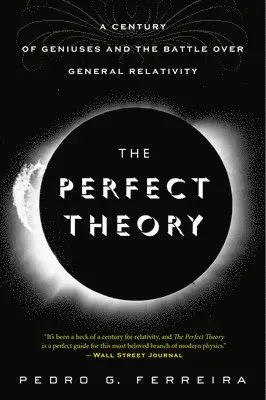
Albert Einstein's General Theory of Relativity is possibly the most perfect intellectual achievement in modern physics. Anything that involves gravity, the force that powers everything on the largest, hottest or densest of scales, can be explained by it. From the moment Einstein first proposed the …
The Perfect Theory: A Century of Geniuses and the Battle Over General Relativity
Häftad, 2015
237 kr
Lägg i varukorg
Perfect Theory
A Century of Geniuses and the Battle over General Relativity
E-bok, 2014
40 kr
Lägg i varukorg
Albert Einstein''s General Theory of Relativity is possibly the most perfect intellectual achievement in modern physics. Anything that involves gravity, the force that powers everything on the largest, hottest or densest of scales, can be explained by it. From the moment Einstein first proposed the …
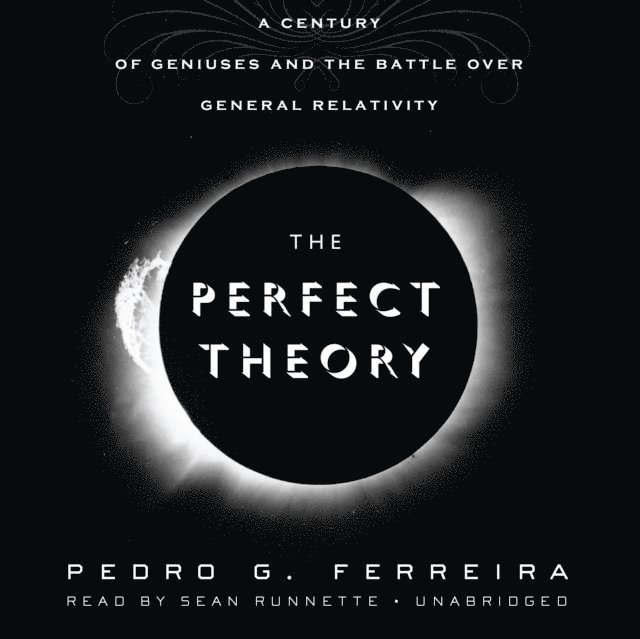
Perfect Theory
A Century of Geniuses and the Battle over General Relativity
Ljudbok, 2014
328 kr
Lägg i varukorg
How did one elegant theory incite a scientific revolution? Physicists have been exploring, debating, and questioning the general theory of relativity ever since Albert Einstein first presented it in 1915. Their work has uncovered a number of the universe''s more surprising secrets, and many believe …