Pedro Moniz Lopes – författare
Visar alla böcker från författaren . Handla med fri frakt och snabb leverans.
4 produkter
4 produkter
Inbunden, Engelska, 2019
1 296 kr
Skickas inom 10-15 vardagar
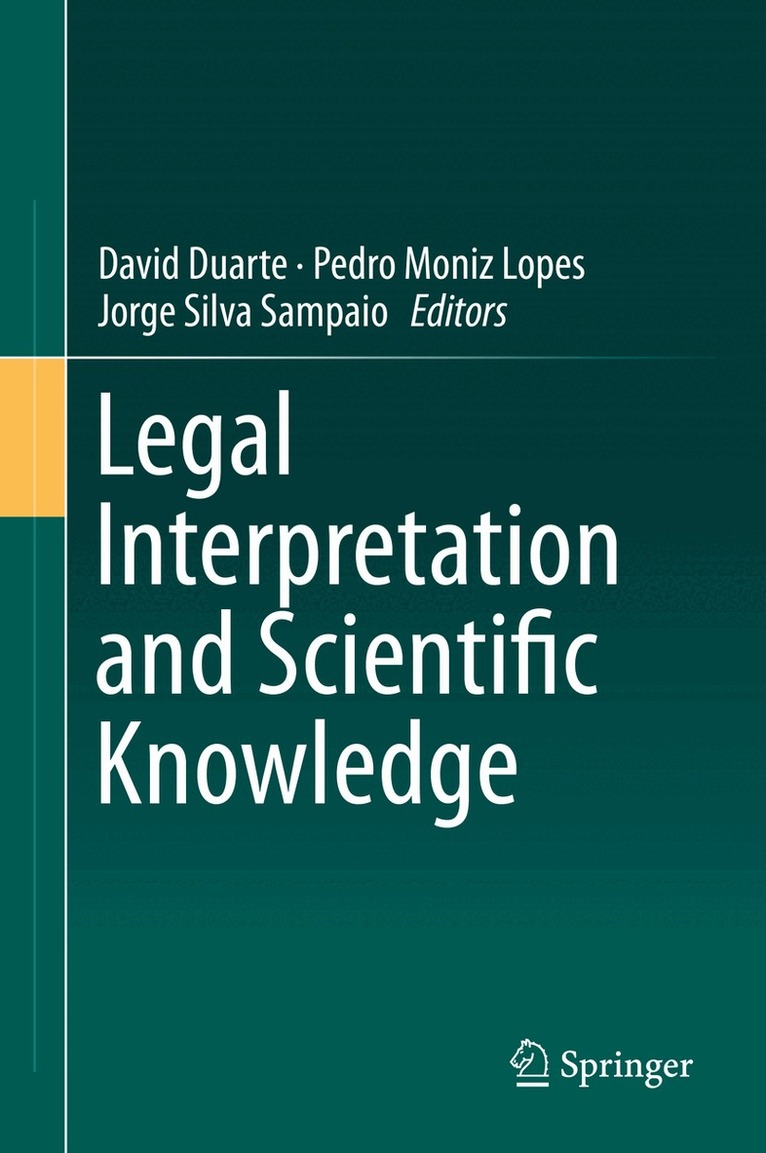
This book discusses the question of whether legal interpretation is a scientific activity. The law’s dependency on language, at least for the usual communication purposes, not only makes legal interpretation the main task performed by those whose work involves the law, but also an unavoidable step in the process of resolving a legal case. This task of decoding the words and sentences used by normative authorities while enacting norms, carried out in compliance with the principles and rules of the natural language adopted, is prone to all of the difficulties stemming from the uncertainty intrinsic to all linguistic conventions. In this context, seeking to determine whether legal interpretation can be scientific or, in other words, can comply with the requirements for scientific knowledge, becomes a central question. In fact, the coherent application of the law depends on a knowledge regarding the meaning of normative sentences that can be classified(at least) as being structured, systematically organized and tendentially objective. Accordingly, this book focuses on analyzing precisely these problems; its respective contributions offer a range of revealing perspectives on both the problems and their ramifications.
E-bok
Engelska, 20191 158 kr
Läs direkt efter köp
This book discusses the question of whether legal interpretation is a scientific activity. The law’s dependency on language, at least for the usual communication purposes, not only makes legal interpretation the main task performed by those whose work involves the law, but also an unavoidable step in the process of resolving a legal case. This task of decoding the words and sentences used by normative authorities while enacting norms, carried out in compliance with the principles and rules of the natural language adopted, is prone to all of the difficulties stemming from the uncertainty intrinsic to all linguistic conventions. In this context, seeking to determine whether legal interpretation can be scientific or, in other words, can comply with the requirements for scientific knowledge, becomes a central question. In fact, the coherent application of the law depends on a knowledge regarding the meaning of normative sentences that can be classified(at least) as being structured, systematically organized and tendentially objective. Accordingly, this book focuses on analyzing precisely these problems; its respective contributions offer a range of revealing perspectives on both the problems and their ramifications.
Häftad, Engelska, 2020
900 kr
Skickas inom 10-15 vardagar
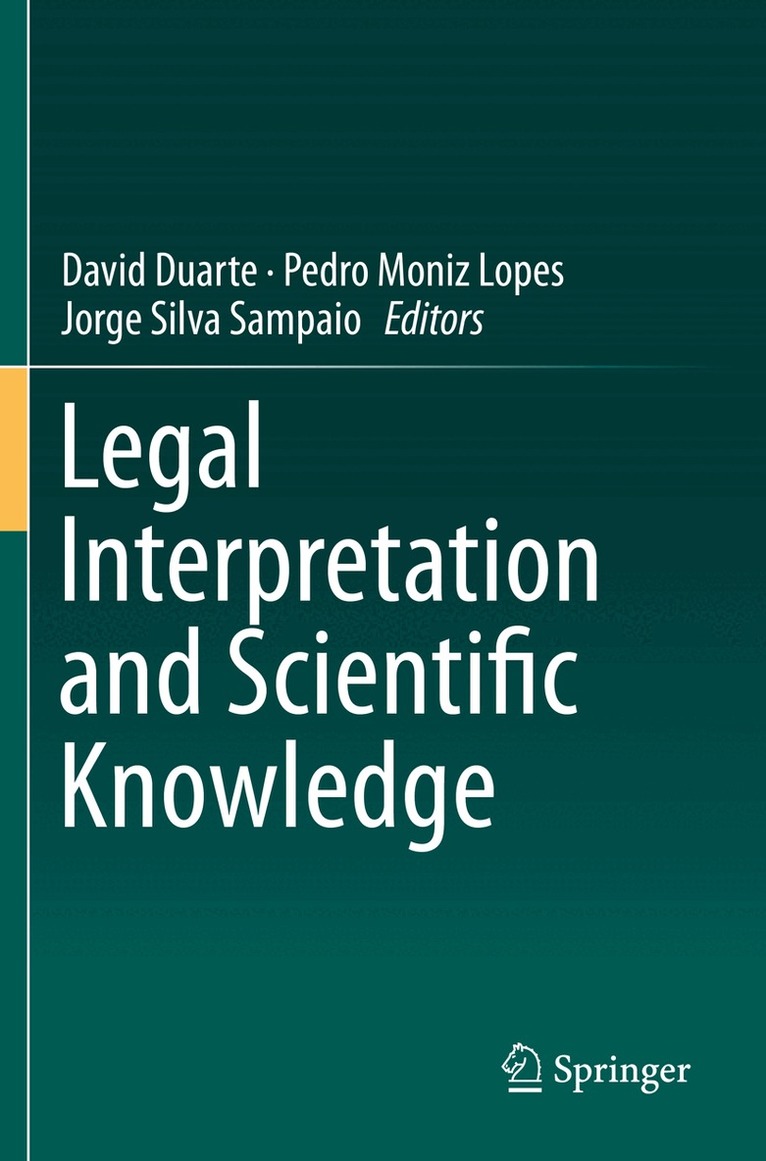
This book discusses the question of whether legal interpretation is a scientific activity. The law’s dependency on language, at least for the usual communication purposes, not only makes legal interpretation the main task performed by those whose work involves the law, but also an unavoidable step in the process of resolving a legal case. This task of decoding the words and sentences used by normative authorities while enacting norms, carried out in compliance with the principles and rules of the natural language adopted, is prone to all of the difficulties stemming from the uncertainty intrinsic to all linguistic conventions. In this context, seeking to determine whether legal interpretation can be scientific or, in other words, can comply with the requirements for scientific knowledge, becomes a central question. In fact, the coherent application of the law depends on a knowledge regarding the meaning of normative sentences that can be classified(at least) as being structured, systematically organized and tendentially objective. Accordingly, this book focuses on analyzing precisely these problems; its respective contributions offer a range of revealing perspectives on both the problems and their ramifications.
569 kr
Läs direkt efter köp
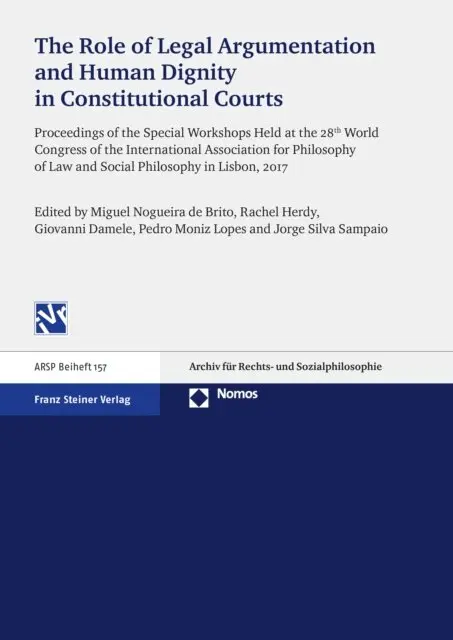
The legal argumentation of constitutional courts, for instance on human dignity, has been in the centre of interest both from theoretical and practical perspectives. This e-book addresses the role of legal argumentation at first in general, covering empirical and comparative perspectives on constitutional argumentative practices. It also comprises a comparative assessment of constitutional argumentation versus the arguments deployed by other courts as well as by decision-makers. Secondly, the book focuses on how constitutional courts reason with human dignity. This concept takes many different shapes, though very rarely in an objective fashion. It is embedded in several western constitutions, although constitutional courts and scholars tend to disagree on its meaning and content. Finally, the e-book aims to shed light on the controversial topic of human dignity from a normative and philosophical perspective.