Pekka Himanen – författare
Visar alla böcker från författaren Pekka Himanen. Handla med fri frakt och snabb leverans.
7 produkter
7 produkter
E-bok
PDF, Engelska, 2014425 kr
Läs direkt efter köp
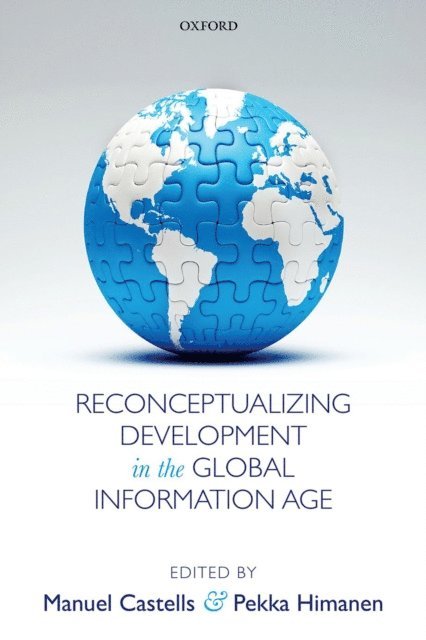
The conditions in which ''development''—the process by which people, individually and collectively, enhance their capacities to improve their lives according to their values and interests—operates have significantly changed in the global information age, a period characterized by the technological revolution in information and communication, the rise of the networking form of social organization, and the global interdependence of economies and societies. This volumeaims to redefine the means and goals of development in this new context: first, by characterizing the specific mode of development, informational development, that the authors consider to be the driver of the creation of material wealth in the twenty-first century; secondly, by reconceptualizinghuman development as the fulfilment of human wellbeing in the multidimensionality of the human experience, ultimately affirming dignity as the supreme value of development; thirdly, by examining the relationship between informational development and human development.After first setting out its analytical framework, the book brings together a diverse set of empirically-rich case studies to illustrate this investigation from across the globe—Silicon Valley, Costa Rica, Chile, South Africa, Finland, the European Union, and China—and concludes by attempting to reconceptualize development. It raises important questions and provides observations, including examining the concept of ''dignity as development'', to contribute to a policy debate that should providespecific answers linked to the conditions of each society, and be enacted by democratic institutions in a concerted global effort to save humankind while there is still time.
E-bok
Engelska, 2014425 kr
Läs direkt efter köp
The conditions in which ''development''—the process by which people, individually and collectively, enhance their capacities to improve their lives according to their values and interests—operates have significantly changed in the global information age, a period characterized by the technological revolution in information and communication, the rise of the networking form of social organization, and the global interdependence of economies and societies. This volumeaims to redefine the means and goals of development in this new context: first, by characterizing the specific mode of development, informational development, that the authors consider to be the driver of the creation of material wealth in the twenty-first century; secondly, by reconceptualizinghuman development as the fulfilment of human wellbeing in the multidimensionality of the human experience, ultimately affirming dignity as the supreme value of development; thirdly, by examining the relationship between informational development and human development.After first setting out its analytical framework, the book brings together a diverse set of empirically-rich case studies to illustrate this investigation from across the globe—Silicon Valley, Costa Rica, Chile, South Africa, Finland, the European Union, and China—and concludes by attempting to reconceptualize development. It raises important questions and provides observations, including examining the concept of ''dignity as development'', to contribute to a policy debate that should providespecific answers linked to the conditions of each society, and be enacted by democratic institutions in a concerted global effort to save humankind while there is still time.
Inbunden, Engelska, 2014
714 kr
Skickas inom 5-8 vardagar
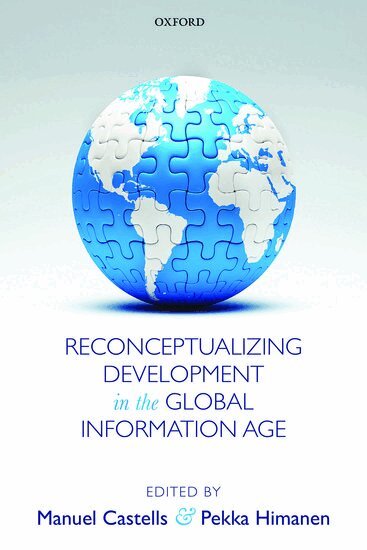
The conditions in which 'development'--the process by which people, individually and collectively, enhance their capacities to improve their lives according to their values and interests--operates have significantly changed in the global information age, a period characterized by the technological revolution in information and communication, the rise of the networking form of social organization, and the global interdependence of economies and societies. This volume aims to redefine the means and goals of development in this new context: first, by characterizing the specific mode of development, informational development, that the authors consider to be the driver of the creation of material wealth in the twenty-first century; secondly, by reconceptualizing human development as the fulfilment of human wellbeing in the multidimensionality of the human experience, ultimately affirming dignity as the supreme value of development; thirdly, by examining the relationship between informational development and human development.After first setting out its analytical framework, the book brings together a diverse set of empirically-rich case studies to illustrate this investigation from across the globe--Silicon Valley, Costa Rica, Chile, South Africa, Finland, the European Union, and China--and concludes by attempting to reconceptualize development. It raises important questions and provides observations, including examining the concept of 'dignity as development', to contribute to a policy debate that should provide specific answers linked to the conditions of each society, and be enacted by democratic institutions in a concerted global effort to save humankind while there is still time.
Inbunden, Engelska, 2002
1 724 kr
Skickas inom 5-8 vardagar
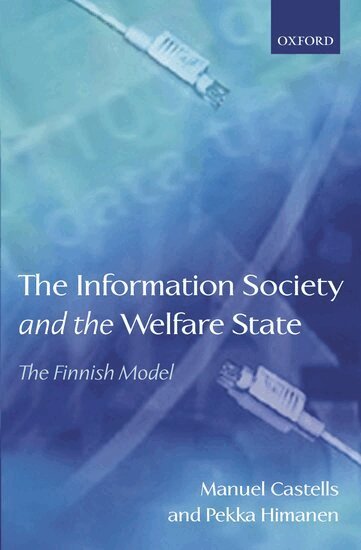
Silicon Valley has been considered as the model that societies must imitate to succeed in the information age. However, recently another alternative has attracted strong international interest: the Finnish model. This is equally dynamic in technological and economic terms, but combines the information society with the welfare state. The Information Society and the Welfare State is the first accessible academic study of what the Finnish model really is. The authors analyse the factors that have enabled Nokia to become the world's leading telecommunications company, for example, and Linux to become the biggest challenger to Microsoft in the operating systems market. They discuss the development of Nokia and the Finnish innovation model, with important lesssons for businesses and national technology policies.However, the Finnish model's most radical and interesting feature is its attempt to combine technological and economic success with social justice and equality. The book shows how Finland has uniquely created a 'virtuous cycle' out of the information society and the welfare state: the successful information society makes the continued financing of the welfare state possible and the welfare state generates well-educated people in good shape for the information society's continued success. This model has significant implications for all societies where policy debates about the information society and/or public policy are on the agenda. Ultimately, the Finnish model proves that there is no one model for the information age, but that there is room for different policies and values.
Häftad, Engelska, 2004
922 kr
Skickas inom 7-10 vardagar
Silicon Valley has been considered as the model that societies must imitate to succeed in the information age. However, recently another alternative has attracted strong international interest: the Finnish model. This is equally dynamic in technological and economic terms, but combines the information society with the welfare state. The Information Society and the Welfare State is the first accessible academic study of what the Finnish model really is. The authors analyse the factors that have enabled Nokia to become the world's leading telecommunications company, for example, and Linux to become the biggest challenger to Microsoft in the operating systems market. They discuss the development of Nokia and the Finnish innovation model, with important lesssons for businesses and national technology policies.However, the Finnish model's most radical and interesting feature is its attempt to combine technological and economic success with social justice and equality. The book shows how Finland has uniquely created a 'virtuous cycle' out of the information society and the welfare state: the successful information society makes the continued financing of the welfare state possible and the welfare state generates well-educated people in good shape for the information society's continued success. This model has significant implications for all societies where policy debates about the information society and/or public policy are on the agenda. Ultimately, the Finnish model proves that there is no one model for the information age, but that there is room for different policies and values.
Häftad, Engelska, 2002
261 kr
Skickas inom 3-6 vardagar
E-bok
Engelska, 201075 kr
Läs direkt efter köp
The Hacker Ethic takes us on a journey through fundamental questions about life in the information age - a trip of constant surprises, after which our time and our lives can be seen from unexpected perspectives.Nearly a century ago, Max Weber's The Protestant Ethic and the Spirit of Capitalism articulated the animating spirit of the industrial age, the Protestant ethic. In the original meaning of the word, hackers are enthusiastic computer programmers who share their work with others; they are not computer criminals. Now Pekka Himanen - together with Linus Torvalds and Manuel Castells - articulates how hackers represent a new opposing ethos for the information age.Underlying hackers' technical creations - such as the Internet and the personal computer, which have become symbols of our time - are the hacker values that produced them. These values promote passionate and freely rhythmed work; the belief that individuals can create great things by joining forces in imaginative ways; and the need to maintain our existing ethical ideals, such as privacy and equality, in our new increasingly technologized society.