Pelagia Goulimari – författare
802 kr
Skickas inom 10-15 vardagar
2 190 kr
Skickas inom 10-15 vardagar
598 kr
Skickas inom 10-15 vardagar
2 518 kr
Skickas inom 10-15 vardagar
688 kr
Skickas inom 10-15 vardagar
3 053 kr
Skickas inom 10-15 vardagar
704 kr
Skickas inom 10-15 vardagar
415 kr
Skickas inom 5-8 vardagar
673 kr
Läs direkt efter köp
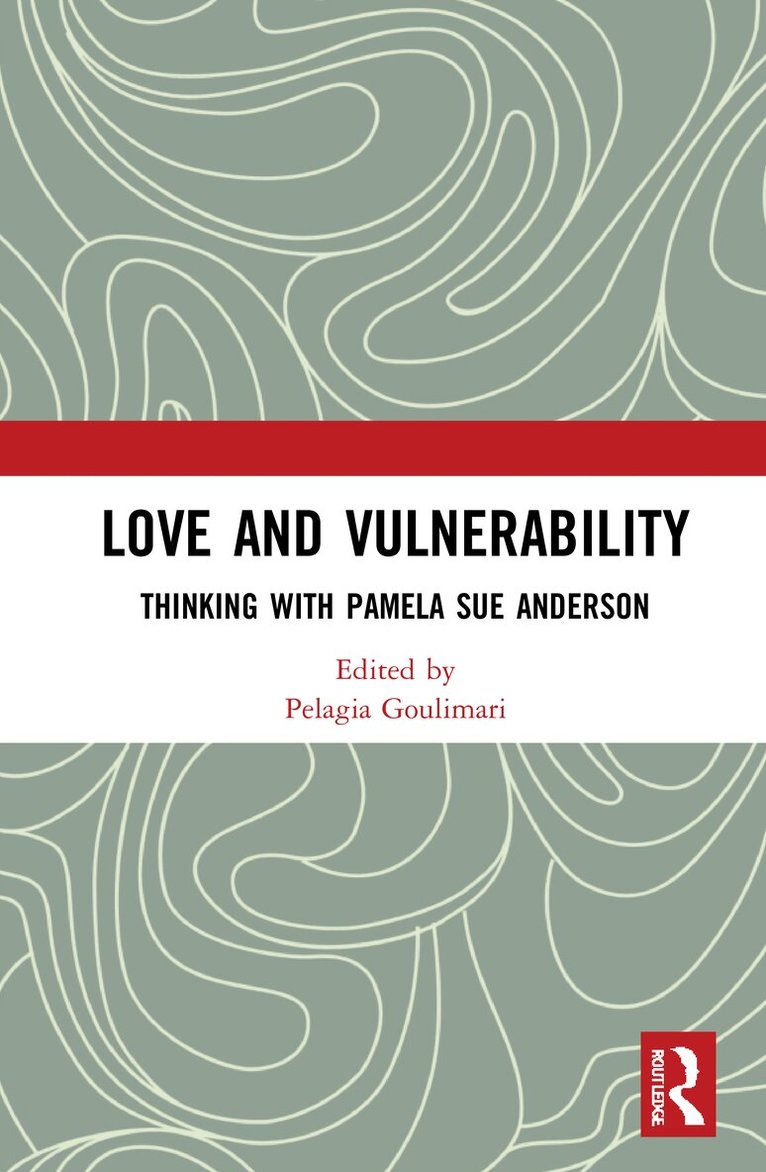
Love and Vulnerability: Thinking with Pamela Sue Anderson developed out of the desire for dialogue with the late feminist philosopher Pamela Sue Anderson’s extraordinary, previously unpublished, last work on love and vulnerability. The collection publishes this work for the first time, with a diverse, multidisciplinary, international range of contributors responding to it, to Anderson’s oeuvre as a whole and to her life and death.
Anderson’s path-breaking work includes A Feminist Philosophy of Religion (1998) and Re-visioning Gender in Philosophy of Religion: Reason, Love and Epistemic Locatedness (2012). Her last work critiques, then attempts to rebuild, concepts of love and vulnerability. Reason, critical self-reflexivity, emotion, intuition and imagination, myth and narrative all have a role to play. Social justice, friendship, conversation, dialogue, collective work are central to her thinking.
Contributors trace the emergence of Anderson’s late thinking, extend her conversations with the history of philosophy and contemporary voices such as hooks and Butler, and bring her work into contact with debates in theology; Continental and analytic philosophy; feminist, queer and transgender theory; postcolonial theory; African-American studies. Discussions engage with the Me Too movement and sexual violence, climate change, sweatshops, neoliberalism, death and dying, and the nature of the human.
Originally published as a special issue of the journal, Angelaki, this large, wide-ranging collection, featuring a number of distinguished contributors, makes a significant contribution to the burgeoning interdisciplinary research on interpersonal relations, sympathy and empathy, affect and emotion.
649 kr
Läs direkt efter köp
Love and Vulnerability: Thinking with Pamela Sue Anderson developed out of the desire for dialogue with the late feminist philosopher Pamela Sue Anderson’s extraordinary, previously unpublished, last work on love and vulnerability. The collection publishes this work for the first time, with a diverse, multidisciplinary, international range of contributors responding to it, to Anderson’s oeuvre as a whole and to her life and death.
Anderson’s path-breaking work includes A Feminist Philosophy of Religion (1998) and Re-visioning Gender in Philosophy of Religion: Reason, Love and Epistemic Locatedness (2012). Her last work critiques, then attempts to rebuild, concepts of love and vulnerability. Reason, critical self-reflexivity, emotion, intuition and imagination, myth and narrative all have a role to play. Social justice, friendship, conversation, dialogue, collective work are central to her thinking.
Contributors trace the emergence of Anderson’s late thinking, extend her conversations with the history of philosophy and contemporary voices such as hooks and Butler, and bring her work into contact with debates in theology; Continental and analytic philosophy; feminist, queer and transgender theory; postcolonial theory; African-American studies. Discussions engage with the Me Too movement and sexual violence, climate change, sweatshops, neoliberalism, death and dying, and the nature of the human.
Originally published as a special issue of the journal, Angelaki, this large, wide-ranging collection, featuring a number of distinguished contributors, makes a significant contribution to the burgeoning interdisciplinary research on interpersonal relations, sympathy and empathy, affect and emotion.
832 kr
Läs direkt efter köp
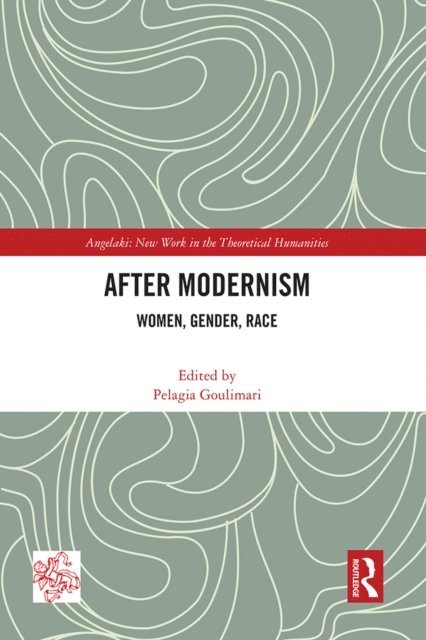
While celebrating the centenary of the “annus mirabilis” of modernism, we now encounter modernism after postmodernist, poststructuralist, postcolonial, critical race, feminist, queer and trans writing and theory. Out of the figures, narratives and concepts they have developed, a less universal, more global, decentred, context-specific, interconnected modernism emerges.
In “after modernism” the meanings of “after” include periodisation, homage and critique. This book attends to neglected genealogies and intertexts—“high” and “low,” yet offering unacknowledged ontological, epistemological, conceptual and figurative resources. How have artists of the Global South negotiated the hierarchical division of art capital into Western high art vs. Global-South culture?
Modernity’s location has been the Western metropolis, but other origin stories have been centring slavery, colonialism, the nation-state. If modernity did not originate once, why not multiple and still-to-come modernities? Instead of a universalizable Western modernity vs. local non-Western traditions, the contributors to this book discern multiple modern traditions. Rather than reifying their heterogeneity, the authors tunnel for lost transnational connections.
The nation-state and the citizen have together defined Western modernity and the “civilized.” Yet they have required the gender binary, gender and sexual normativity, assimilation, exclusion, forced migration, partition, segregation. In-between the public and the private, humans and the natural world, this book explores a multiple, relational modern subjectivity, collectivity and cosmic interconnectivity, whose space is indivisible, entangled, ever folding and unfolding. It was originally published as a special issue of the journal Angelaki.
832 kr
Läs direkt efter köp
While celebrating the centenary of the “annus mirabilis” of modernism, we now encounter modernism after postmodernist, poststructuralist, postcolonial, critical race, feminist, queer and trans writing and theory. Out of the figures, narratives and concepts they have developed, a less universal, more global, decentred, context-specific, interconnected modernism emerges.
In “after modernism” the meanings of “after” include periodisation, homage and critique. This book attends to neglected genealogies and intertexts—“high” and “low,” yet offering unacknowledged ontological, epistemological, conceptual and figurative resources. How have artists of the Global South negotiated the hierarchical division of art capital into Western high art vs. Global-South culture?
Modernity’s location has been the Western metropolis, but other origin stories have been centring slavery, colonialism, the nation-state. If modernity did not originate once, why not multiple and still-to-come modernities? Instead of a universalizable Western modernity vs. local non-Western traditions, the contributors to this book discern multiple modern traditions. Rather than reifying their heterogeneity, the authors tunnel for lost transnational connections.
The nation-state and the citizen have together defined Western modernity and the “civilized.” Yet they have required the gender binary, gender and sexual normativity, assimilation, exclusion, forced migration, partition, segregation. In-between the public and the private, humans and the natural world, this book explores a multiple, relational modern subjectivity, collectivity and cosmic interconnectivity, whose space is indivisible, entangled, ever folding and unfolding. It was originally published as a special issue of the journal Angelaki.
2 373 kr
Skickas inom 10-15 vardagar
704 kr
Skickas inom 10-15 vardagar
793 kr
Läs direkt efter köp
772 kr
Läs direkt efter köp
812 kr
Läs direkt efter köp
812 kr
Läs direkt efter köp
2 794 kr
Skickas inom 10-15 vardagar
948 kr
Läs direkt efter köp
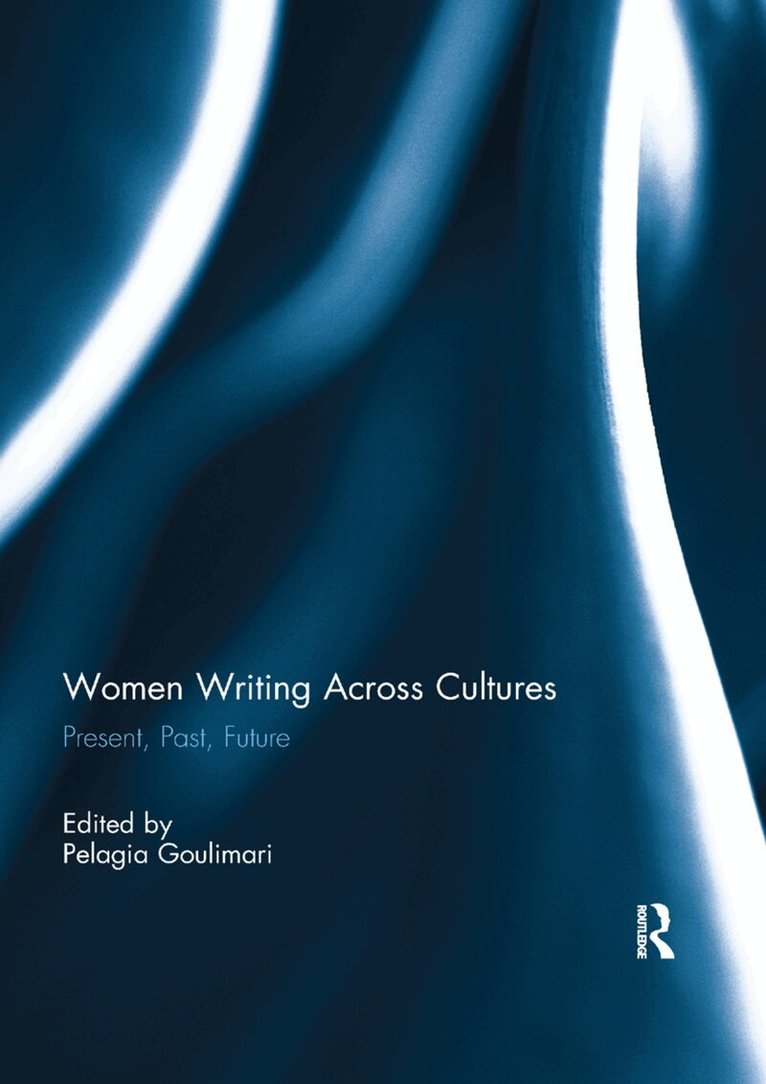
This collection brings together an international, multicultural, multilingual, and multidisciplinary community of scholars and practitioners in different media seeking to question and re-theorize the contested terms of our title: “woman,” “writing,” “women’s writing,” and “across.” “Culture” is translated into an open series of interconnected terms and questions. How might one write across national cultures; or across a national and a minority culture; or across disciplines, genres, and media; or across synchronic discourses that are unequal in power; or across present and past discourses or present and future discourses?
The collection explores and develops recent feminist, queer, and transgender theory and criticism, and also aesthetic practice. “Writing across” assumes a number of orientations: posthumanist; transtemporal; transnationalist; writing across discourses, disciplines, media, genres, genders; writing across pronouns – he, she, they; writing across literature, non-literary texts, and life.
This book was originally published as a special issue of Angelaki: Journal of the Theoretical Humanities.
948 kr
Läs direkt efter köp
This collection brings together an international, multicultural, multilingual, and multidisciplinary community of scholars and practitioners in different media seeking to question and re-theorize the contested terms of our title: “woman,” “writing,” “women’s writing,” and “across.” “Culture” is translated into an open series of interconnected terms and questions. How might one write across national cultures; or across a national and a minority culture; or across disciplines, genres, and media; or across synchronic discourses that are unequal in power; or across present and past discourses or present and future discourses?
The collection explores and develops recent feminist, queer, and transgender theory and criticism, and also aesthetic practice. “Writing across” assumes a number of orientations: posthumanist; transtemporal; transnationalist; writing across discourses, disciplines, media, genres, genders; writing across pronouns – he, she, they; writing across literature, non-literary texts, and life.
This book was originally published as a special issue of Angelaki: Journal of the Theoretical Humanities.
1 327 kr
Tillfälligt slut