Pena-Cervel Maria Sandra Pena-Cervel – författare
Visar alla böcker från författaren Pena-Cervel Maria Sandra Pena-Cervel. Handla med fri frakt och snabb leverans.
2 produkter
2 produkter
E-bok
Engelska, 20221 305 kr
Läs direkt efter köp
This book combines explanatory breadth with analytical delicacy. It offers a comprehensive study of a broad array of traditional figures of speech by systematizing linguistic evidence of the cognitive processes underlying them. Such processes are explicitly linked to different communicative consequences, thus bringing together pragmatics and cognition. This type of study has allowed the authors to provide new definitions for all the figures while making their dependency relations fully explicit. For example, hypallage, antonomasia, anthimeria, and merism are studied as variants of metonymy, and analogy, paragon, and allegory as variants of metaphor. An important feature of the book is its special emphasis on the combinations of figures of speech into conceptually more complex configurations. Finally, the book accounts for the principles that regulate the felicity of figurative expressions. The result is a broad integrative framework for the analysis of figurative language grounded in the relationship between pragmatics and cognition.
E-bok
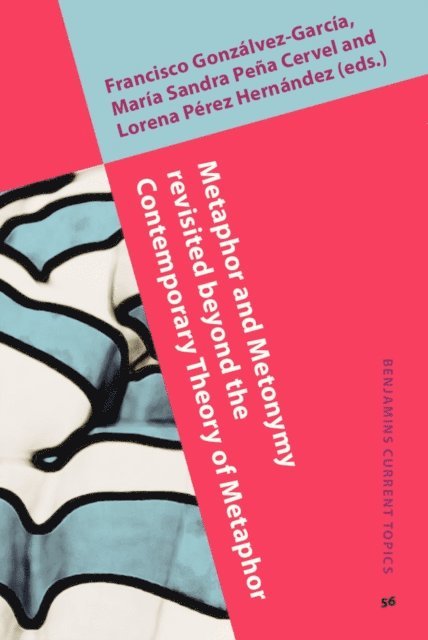
PDF, Engelska, 20131 258 kr
Läs direkt efter köp
The contributions in this volume go beyond the Contemporary Theory of Metaphor complementing it in a number of relevant ways. Some of the papers argue for a more dynamic, interdisciplinary approach to metaphor looking into it from semiotic, psychological and socio-cultural perspectives. Other contributions focus on the crucial role played by metaphor and metonymy in meaning construction at a discourse/textual level. Finally, the volume also includes proposals which revolve around the alleged universal nature of metaphorical mappings and their suitability to account for grammatical phenomena.The contributions in this volume display an ample gamut of theoretical approaches pointing to the viability of taking a functional-cognitive stance on the analysis of metaphor and metonymy in contrast to a purely cognitive one.This book is structured into three major sections: i) the Contemporary Theory of Metaphor: revisions and recent developments; ii) metaphor and/or metonymy across different discourse/genre types; and iii) the Contemporary Theory of Metaphor: current applications. Originally published in Review of Cognitive Linguistics 9:1 (2011).