Peng Gao – författare
Visar alla böcker från författaren Peng Gao. Handla med fri frakt och snabb leverans.
4 produkter
4 produkter
Inbunden, Engelska, 2025
2 016 kr
Skickas inom 10-15 vardagar
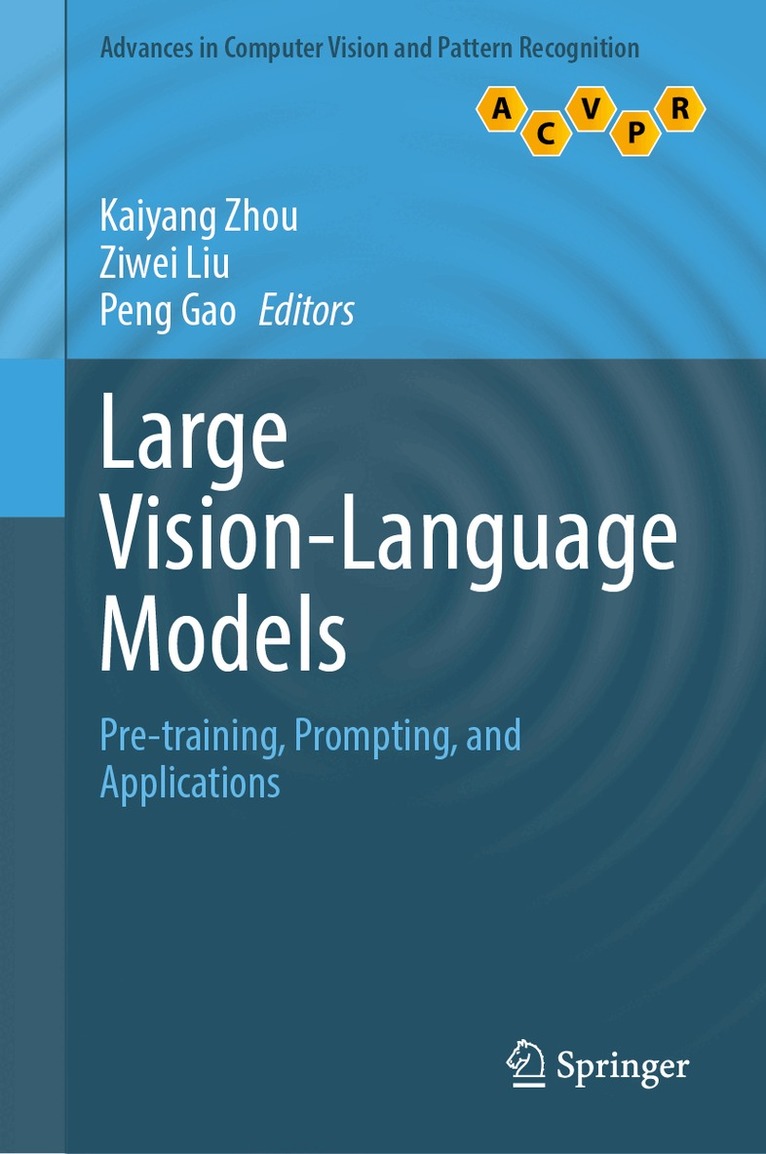
The rapid progress in the field of large multimodal foundation models, especially vision-language models, has dramatically transformed the landscape of machine learning, computer vision, and natural language processing. These powerful models, trained on vast amounts of multimodal data mixed with images and text, have demonstrated remarkable capabilities in tasks ranging from image classification and object detection to visual content generation and question answering. This book provides a comprehensive and up-to-date exploration of large vision-language models, covering the key aspects of their pre-training, prompting techniques, and diverse real-world computer vision applications. It is an essential resource for researchers, practitioners, and students in the fields of computer vision, natural language processing, and artificial intelligence.Large Vision-Language Models begins by exploring the fundamentals of large vision-language models, covering architectural designs, training techniques, and dataset construction methods. It then examines prompting strategies and other adaptation methods, demonstrating how these models can be effectively fine-tuned to address a wide range of downstream tasks. The final section focuses on the application of vision-language models across various domains, including open-vocabulary object detection, 3D point cloud processing, and text-driven visual content generation and manipulation.Beyond the technical foundations, the book explores the wide-ranging applications of vision-language models (VLMs), from enhancing image recognition systems to enabling sophisticated visual content generation and facilitating more natural human-machine interactions. It also addresses key challenges in the field, such as feature alignment, scalability, data requirements, and evaluation metrics. By providing a comprehensive roadmap for both newcomers and experts, this book serves as a valuable resource for understanding the current landscape, limitations, and future directions of VLMs, ultimately contributing to the advancement of artificial intelligence.
E-bok
Engelska, 20252 508 kr
Läs direkt efter köp
The rapid progress in the field of large multimodal foundation models, especially vision-language models, has dramatically transformed the landscape of machine learning, computer vision, and natural language processing. These powerful models, trained on vast amounts of multimodal data mixed with images and text, have demonstrated remarkable capabilities in tasks ranging from image classification and object detection to visual content generation and question answering. This book provides a comprehensive and up-to-date exploration of large vision-language models, covering the key aspects of their pre-training, prompting techniques, and diverse real-world computer vision applications. It is an essential resource for researchers, practitioners, and students in the fields of computer vision, natural language processing, and artificial intelligence.Large Vision-Language Models begins by exploring the fundamentals of large vision-language models, covering architectural designs, training techniques, and dataset construction methods. It then examines prompting strategies and other adaptation methods, demonstrating how these models can be effectively fine-tuned to address a wide range of downstream tasks. The final section focuses on the application of vision-language models across various domains, including open-vocabulary object detection, 3D point cloud processing, and text-driven visual content generation and manipulation.Beyond the technical foundations, the book explores the wide-ranging applications of vision-language models (VLMs), from enhancing image recognition systems to enabling sophisticated visual content generation and facilitating more natural human-machine interactions. It also addresses key challenges in the field, such as feature alignment, scalability, data requirements, and evaluation metrics. By providing a comprehensive roadmap for both newcomers and experts, this book serves as a valuable resource for understanding the current landscape, limitations, and future directions of VLMs, ultimately contributing to the advancement of artificial intelligence.
Inbunden, Engelska, 2026
2 564 kr
Skickas inom 11-20 vardagar
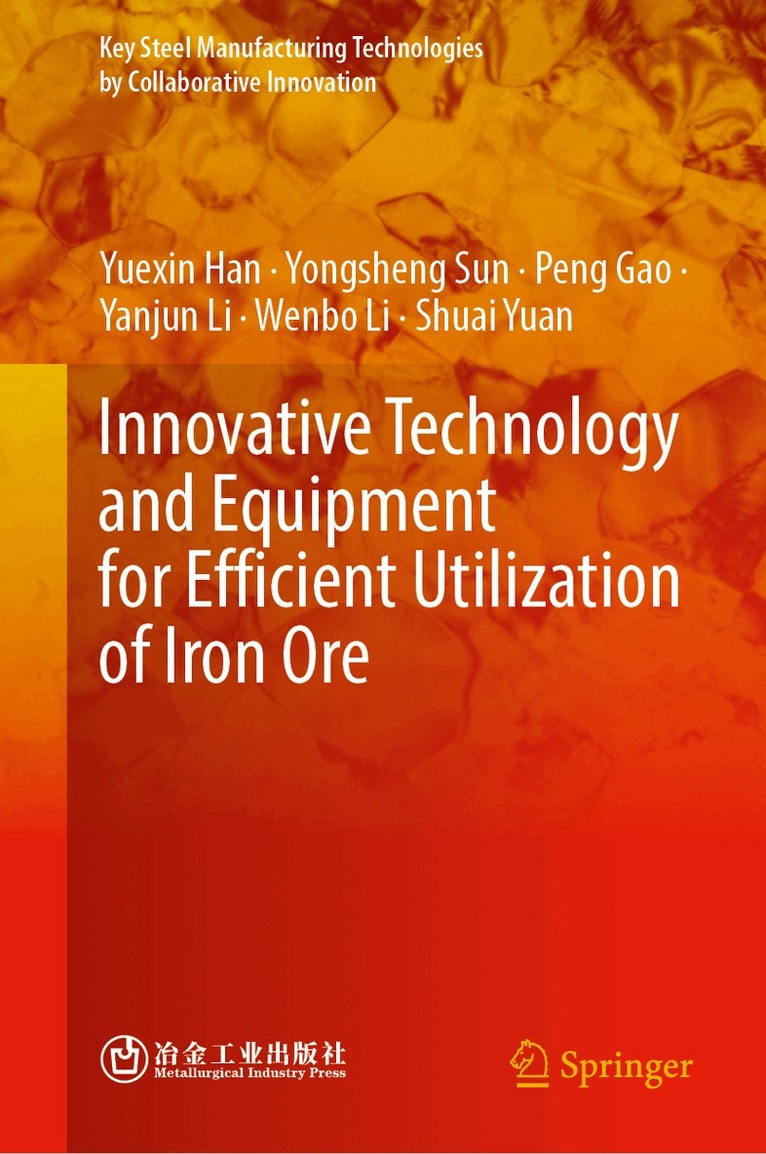
This book mainly introduces pioneering technologies in the field of efficient utilization of iron ore, specifically including suspension magnetization roastingtechnology and equipment of complex refractory iron ore, coal-based reduction technology of extremely refractory iron ore, green preparation of super iron concentrate and clean steel base material, energy-saving grinding technology and equipment of new ceramic ball stirring mill, stepped flotation of carbonate-containing hematite and other common key technologies in mineral processing. This book comprehensively elaborates and refines the above-mentioned technologies and equipments from the basic theory, laboratory research, to the semi-industrial test and industrial test level.This book can be read for reference by college teachers and students, researchers, engineering technicians and enterprise administrators in the fields of basic research and applied technology research on the iron ore resource processing.
Inbunden, Engelska, 2027
3 446 kr
Kommande
This book systematically summarizes and condenses the groundbreaking work the author and their research team have done in recent years in the profound reduction of iron ore. In response to the challenges of utilizing certain iron ore resources in China that are difficult to process using conventional beneficiation methods, this book introduces the concept of profound reduction. By employing advanced detection technologies and methods such as software simulation, image analysis, and micro-area composition analysis, the book uncovers key scientific issues in the reduction process. These include the phase transformation, the measurement and control of iron particle size, the migration of phosphorus elements between phases, and the thermodynamic and kinetic mechanisms. It also details the development of a series of new profound reduction technologies and the establishment of a comprehensive theoretical and technical framework for the profound reduction of iron ore. This book is a valuable reference for university faculty and students, researchers, and engineering professionals engaged in fundamental and applied research in mineral processing engineering and metallurgical engineering.