Penny A. Weiss - Böcker
Visar alla böcker från författaren Penny A. Weiss. Handla med fri frakt och snabb leverans.
10 produkter
10 produkter
509 kr
Skickas inom 7-10 vardagar
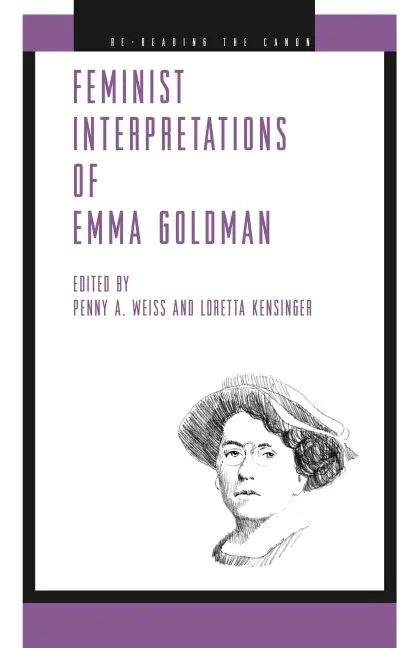
Within the popular consciousness, Emma Goldman has become something of an icon, a symbol for rebellion and women’s rights. But there has been surprisingly little substantive analysis of her influence on social, political, and feminist theory. In Feminist Interpretations of Emma Goldman, Weiss and Kensinger present essays that resist a simplistic understanding of Goldman and instead attempt to examine her thinking in its proper social, historical, and philosophical context. Only by considering the sources, influences, and specific significance of Goldman’s ideas can her proper place in feminist theory be truly understood.In addition to the editors, the contributors are Martha A. Ackelsberg, Kathryn Pyne Addelson, Lynne M. Adrian, Berenice A. Carroll, Voltairine de Cleyre, Janet E. Day, Candace Falk, Kathy E. Ferguson, Marsha Aileen Hewitt, Lori Jo Marso, Jonathan McKenzie, Alix Kates Shulman, Craig Stalbaum, Jason Wehling, and Alice Wexler.
973 kr
Skickas inom 5-8 vardagar
This book is an exercise in the recovery of historical memory about a set of thinkers who have been forgotten or purposely ignored and, as a result, never made it into the canon of Western political philosophy. Penny Weiss calls them “canon fodder,” recalling the fate of soldiers in war who are treated by their governments and military leaders as expendable. Despite some real progress at recovery over the past few decades, and the now-frequent references to a few female thinkers like Mary Wollstonecraft, Hannah Arendt, and Simone de Beauvoir, the surface has only been scratched, and the rich resources of women’s writings about political ideas remain still largely untapped. Included here, and intended to further whet the palate, are figures from Sei Shōnagon, Christine de Pizan, and Mary Astell to Elizabeth Cady Stanton, Anna Julia Cooper, and Emma Goldman.Restoring female thinkers to the conversation of political philosophy is the primary goal of this book. Part I deploys a range of these thinkers to discuss the nature of political inquiry itself. Part II focuses on alternative approaches to and visions of core political ideas: equality, power, revolution, childhood, and community. While mainly an intellectual act of revival, this book also affects practical political life, because “remote and academic as they sometimes appear, debates about what to include in the canon ultimately touch almost everyone: students handed texts from lists of ‘great books’ to guide them . . . and citizens whose governments justify their actions with ideas from political texts deemed classic."
502 kr
Skickas inom 5-8 vardagar
This book is an exercise in the recovery of historical memory about a set of thinkers who have been forgotten or purposely ignored and, as a result, never made it into the canon of Western political philosophy. Penny Weiss calls them “canon fodder,” recalling the fate of soldiers in war who are treated by their governments and military leaders as expendable. Despite some real progress at recovery over the past few decades, and the now-frequent references to a few female thinkers like Mary Wollstonecraft, Hannah Arendt, and Simone de Beauvoir, the surface has only been scratched, and the rich resources of women’s writings about political ideas remain still largely untapped. Included here, and intended to further whet the palate, are figures from Sei Shōnagon, Christine de Pizan, and Mary Astell to Elizabeth Cady Stanton, Anna Julia Cooper, and Emma Goldman.Restoring female thinkers to the conversation of political philosophy is the primary goal of this book. Part I deploys a range of these thinkers to discuss the nature of political inquiry itself. Part II focuses on alternative approaches to and visions of core political ideas: equality, power, revolution, childhood, and community. While mainly an intellectual act of revival, this book also affects practical political life, because “remote and academic as they sometimes appear, debates about what to include in the canon ultimately touch almost everyone: students handed texts from lists of ‘great books’ to guide them . . . and citizens whose governments justify their actions with ideas from political texts deemed classic."
1 149 kr
Skickas inom 10-15 vardagar
Rousseau's writings reflect paradoxes and apparent inconsistencies with his principled commitments to freedom and equality. In this engrossing work, Penny Weiss wrestles with issues of gender in the works of Rousseau.Weiss attempts to resolve apparent inconsistencies by placing them within the context of Rousseau's political philosophy, while avoiding the impulse to attribute his remarks on the sexes to the sexist times in which he wrote, or to his personal idiosyncracies.A significant contribution to feminist theory, this book addresses the debates concerning Rousseau's understandings of gender, justice, freedom, community, and equality. She also examines how Rousseau's political strategies give rise to a range of important contemporary questions regarding families, citizens, and communities.This new, more complete picture of Rousseau's work will challenge scholars and students of philosophy, politics, and women's studies to look at, and understand, Rousseau in a whole new way. Penny A. Weiss addresses the apparent male/female contradictions that run through the work of the eighteenth-century philosopher Jean-Jacques Rousseau. She argues that Rousseau's defense of sexual differentiation is based on the contribution he perceives it can make to the establishment of community, not on an appeal to some version of natural sex differences. Weiss convincingly demonstrates that Rousseau's political strategy is ultimately unworkable, undermining the very community it was meant to establish.
347 kr
Skickas inom 7-10 vardagar
Rousseau's writings reflect paradoxes and apparent inconsistencies with his principled commitments to freedom and equality. In this engrossing work, Penny Weiss wrestles with issues of gender in the works of Rousseau.Weiss attempts to resolve apparent inconsistencies by placing them within the context of Rousseau's political philosophy, while avoiding the impulse to attribute his remarks on the sexes to the sexist times in which he wrote, or to his personal idiosyncracies.A significant contribution to feminist theory, this book addresses the debates concerning Rousseau's understandings of gender, justice, freedom, community, and equality. She also examines how Rousseau's political strategies give rise to a range of important contemporary questions regarding families, citizens, and communities.This new, more complete picture of Rousseau's work will challenge scholars and students of philosophy, politics, and women's studies to look at, and understand, Rousseau in a whole new way. Penny A. Weiss addresses the apparent male/female contradictions that run through the work of the eighteenth-century philosopher Jean-Jacques Rousseau. She argues that Rousseau's defense of sexual differentiation is based on the contribution he perceives it can make to the establishment of community, not on an appeal to some version of natural sex differences. Weiss convincingly demonstrates that Rousseau's political strategy is ultimately unworkable, undermining the very community it was meant to establish.
515 kr
Skickas inom 10-15 vardagar
Applying the idea of conversation broadly, Penny A. Weiss offers a collection of essays that are either constructed dialogues, letters, or discussions about voice and silencing. Conversation emerges as both a theory and a method of feminist political inquiry and practice. The most vocal participants in Weiss' conversations are historical political thinkers both within the Western canon (Plato, Aristotle, Machiavelli, Rousseau) and beyond its confines (Astell, Coopers, Wollstonecraft, de Pizan). Other figures appear as well, from Anita Hill and U.S. Supreme Court justices to the author's own students and children.Conflicts between feminists and anti-feminists frame some essays, while others represent debates within feminism. This unique collection is unified by a commitment to dialogue as a part of feminist ethics, strategy, and pedagogy, and builds upon the belief that a conversational approach does not preclude disagreement or contrasting stories, but requires them. Conversations With Feminism is an important book for students and scholars of political theory, philosophy, and women's studies.
1 158 kr
Skickas inom 7-10 vardagar
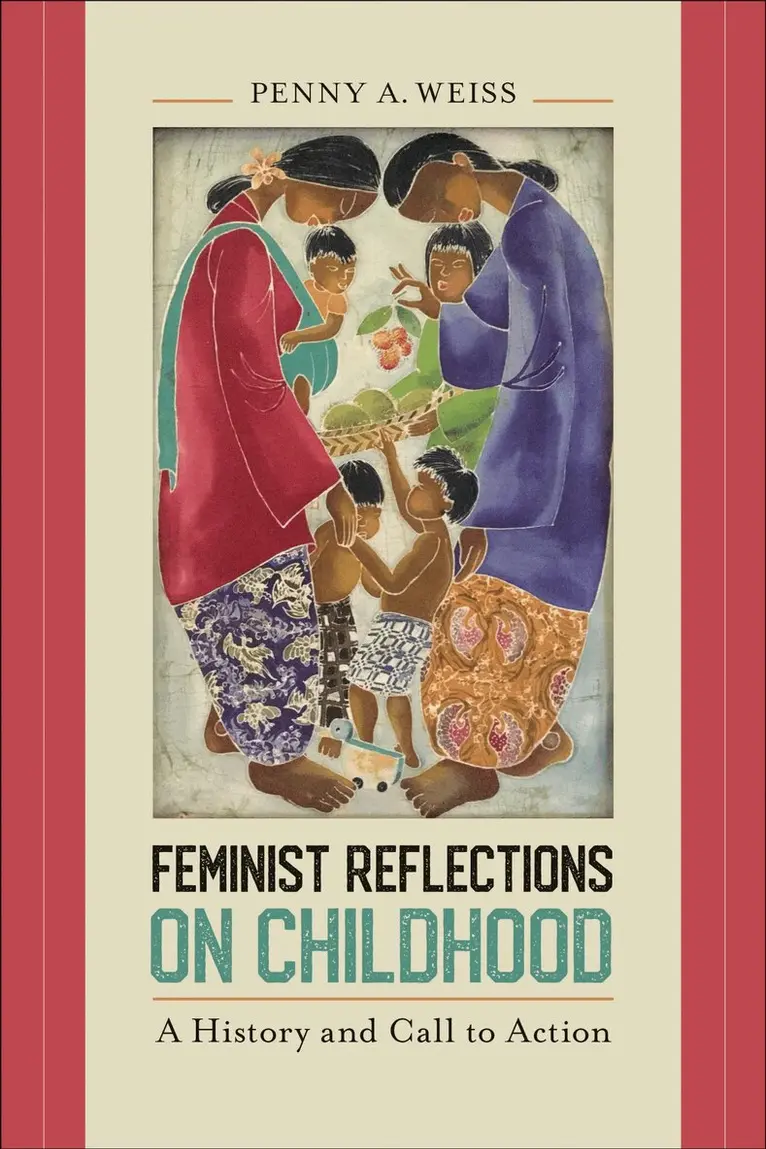
In Feminist Reflections on Childhood, Penny Weiss rediscovers the radically feminist tradition of advocating for the liberatory treatment of youth. Weiss looks at both historical and contemporary feminists to understand what issues surrounding the inequality experienced by both women and children were important to the authors as feminist activists and thinkers. She uses the writings of Mary Wollstonecraft, Elizabeth Cady Stanton, and Simone de Beauvoir to show early feminist arguments for the improved status and treatment of youth. Weiss also shows how Charlotte Perkins Gilman, a socialist feminist, and Emma Goldman, an anarchist feminist, differently understood and re-visioned children’s lives, as well as how children continue to show up on feminist agendas and in manifestos that demand better conditions for children’s lives.Moving to contemporary theory, Feminist Reflections on Childhood also looks at how feminist disability theory is well-positioned to recognize the voices of children, and how queer theory provides lessons on contemporary trends that provide visions and strategies for more constructive adult-child relations. Weiss, who includes her own experiences as a mother and foster mother throughout the book, closes her distinctively feminist takes on childhood with a consideration of speculative fiction stories that offer examples of what feminists think makes childhood (un)livable.
360 kr
Skickas inom 7-10 vardagar
In Feminist Reflections on Childhood, Penny Weiss rediscovers the radically feminist tradition of advocating for the liberatory treatment of youth. Weiss looks at both historical and contemporary feminists to understand what issues surrounding the inequality experienced by both women and children were important to the authors as feminist activists and thinkers. She uses the writings of Mary Wollstonecraft, Elizabeth Cady Stanton, and Simone de Beauvoir to show early feminist arguments for the improved status and treatment of youth. Weiss also shows how Charlotte Perkins Gilman, a socialist feminist, and Emma Goldman, an anarchist feminist, differently understood and re-visioned children’s lives, as well as how children continue to show up on feminist agendas and in manifestos that demand better conditions for children’s lives.Moving to contemporary theory, Feminist Reflections on Childhood also looks at how feminist disability theory is well-positioned to recognize the voices of children, and how queer theory provides lessons on contemporary trends that provide visions and strategies for more constructive adult-child relations. Weiss, who includes her own experiences as a mother and foster mother throughout the book, closes her distinctively feminist takes on childhood with a consideration of speculative fiction stories that offer examples of what feminists think makes childhood (un)livable.
531 kr
Skickas inom 7-10 vardagar
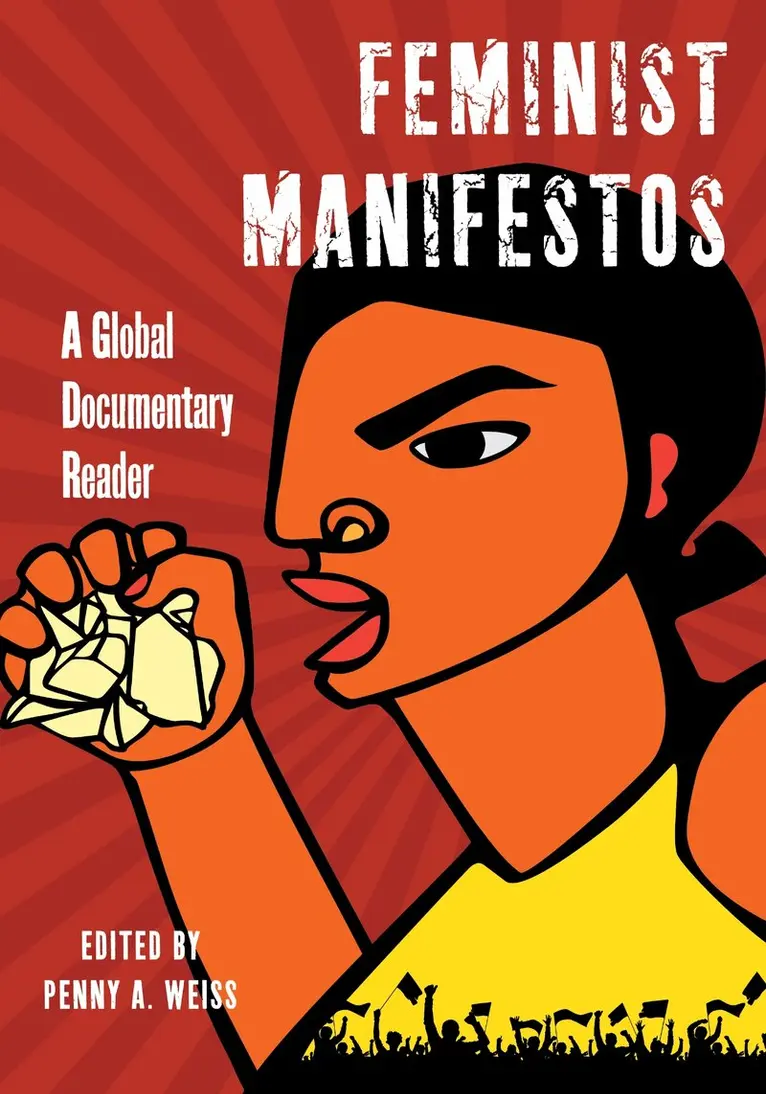
A wide-reaching collection of groundbreaking feminist documents from around the worldFeminist Manifestos is an unprecedented collection of 150 documents from feminist organizations and gatherings in over 50 countries over the course of three centuries. In the first book of its kind, the manifestos are shown to contain feminist theory and recommend actions for change, and also to expand our very conceptions of feminist thought and activism. Covering issues from political participation, education, religion and work to reproduction, violence, racism, and environmentalism, the manifestos together challenge simplistic definitions of gender and feminist movements in exciting ways. In a wide-ranging introduction, Penny Weiss explores the value of these documents, especially how they speak with and to each other. In addition, an introduction to each individual document contextualizes and enhances our understanding of it.Weiss is particularly invested in how communities work together toward social change, which is demonstrated through her choice to include only collectively authored texts. By assembling these documents into an accessible volume, Weiss reveals new possibilities for social justice and ways to advocate for equality.A unique and inspirational collection, Feminist Manifestos expands and evolves our understanding of feminism through the self-described agendas of women from every ethnic group, religion, and region in the world.
1 415 kr
Skickas inom 10-15 vardagar
A wide-reaching collection of groundbreaking feminist documents from around the worldFeminist Manifestos is an unprecedented collection of 150 documents from feminist organizations and gatherings in over 50 countries over the course of three centuries. In the first book of its kind, the manifestos are shown to contain feminist theory and recommend actions for change, and also to expand our very conceptions of feminist thought and activism. Covering issues from political participation, education, religion and work to reproduction, violence, racism, and environmentalism, the manifestos together challenge simplistic definitions of gender and feminist movements in exciting ways. In a wide-ranging introduction, Penny Weiss explores the value of these documents, especially how they speak with and to each other. In addition, an introduction to each individual document contextualizes and enhances our understanding of it.Weiss is particularly invested in how communities work together toward social change, which is demonstrated through her choice to include only collectively authored texts. By assembling these documents into an accessible volume, Weiss reveals new possibilities for social justice and ways to advocate for equality.A unique and inspirational collection, Feminist Manifestos expands and evolves our understanding of feminism through the self-described agendas of women from every ethnic group, religion, and region in the world.